
Sign of the Cross Prayer
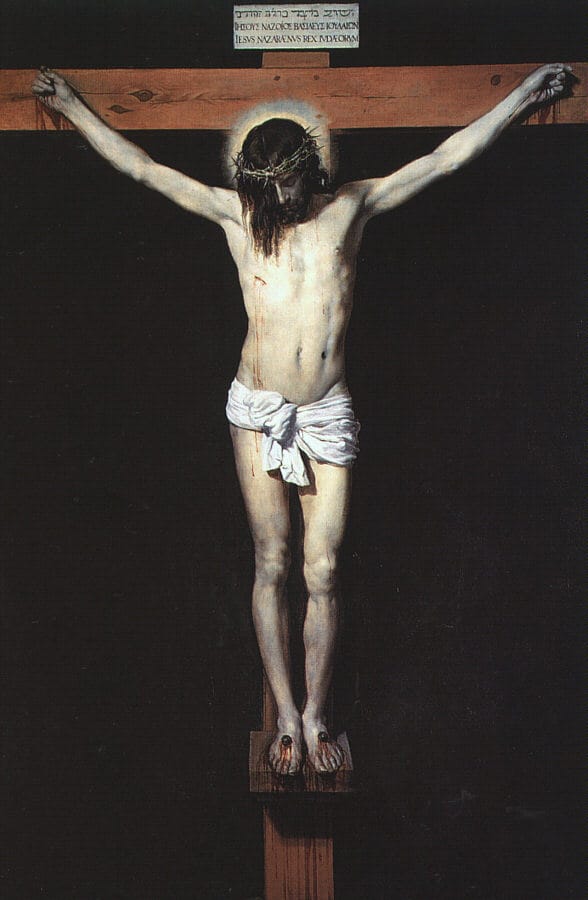
This page presents the familiar short form and the traditional long form, followed by clear directions for the hand movement and an explanation of the words. It also describes how this devotion is used in the Rosary, public worship, and daily life.
What Is the Sign of the Cross?
The Sign of the Cross is a short Catholic prayer made by tracing the shape of the Cross over the body while saying, “In the name of the Father, and of the Son, and of the Holy Ghost. Amen.” The words profess faith in one God in three Divine Persons, while the gesture recalls the Cross through which Jesus Christ redeemed mankind.
Catholics make it at the beginning and end of prayer, during the Mass, before the Rosary, and at many moments throughout the day. Made slowly and with faith, it is an act of worship, a reminder of Baptism, and a simple way of placing one’s life under the Cross of Christ.
The Words and Gestures of the Sign of the Cross

Short Form
In the Name of the Father,
and of the Son,
and of the Holy Spirit.
Amen.
This familiar form joins words and movement in one act of faith. The Father, the Son, and the Holy Ghost are named while the Cross of Christ is traced over the body. The final “Amen” expresses belief in what has been professed.
Long Form
By the sign of the Holy Cross,
deliver us from our enemies,
O Lord our God.
In the name of the Father,
and of the Son,
and of the Holy Ghost.
Amen.
The traditional long form begins with a plea for protection and deliverance. The word “enemies” includes sin, temptation, the devil, and anything that draws a person away from God. The prayer places trust in Jesus Christ, whose death and Resurrection conquered sin and death.
How to Make It
Using the right hand, touch the forehead while saying, “In the name of the Father.” Move the hand to the breast while saying, “and of the Son.” Then touch the left shoulder while saying, “and of the Holy,” and the right shoulder while saying, “Ghost.” Finish with “Amen.”
The movement should be made calmly and reverently. It does not need to be exaggerated, but it should not be rushed as though it were merely a signal that another prayer is beginning.
Eastern and Western Customs
Latin Rite Catholics ordinarily move from the forehead to the breast and then from the left shoulder to the right. Eastern Catholics and Orthodox Christians generally move from the right shoulder to the left. They may also join their fingers in a way that represents the Most Holy Trinity and the divine and human natures of Jesus Christ.
Some Catholics say “Holy Spirit,” while others use the traditional English wording “Holy Ghost.” Both expressions name the Third Person of the Most Holy Trinity. These differences do not change the central meaning of the prayer.
What This Prayer Proclaims

The words and gestures together express several central truths of Christianity. They name the one God revealed as Father, Son, and Holy Ghost, recall the sacrifice through which mankind was redeemed, and remind the baptized that they belong to God.
Faith in the Most Holy Trinity
Saying “In the name of the Father, and of the Son, and of the Holy Ghost” professes belief in one God in three Divine Persons. The word “name” is singular because there is only one God. Yet the Father, Son, and Holy Ghost are each named because they are distinct Persons who share the one divine nature.
The Saving Cross of Christ
Tracing the Cross over the body recalls the Passion, death, and Resurrection of Jesus. The Cross was an instrument of suffering, but through it the Lord conquered sin and opened the way to eternal life. The gesture therefore expresses trust in His sacrifice and victory rather than in the physical movement itself.
Baptism and Belonging to Christ
At Baptism, a person is marked with the Cross and baptized in the name of the Father, the Son, and the Holy Ghost. Repeating this gesture recalls that first sacramental profession. It reminds the believer that the mind, heart, body, work, suffering, and future have been entrusted to God.
Biblical and Historical Foundations

The Bible does not describe the complete gesture as it is used today. Its words and meaning, however, are rooted in Scripture, and early Christian writings show that believers marked themselves with the Cross centuries before the custom developed into its present form.
Roots in Sacred Scripture
The words naming the Father, the Son, and the Holy Ghost come from Christ’s command to baptize all nations in the name of the Most Holy Trinity (Matthew 28:19). Saint Paul declares that he glories “in the cross of our Lord Jesus Christ” (Galatians 6:14).
Scripture also describes God’s servants receiving a mark upon the forehead. This appears in Ezechiel 9:4 and again in the Apocalypse, where the faithful are sealed as belonging to God (Apocalypse 7:3). These passages do not prescribe the later Christian gesture, but they help explain its biblical meaning.
Practice in the Early Church
Early Christians commonly traced a small cross upon the forehead. Around the beginning of the third century, Tertullian wrote that believers signed themselves during ordinary activities such as traveling, eating, working, and going to bed.
Saint Cyril of Jerusalem later encouraged Christians to trace it openly upon the forehead as a profession of belief and a defense during temptation. These accounts show that the practice belonged to everyday Christian life long before the larger movement became customary.
Growth of the Catholic Tradition
The earliest form was usually traced with a finger or thumb upon the forehead. Over time, Christians also marked the lips and breast, and the gesture gradually expanded across the upper body.
Different customs developed in Eastern and Western Christianity. In the Latin Church, the familiar movement from the forehead to the breast and then from the left shoulder to the right became established. The outward form developed across centuries, while its purpose remained the same: to profess belief, remember redemption, and place each prayer under God’s care.
Its Place in the Rosary and Daily Prayer

The Sign of the Cross belongs not only to formal worship but also to the ordinary rhythm of Christian life. It can open and close longer prayers, mark important moments, and help a person turn their attention toward God.
Beginning and Ending the Rosary
The Rosary begins at the crucifix. The person praying makes the Sign of the Cross and then recites the Apostles’ Creed. This first gesture helps set aside distractions and prepares the mind and heart for the mysteries that follow.
After the closing prayers, it is customary to make the gesture again. In this way, the entire Rosary is offered in the name of the Father, the Son, and the Holy Ghost.
Prayer Throughout the Day
This brief prayer can be used upon waking, before meals, when entering a church, before beginning work, and before going to sleep. It may also be prayed before a journey, during temptation, or when asking for help in a difficult moment.
Because it requires only a few words, it can quietly bring prayer into places where a longer devotion may not be possible.
Making It with Attention
Familiar gestures can easily become hurried. Slowing down for a moment helps restore their meaning. Speak the words clearly, trace the movement deliberately, and remember what is being professed.
The purpose is not to make the motion large or noticeable. A simple and reverent gesture is enough when it is joined to sincere prayer.
Frequently Asked Questions
What Is the Long or “Big” Version of the Sign of the Cross?
The long version, sometimes called the “big” Sign of the Cross, begins with a short plea for God’s protection:
“By the sign of the Holy Cross, deliver us from our enemies, O Lord our God. In the name of the Father, and of the Son, and of the Holy Ghost. Amen.”
Some Catholics use this traditional form before personal prayer or in moments of need. It asks God for deliverance and then concludes with the familiar profession of faith in the Most Holy Trinity.
Is the Sign of the Cross Found in the Bible?
Scripture does not describe the complete movement from the forehead to the breast and shoulders. Its words and meaning, however, are rooted in the Bible.
Christ commanded the Apostles to baptize “in the name of the Father, and of the Son, and of the Holy Ghost” (Matthew 28:19). Scripture also describes the servants of God being marked upon their foreheads (Ezechiel 9:4; Apocalypse 7:3). Saint Paul declared that he gloried in “the cross of our Lord Jesus Christ” (Galatians 6:14).
The Church joins these biblical truths in one prayer made with both the voice and the body.
Is the Sign of the Cross Worship of the Cross Itself?
No. Catholics do not worship a piece of wood, an image, or the shape of a cross. Adoration belongs to God alone.
By tracing the Cross while naming the Father, the Son, and the Holy Ghost, Catholics worship God and remember the sacrifice of Jesus Christ upon Calvary. The Cross points to Christ, His saving death, and His victory over sin and death. The gesture honors the Lord who died upon the Cross, not the material object itself.
Why Do Christians Make the Sign of the Cross Differently?
The differences come from distinct Christian traditions. In the Latin Rite, Catholics ordinarily move from the forehead to the breast and then from the left shoulder to the right. Eastern Catholics and Orthodox Christians generally move from the right shoulder to the left and often join their fingers in a way that represents the Most Holy Trinity and the two natures of Christ.
Some Christians use “Holy Spirit,” while others use the traditional English expression “Holy Ghost.” Some Protestant Christians do not use the gesture at all.
These differences do not change the prayer’s central profession of faith in the Father, the Son, and the Holy Ghost or its remembrance of the Cross of Christ.
May Non-Catholics Make the Sign of the Cross?
Yes. The gesture is not restricted to Catholics. Eastern Orthodox Christians and some Protestant Christians also use it as a profession of faith in the Most Holy Trinity and the saving Cross of Jesus Christ.
Someone who is learning about Christianity or preparing for Baptism may also make it sincerely while seeking God’s help. Because its words profess belief in the Father, the Son, and the Holy Ghost, it should be made reverently and with an understanding of the faith it expresses, rather than as a joke, charm, or superstition.
More Rosary Prayers and Resources
Rosary Prayers
Printable Rosary PDFs

Charles Rogers is a resident of South Carolina and a retired computer programmer by trade. Raised in various Christian denominations, he came to faith in Jesus Christ early in life. In 2012, he began experiencing authentic spiritual encounters with the Blessed Virgin Mary, which led him on a seven-year journey at her hands, that included alcohol addiction, a widow maker heart attack and death and conversion to the Catholic Faith. He is the exclusive author and owner of Two Percent Survival, a website dedicated to and created in honor of the Holy Mother. Feel free to email Charles at twopercentsurvival@gmail.com.

May Our Lady of the Rosary lead you deeper into the grace you have been given. Pray always, and trust the mercy of God while the door remains open.
— Two Percent Survival