

Hail Holy Queen Prayer

Lorem ipsum dolor sit amet, consectetur adipiscing elit. Ut elit tellus, luctus nec ullamcorper mattis, pulvinar dapibus leo.
Hail Holy Queen in English
Hail, holy Queen,
Mother of Mercy!
Our life, our sweetness, and our hope!
To thee do we cry, poor banished children of Eve;
to thee do we send up our sighs, mourning and weeping in this vale of tears.
Turn, then, most gracious Advocate,
thine eyes of mercy toward us;
and after this our exile show unto us the blessed fruit of thy womb, Jesus;
O clement, O loving, O sweet Virgin Mary.
Versicle and Response
Pray for us, O holy Mother of God.
That we may be made worthy of the promises of Christ.
Meaning of the Hail Holy Queen
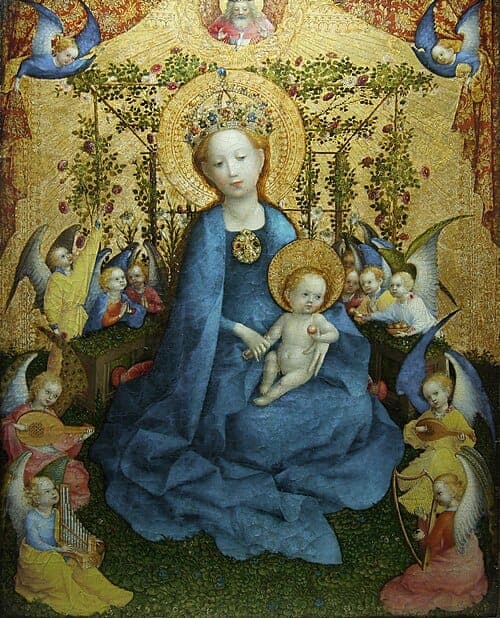
The Hail Holy Queen is a prayer of trust, sorrow, and Christian hope. It begins by honoring the Blessed Virgin Mary as Queen and Mother of Mercy, then turns to her with the needs of fallen humanity. The faithful speak as the children of Eve, living in a land marked by sin, suffering, and death, yet still longing for the joy of heaven.
Each line asks Mary to look upon her children with motherly care and to pray for them during their earthly exile. The prayer does not end with Mary alone. It reaches its highest point in Jesus, “the blessed fruit of thy womb.” Mary’s task is always to lead souls to her Son. For this reason, the Hail Holy Queen is both a plea for her help and a confession of hope that, through the grace of Christ, the faithful may one day see Him face to face.
“Hail, Holy Queen, Mother of Mercy”
The prayer begins with a loving greeting to Mary. She is called Queen because she is the Mother of Jesus Christ, the eternal King, and because God has raised her to share in the glory of her Son. Her queenship comes entirely from Christ and remains under His authority. Mary is also called the Mother of Mercy because she gave birth to Jesus, through whom God’s mercy entered the human family. As a spiritual mother, she cares for the followers of Christ and brings their needs before Him. These titles do not place Mary above God. They honor the work that God has done in her and the motherly mission He has given her.
“Our Life, Our Sweetness, and Our Hope”
These words express the deep love and trust Catholics have for the Blessed Virgin Mary. Jesus alone is the source of eternal life, salvation, and Christian hope. Mary is called “our life, our sweetness, and our hope” because her whole life is joined to Him and because her motherly care helps lead souls toward Him. She brings comfort during sorrow, strength during temptation, and hope when faith feels weak. The titles point beyond Mary to the grace of Christ working through her. A child who turns to Mary is not turning away from Jesus. The child is asking His Mother to help him remain close to her Son.
“Poor Banished Children of Eve”
The “children of Eve” are all members of the fallen human family. Through the sin of Adam and Eve, mankind lost the peace of Eden and became subject to suffering, temptation, and death. The word “banished” describes life away from the perfect communion with God for which the human heart was made. Calling ourselves “poor” is an act of humility. It admits that no one can overcome sin or reach heaven by his own power. The prayer places this human weakness before Mary and asks for her motherly help. She is the New Eve who remained faithful to God and gave the world Jesus Christ, the Savior promised after the fall.
“Mourning and Weeping in This Vale of Tears”
The “vale of tears” describes earthly life as it is wounded by sin. Every person knows some form of grief, illness, fear, disappointment, temptation, or loss. The prayer does not pretend that suffering is small or unreal. It allows the faithful to bring their sighs and tears before God while asking Mary to remain near them. Yet the words are not without hope. A vale is a place through which someone passes; it is not the final home of the Christian. The faithful continue toward heaven, trusting that Christ can give meaning to suffering and that Mary, who stood beneath the Cross, understands the sorrows carried by her children.
“Turn Thine Eyes of Mercy Toward Us”
This line asks Mary to look upon the faithful with the care of a mother. Her “eyes of mercy” reflect the mercy she has received from God and the compassion she shows toward those who suffer or struggle with sin. Catholics ask Mary to intercede because Scripture teaches Christians to pray for one another, and the saints in heaven remain united to the Church in Christ. Mary does not replace Jesus or stand between the soul and His mercy. She brings the soul to Him. Like the servants at Cana, the faithful turn to Mary with their need and hear her direct them toward Christ: “Whatsoever he shall say to you, do ye” (John 2:5).
“Show Unto Us the Blessed Fruit of Thy Womb, Jesus”
The prayer reaches its goal in the name of Jesus. The words “blessed fruit of thy womb” come from Elizabeth’s greeting to Mary: “Blessed art thou among women, and blessed is the fruit of thy womb” (Luke 1:42). To ask Mary to “show unto us” Jesus is to ask for her help in knowing, loving, and following Him throughout life. It also expresses the hope of seeing Christ face to face after death. Mary never keeps attention upon herself. She carries Jesus to the faithful as she carried Him to Elizabeth and presented Him in the Temple. The Hail Holy Queen therefore ends where all true Marian devotion ends—with Jesus Christ.
Why Catholics Call Mary Queen and Mother of Mercy
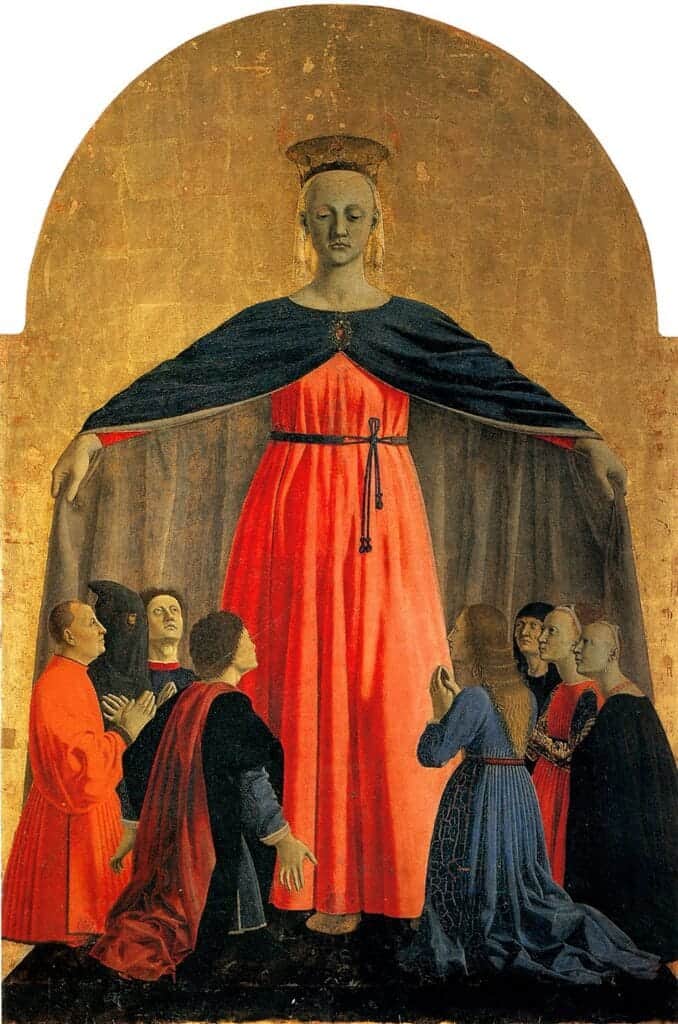
Mary’s Queenship Comes from Christ
Catholics call Mary Queen because she is the Mother of Jesus Christ, the eternal King. At the Annunciation, the angel Gabriel declared that her Son would receive “the throne of David his father” and would reign forever (Luke 1:32–33). Mary’s royal dignity therefore comes entirely from the kingship of Jesus. She does not rule apart from Him or possess authority equal to His. Everything she has is a gift from God and remains subject to her Son.
In the kingdoms of the Old Testament, the mother of the king held a place of honor beside him and could present the needs of the people before the throne. Mary fulfills this image as the Mother of Christ the King. Because she served God faithfully on earth and now shares in the glory of her risen Son, the Church honors her as Queen of heaven and earth. Calling her Queen praises the work God has accomplished in her and points back to the eternal reign of Jesus.
Mary’s Motherly Intercession
Mary’s intercession is shown clearly at the wedding feast of Cana. When the wine failed, she noticed the need, brought it to Jesus, and told the servants, “Whatsoever he shall say to you, do ye” (John 2:5). Her actions reveal the pattern of her motherly care: she brings human needs to Christ and directs people to obey Him.
At the Cross, Jesus entrusted Mary to the beloved disciple, saying, “Behold thy mother” (John 19:27). Catholics understand this as part of her spiritual motherhood toward all who belong to Christ. Her intercession never replaces the unique mediation of Jesus, who alone saves mankind. Rather, Mary prays for the faithful as a mother and as a member of the Church already united with her Son in heaven.
When Catholics ask Mary to turn her “eyes of mercy” toward them, they are asking for her prayers. She does not grant grace by her own power; every grace comes from God through Jesus Christ. Her motherly mission is to bring souls closer to Him, strengthen them in faith, and help them remain faithful on the road to heaven.
History of the Salve Regina
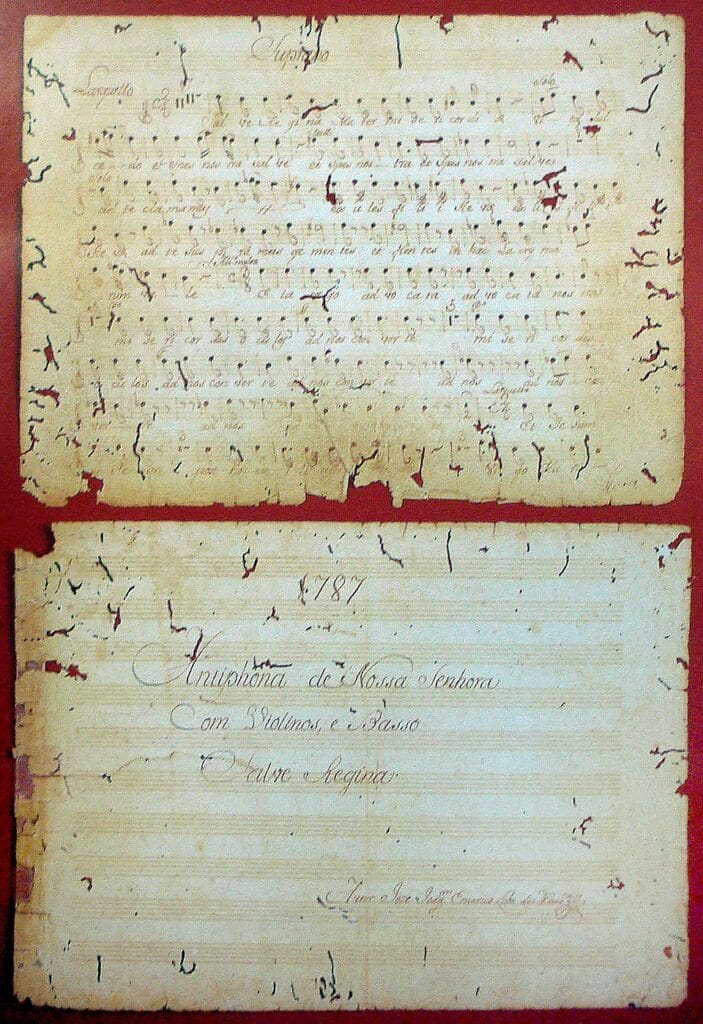
The Salve Regina arose during the Middle Ages and became one of the Church’s most treasured prayers to the Blessed Virgin Mary. First known as a Latin antiphon, it gave Christians words for turning to Mary during sorrow, temptation, and the hardships of earthly life. Its movement from exile and tears toward Jesus helped it pass from monasteries into the prayer of Catholics everywhere.
Origins of the Prayer
The exact author of the Salve Regina is uncertain. It is traditionally associated with Blessed Hermann of Reichenau, an eleventh-century Benedictine monk and scholar, although other medieval figures have also been named. Because the evidence does not establish one author with certainty, it is safest to regard the prayer as an ancient work received and preserved by the Church.
Its words reflect the spiritual concerns of medieval monastic life. Christians are described as exiles who mourn in a “vale of tears,” yet they do not lose hope. They turn to Mary as Mother of Mercy and ask her to lead them to Jesus, “the blessed fruit” of her womb. The Latin title Salve Regina simply means “Hail, Queen.”
The Salve Regina in the Prayer of the Church
The Salve Regina was first used as a sung Marian antiphon and became closely associated with Compline, the Church’s Night Prayer. Religious communities sang it near the close of the day, entrusting themselves to Mary before entering the silence of the night. It remains one of the four traditional Marian antiphons connected with the Church’s daily prayer.
Over time, the prayer spread beyond monasteries into churches, homes, processions, and other Catholic devotions. It became especially familiar as the prayer said near the end of the Rosary. Whether sung in Latin by a religious community or recited in English by a family, the Salve Regina retains the same purpose: to ask for Mary’s motherly prayers and to be led through her to Jesus Christ.
The Hail Holy Queen in the Rosary

The Hail Holy Queen is traditionally prayed near the end of the Rosary, after the five decades have been completed. Having meditated upon the life, death, and glory of Jesus through the mysteries, the faithful turn to Mary and ask for her continued prayers. The words gather together many of the Rosary’s central themes: sorrow and hope, earthly exile, trust in Mary’s motherly care, and the desire to be led to Jesus Christ.
Why the Rosary Ends with the Hail Holy Queen
The Rosary leads the faithful through the mysteries of Christ in union with His Mother. The Hail Holy Queen provides a fitting conclusion because it places the needs of those who have prayed before Mary and asks her to accompany them after the Rosary has ended.
The prayer also turns the heart toward heaven. Those who pray call themselves the “banished children of Eve” and acknowledge the suffering of this earthly life, yet they do not end in sadness. They ask Mary to show them Jesus, “the blessed fruit” of her womb. The final aim of the Rosary is not Mary alone, but a deeper knowledge and love of her Son.
After the Hail Holy Queen and its versicle and response, Catholics commonly continue with the Rosary Closing Prayer. Together, these prayers ask for Mary’s intercession and for the grace to live according to the mysteries that have just been contemplated.
When the Hail Holy Queen May Be Prayed
The Hail Holy Queen is most familiar as a concluding prayer of the Rosary, but it may also be prayed by itself. Catholics often turn to it during grief, fear, temptation, illness, or any time they need the comfort of Mary’s motherly prayers.
It may be prayed privately, with a family, in a parish, or with a prayer group. The prayer is also sung or recited in the Church’s tradition of daily prayer. Whether offered at the end of the Rosary or on its own, its purpose remains the same: to ask Mary to look with mercy upon her children and lead them faithfully to Jesus.
Frequently Asked Questions
No. Catholics worship God alone: Father, Son, and Holy Ghost. In the Hail Holy Queen, the faithful honor Mary and ask for her intercession. Her titles, including “holy Queen” and “Mother of mercy,” recognize the gifts and mission she received from God. The prayer ultimately leads to Jesus, “the blessed fruit of thy womb.” Mary does not replace Christ; she prays for the faithful and directs them toward Him.
The phrase describes humanity after the fall of Adam and Eve. As members of the fallen human family, we live in a world affected by sin, suffering, temptation, and death. Calling ourselves “poor” expresses humility and acknowledges that we cannot save ourselves. Calling ourselves “banished” reflects our longing for the perfect communion with God that was lost through sin and restored through Jesus Christ.
Yes. Anyone may pray the Hail Holy Queen. A person does not need to understand every Marian title before beginning. A non-Catholic who is learning about the faith, or a Catholic returning after many years, may pray it honestly and ask Mary to lead him closer to Jesus. The prayer can become a simple step toward a deeper relationship with Christ and a better understanding of Catholic devotion.
Begin honestly. You might first say, “Lord Jesus, help me understand Your Mother and draw me closer to You.” Then pray the Hail Holy Queen slowly, one line at a time. You do not need to force a particular feeling or pretend that every question has been resolved. Offer your uncertainty to God and ask Him to help you understand Mary’s place in the Christian life. A sincere desire for truth is already a meaningful beginning.
If you struggle with Mary or feel far from God, you can still begin the Hail Holy Queen in a simple, honest way. You might say first, “Lord Jesus, I am not sure how to come to Your Mother. Please help me.” Then pray the Hail Holy Queen slowly, even if one line at a time, and tell God you want the truth, not just a habit. You do not have to feel anything. You do not have to force tender words. Offer your confusion as part of the prayer. Remember that Jesus Himself gave Mary to the beloved disciple at the cross (Jn 19:26–27, Douay-Rheims). You can ask Him: “Show me why You gave her to me.” That simple act of trust is already a real prayer.
The Hail Holy Queen, also known by its Latin name, the Salve Regina, is one of the traditional closing prayers of the Rosary. It is followed by the versicle, “Pray for us, O holy Mother of God,” and the response, “That we may be made worthy of the promises of Christ.” Catholics then commonly pray the Rosary Closing Prayer beginning, “O God, whose only-begotten Son,” before ending with the Sign of the Cross.
More Rosary Resources
Rosary Prayers
- Queen of the Holy Rosary
- Sign of the Cross
- Apostles’ Creed
- Our Father
- Hail Mary
- Glory Be
- Fatima Prayer
- Hail Holy Queen (Salve Regina) (You are Here)
- Rosary Closing Prayer
- Fatima Pardon Prayer

Charles Rogers is a resident of South Carolina and a retired computer programmer by trade. Raised in various Christian denominations, he came to faith in Jesus Christ early in life. In 2012, he began experiencing authentic spiritual encounters with the Blessed Virgin Mary, which led him on a seven-year journey at her hands, that included alcohol addiction, a widow maker heart attack and death and conversion to the Catholic Faith. He is the exclusive author and owner of Two Percent Survival, a website dedicated to and created in honor of the Holy Mother. Feel free to email Charles at twopercentsurvival@gmail.com.

May Our Lady of the Rosary lead you deeper into the grace you have been given. Pray always, and trust the mercy of God while the door remains open.
— Two Percent Survival