

Litany for the Poor Souls in Purgatory
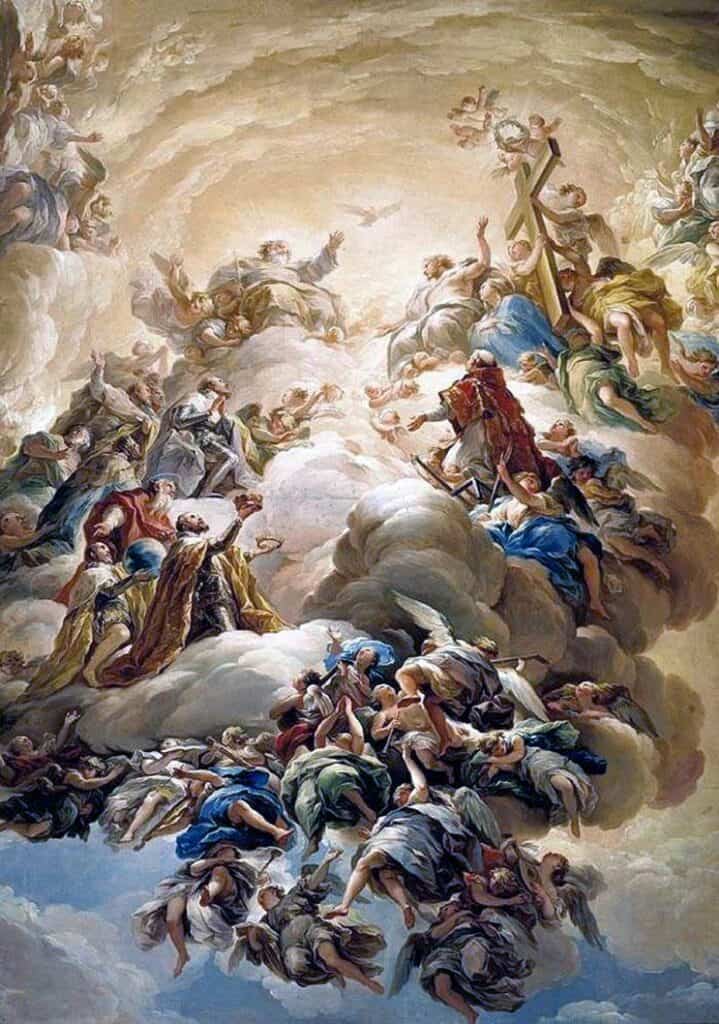
The Litany of the Poor Souls in Purgatory is a Catholic prayer asking God to have mercy on the faithful departed who are undergoing their final purification before heaven. The full prayer appears below, together with simple directions for praying it, an explanation of its petitions, and a printable PDF. It may be offered for a deceased loved one, forgotten souls, or all the faithful departed.
Litany of the Poor Souls in Purgatory Text
Lord, have mercy on us.
Christ, have mercy on us.
Lord, have mercy on us.
Christ, hear us.
Christ, graciously hear us.
God the Father of heaven, have mercy on them.
God the Son, Redeemer of the world, have mercy on them.
God the Holy Ghost, have mercy on them.
Holy Trinity, one God, have mercy on them.
Holy Mary, pray for them.
Holy Mother of God, pray for them.
Holy Virgin of virgins, pray for them.
St. Michael, pray for them.
All you holy Angels and Archangels, pray for them.
St. Joseph, pray for them.
All you holy Patriarchs and Prophets, pray for them.
St. John the Baptist, pray for them.
All you holy Apostles and Evangelists, pray for them.
All you holy Martyrs, pray for them.
All you holy Confessors, pray for them.
All you holy Virgins and Widows, pray for them.
All you Saints of God, pray for them.
Be merciful, spare them, O Lord.
Be merciful, graciously hear them, O Lord.
From all evil, deliver them, O Lord.
From Thy wrath, deliver them, O Lord.
From the rigor of Thy justice, deliver them, O Lord.
From the pains of Purgatory, deliver them, O Lord.
From their longings for Thee, deliver them, O Lord.
From the flames of Purgatory, deliver them, O Lord.
From the darkness of Purgatory, deliver them, O Lord.
By Thy Birth, deliver them, O Lord.
By Thy Cross and Passion, deliver them, O Lord.
By Thy Death and Burial, deliver them, O Lord.
By Thy glorious Resurrection, deliver them, O Lord.
By Thy admirable Ascension, deliver them, O Lord.
By the coming of the Holy Ghost, deliver them, O Lord.
By Thy coming to judgment, deliver them, O Lord.
We sinners, beseech Thee, hear us.
That Thou wouldst spare them, we beseech Thee, hear us.
That Thou wouldst pardon them, we beseech Thee, hear us.
That Thou wouldst release them from their pains, we beseech Thee, hear us.
That Thou wouldst shorten their time of suffering, we beseech Thee, hear us.
That Thou wouldst admit them into eternal rest, we beseech Thee, hear us.
That Thou wouldst receive them into the company of Thy Saints, we beseech Thee, hear us.
Lamb of God, who takest away the sins of the world, grant them rest.
Lamb of God, who takest away the sins of the world, grant them rest.
Lamb of God, who takest away the sins of the world, grant them eternal rest.
Christ, hear us.
Christ, graciously hear us.
Lord, have mercy on us.
Christ, have mercy on us.
Lord, have mercy on us.
Let us pray
O God, the Creator and Redeemer of all the faithful, grant to the souls of Thy servants departed the remission of all their sins; that through pious supplications they may obtain the pardon which they have always desired. Who livest and reignest world without end. Amen.
Prayer source note: This text is presented as a traditional Catholic private devotion for the faithful departed. A reliable printed source for this exact form has not yet been identified, so it is not presented as an officially approved liturgical text.
What Is the Litany of the Poor Souls in Purgatory?
The Litany of the Poor Souls in Purgatory is a traditional private devotion offered for the dead. It follows the familiar form of a Catholic litany: the faithful call upon the Holy Trinity, ask the Blessed Virgin Mary and the saints to intercede, appeal to the saving mysteries of Jesus Christ, and plead for pardon and eternal rest. The prayer is also called the Litany of the Poor Souls in Purgatory or the All Souls Litany.
How to Pray the Litany of the Poor Souls in Purgatory
Begin by choosing the person or souls for whom the litany will be offered. The intention may be for a deceased loved one, the forgotten souls who have no one to pray for them, or all the faithful departed.
The litany may be prayed alone or with others. In a group, one person reads the invocations and the others give the responses. Pray slowly enough to mean each plea rather than rushing through the repeated words.
Keep the intention before God throughout the prayer. When the Blessed Virgin Mary and the saints are invoked, ask them to join their prayers to the petition. When the saving mysteries of Christ are named, place all confidence in His Passion, Death, Resurrection, and victory over death.
The earthly time in which a person can grow in merit ends at death, yet the Church continues to aid the faithful departed through suffrages offered for them. The Mass holds the first place, while prayers, sacrifices, almsgiving, indulgences, and works of penance may also be offered on their behalf.
This litany may be prayed at any time. It is especially fitting on All Souls’ Day, throughout November, after Mass, on the anniversary of a death, or whenever a deceased loved one comes to mind.
Meaning of the Litany of the Poor Souls in Purgatory
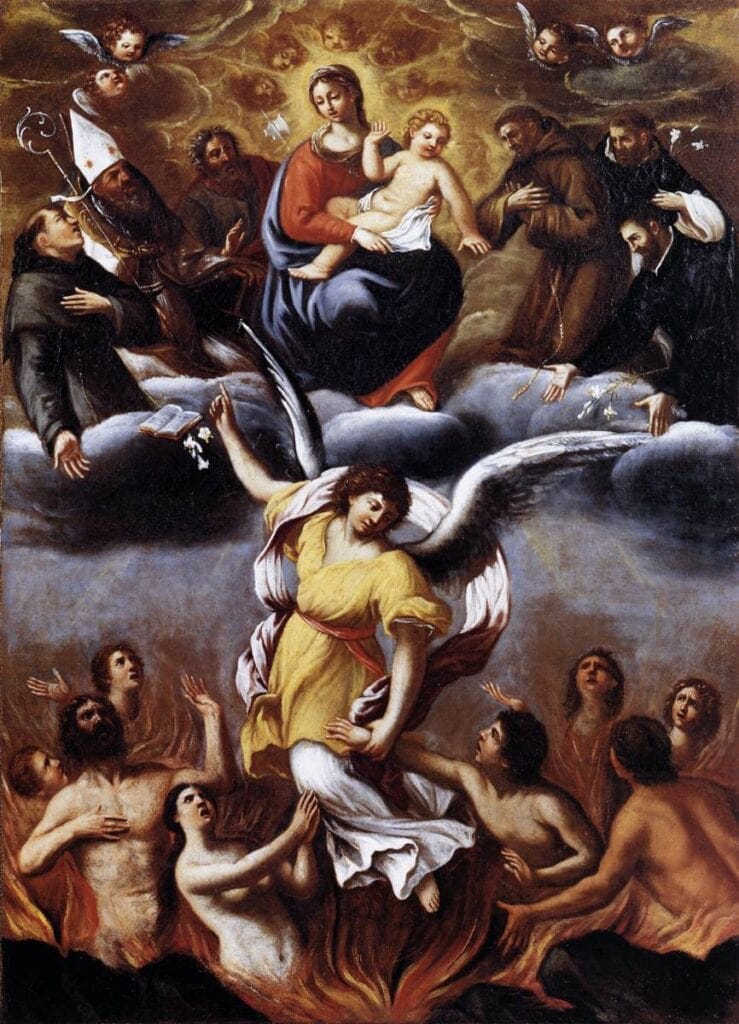
The petitions express the Church’s faith in both God’s justice and His mercy. The litany begins before the Holy Trinity, asks the Blessed Virgin Mary and the saints to intercede, appeals to the saving work of Jesus Christ, and ends by pleading for pardon, rest, and entrance into heavenly glory.
The prayer also expresses the communion of saints. The faithful on earth, the souls being purified, and the saints in heaven remain united in Christ. For this reason, love for the departed does not end at death. As Sacred Scripture says,
“It is therefore a holy and wholesome thought to pray for the dead, that they may be loosed from sins” (2 Machabees 12:46).
Opening Petitions
The first invocations—“Lord, have mercy” and “Christ, hear us”—place the one praying before God in humility. Before asking help for the departed, the Church acknowledges that every grace comes from Him.
The invocation of the Father, Son, and Holy Ghost makes the source of that grace clear. The Blessed Virgin Mary and the saints do not replace God; they intercede before Him. Every petition rests on His mercy rather than on human worthiness.
Scripture that encourages this confidence:
“Let us go therefore with confidence to the throne of grace: that we may obtain mercy, and find grace in seasonable aid” (Hebrews 4:16).
Invocation of the Blessed Virgin Mary and the Saints
After addressing God, the litany asks the Blessed Virgin Mary and the saints to intercede. This does not turn the prayer away from God. It reveals the unity of His Church across earth, Purgatory, and heaven.
Mary is invoked first because she is the Mother of God and Mother of the Church. The saints, perfected in charity, also pray for their brothers and sisters in Christ. Scripture teaches,
“Pray one for another, that you may be saved” (James 5:16).
The communion of saints is therefore lived in prayer. Death does not divide the Mystical Body of Christ, and the faithful may ask the saints in heaven to join their prayers for the departed.
Prayers for Deliverance
With the response “Deliver them, O Lord,” the litany turns to the suffering of purification and the souls’ longing for complete union with God. The holy souls are saved, but every remaining effect of sin must be healed before they enter the full joy of heaven.
The traditional words “fire,” “flames,” and “darkness” express the seriousness of purification and the soul’s separation from the beatific vision. They should be read within the Church’s teaching that Purgatory is the final purification of the elect, entirely different from the punishment of the damned.
St. Paul writes that a person
“shall be saved, yet so as by fire” (1 Corinthians 3:15).
The repeated plea is therefore filled with hope. The faithful ask God to aid the departed and bring their purification to completion according to His mercy.
Appeals Through the Life of Jesus Christ
The appeals to Christ’s Birth, Passion, Death, Resurrection, and Ascension confess that every grace given to the departed comes through His redemption. The prayer rests upon the saving work of Jesus, not upon human power.
The Cross stands at the center. Christ offered Himself for the forgiveness of sins, and the Church asks that the fruits of His sacrifice be applied to the souls undergoing purification. His Resurrection and Ascension proclaim that death has been conquered and heaven has been opened.
The faithful therefore place their hope in Christ, who “gave himself a redemption for all” (1 Timothy 2:6) and who alone leads the holy souls into eternal life.
Final Petitions for the Souls
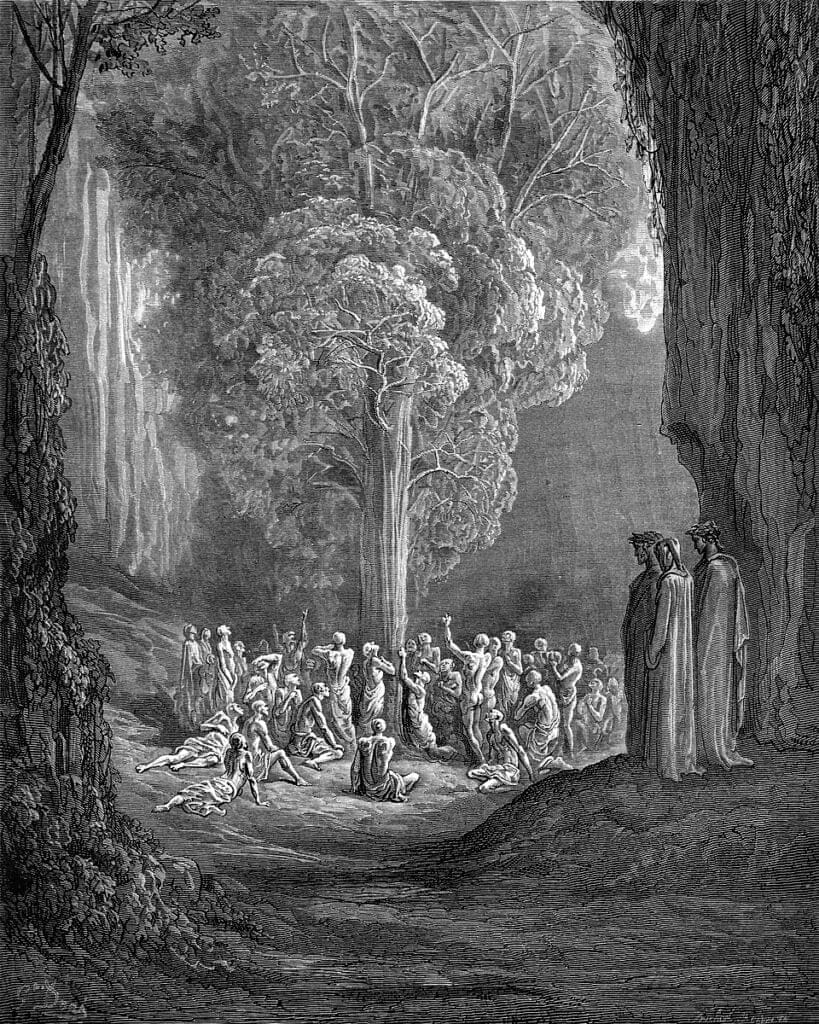
The final petitions gather the purpose of the litany into one plea: pardon, release, eternal rest, and entrance into the company of the saints. The prayer now turns from present purification to the glory promised to those who die in the Lord.
The repeated words “grant them rest” express confidence that purification will end. Scripture gives voice to this hope:
“Blessed are the dead who die in the Lord… that they may rest from their labours” (Apocalypse 14:13).
The goal is not relief alone, but perfect communion with God, where every wound of sin is healed and every sorrow has ended.
Closing Prayer
The closing prayer addresses God as Creator and Redeemer and entrusts the faithful departed to His mercy. It gathers the whole litany into a final act of confidence.
God created each soul, Christ redeemed mankind, and God alone completes the work of purification. The Church therefore asks Him to grant pardon and bring the departed into glory.
The final words teach the faithful to entrust the departed completely to God. The Church continues to pray for them in charity while leaving their purification and entrance into heavenly glory to His justice and mercy.
Why Catholics Pray for the Poor Souls in Purgatory
Catholics pray for the dead because the Church teaches that the faithful departed can be aided by the prayers and sacrifices offered for them. The souls in Purgatory died in God’s grace and friendship and are assured of heaven, but they still undergo the final purification needed to enter the joy of God’s presence.
Sacred Scripture calls prayer for the dead “a holy and wholesome thought” (2 Machabees 12:46). From the earliest days of the Church, Christians have remembered the departed and offered suffrages for them, above all the Eucharistic Sacrifice.
The Catechism also commends prayer, almsgiving, indulgences, and works of penance offered on behalf of the dead. These acts are spiritual works of mercy because they are given to those who cannot return an earthly favor.
Prayer for the dead also expresses the communion of saints.
“For whether we live, we live unto the Lord; or whether we die, we die unto the Lord” (Romans 14:8).
All who belong to Christ remain united in Him.
Remembering the departed prepares the living for their own death and judgment. It teaches the faithful to trust God’s mercy, turn away from sin, and practice charity that reaches beyond the grave.
Frequently Asked Questions
What is the Litany of the Poor Souls in Purgatory?
The Litany of the Poor Souls in Purgatory is a traditional Catholic private devotion in which the faithful ask God to have mercy on the departed who are undergoing final purification. It invokes the Holy Trinity, asks the Blessed Virgin Mary and the saints to intercede, appeals to the saving mysteries of Christ, and pleads for eternal rest.
Why do Catholics pray for the souls in Purgatory?
Catholics pray for the souls in Purgatory because Scripture and the teaching of the Church affirm that prayers offered for the dead can aid them. The Catechism teaches that the Church has always honored the dead and offered suffrages for them, above all the Eucharistic Sacrifice. Prayer for the departed is a spiritual work of mercy.
Can praying this litany help the souls in Purgatory?
Yes. The Church teaches that suffrages offered for the dead truly aid them. The faithful may confidently offer this litany while leaving the exact manner in which God applies the prayer to His wisdom and mercy. No sincere prayer offered in charity is wasted.
Do the souls in Purgatory know we are praying for them?
The Church has not defined exactly how the souls in Purgatory perceive each prayer offered for them. Catholic tradition encourages the faithful to trust that such charity is known to God and truly benefits the departed. The belief that grateful souls later intercede for their benefactors is a pious Catholic tradition, not a defined promise concerning each individual prayer.
How often should this litany be prayed?
There is no required schedule. The litany may be prayed at any time and may be offered daily or weekly. It is especially fitting on All Souls’ Day, throughout November, on the anniversary of a death, after Mass, or whenever a deceased loved one is remembered.
Is this an Official Liturgical Litany?
This text is best presented as a traditional private devotion unless a reliable source of formal ecclesiastical approval is documented. It is not used in place of the Church’s liturgy, the Mass, or the official prayers appointed for the faithful departed.
Related Catholic Litanies and Printable PDFs
Catholic Litany Prayers

Charles Rogers is a resident of South Carolina and a retired computer programmer by trade. Raised in various Christian denominations, he came to faith in Jesus Christ early in life. In 2012, he began experiencing authentic spiritual encounters with the Blessed Virgin Mary, which led him on a seven-year journey at her hands, that included alcohol addiction, a widow maker heart attack and death and conversion to the Catholic Faith. He is the exclusive author and owner of Two Percent Survival, a website dedicated to and created in honor of the Holy Mother. Feel free to email Charles at twopercentsurvival@gmail.com.

May Our Lady of the Rosary lead you deeper into the grace you have been given. Pray always, and trust the mercy of God while the door remains open.
— Two Percent Survival