

Rosary Closing Prayer
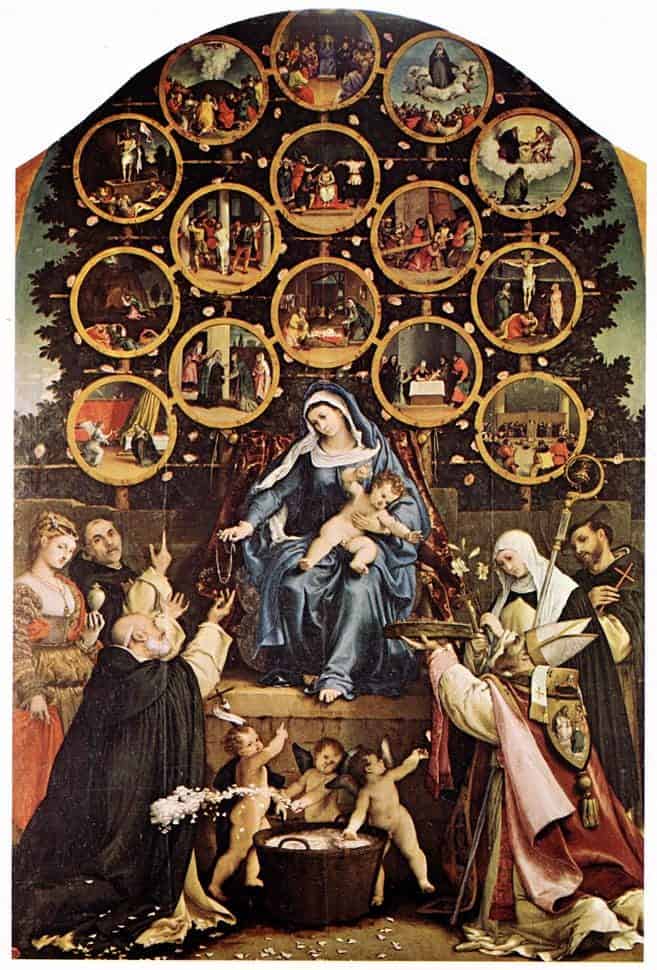
The Rosary Closing Prayer is traditionally said after the Hail Holy Queen near the end of the Rosary. Addressed to God the Father, it recalls the life, death, and Resurrection of Jesus Christ and asks for the grace to imitate the mysteries just contemplated and receive what they promise.
Below is the complete prayer, followed by an explanation of its meaning and its place in the conclusion of the Rosary.
Rosary Closing Prayer
O God, whose only begotten Son, by His life, death, and resurrection, has purchased for us the rewards of eternal life; grant, we beseech Thee, that meditating upon these mysteries of the Most Holy Rosary of the Blessed Virgin Mary, we may imitate what they contain and obtain what they promise, through the same Christ our Lord. Amen.
Meaning of the Rosary Closing Prayer

The Rosary Closing Prayer gathers the whole devotion into one final request. After meditating on the life of Jesus with Mary, the faithful turn to God the Father and ask that the mysteries bear fruit in daily life. Each phrase points back to Christ—who He is, what He has done, and the eternal life He has won for those who remain faithful to Him.
The prayer also shows that the Rosary is more than the repetition of familiar words. Its purpose is to lead the soul into the mysteries of Christ, shape the heart according to His example, and open it to the grace He gives.
O God, Whose Only Begotten Son
The prayer begins by addressing God the Father. This follows the form of many prayers of the Church, which are offered to the Father through the Son in the Holy Ghost. The person praying does not approach God alone but comes through Jesus Christ, the eternal Son who has opened the way to the Father.
The words “only begotten Son” confess that Jesus is not merely a prophet, teacher, or holy man. He is the eternal Son of God, equal to the Father in His divine nature. Saint John writes, “God so loved the world, as to give his only begotten Son” (John 3:16, Douay-Rheims). The same Son took flesh from the Blessed Virgin Mary and entered human history for the salvation of mankind.
By beginning with this truth, the prayer places the entire Rosary within the mystery of Christ. Every Joyful, Luminous, Sorrowful, and Glorious Mystery reveals something about the Son whom the Father sent out of love.
By His Life, Death, and Resurrection
The prayer next recalls the whole saving work of Jesus Christ. His earthly life, sacrificial death, and glorious Resurrection belong together as one work of redemption.
Christ’s life reveals the love and holiness of God. His words teach the way of truth, while His actions show mercy toward sinners, the sick, the poor, and all who seek Him. His death upon the Cross is the perfect sacrifice offered for the sins of mankind. His Resurrection is the victory over sin and death and the beginning of the new life promised to the faithful.
These mysteries form the heart of the Rosary. The faithful do not meditate on isolated events but on the one saving mission of Christ. From the Annunciation to the Coronation of Mary, every mystery points toward what God has done through His Son.
Has Purchased for Us the Rewards of Eternal Life
The word “purchased” expresses the great price Christ paid for human redemption. Saint Peter teaches that the faithful were redeemed “with the precious blood of Christ, as of a lamb unspotted and undefiled” (1 Peter 1:19, Douay-Rheims).
Eternal life could not be gained through human effort alone. Sin separated mankind from God, and no earthly work could repair that wound. Jesus freely offered Himself upon the Cross and rose from the dead so that those united with Him might receive forgiveness, grace, resurrection, and life with God forever.
The “rewards of eternal life” are not wages earned apart from grace. They are gifts Christ has won and now offers to those who believe in Him, receive His grace, and remain faithful. The greatest reward is God Himself: to see Him face to face, love Him without end, and share forever in the joy of Heaven.
Meditating Upon These Mysteries
The Rosary joins vocal prayer with meditation. While the lips pray the Our Father, Hail Mary, and Glory Be, the mind and heart rest upon the mysteries of Christ.
Meditation does not require a person to form a perfect picture of every scene. It may be as simple as considering one word from Scripture, one action of Jesus, the faith of Mary, or one grace connected with the mystery. During the Crucifixion, the soul may consider Christ’s mercy. During the Resurrection, it may renew its hope. During the Annunciation, it may ask for Mary’s humble obedience.
The closing prayer asks God to accept this meditation and make it fruitful. Even when attention has wandered or prayer has felt dry, the faithful may trust that God sees the desire to remain with Him.
Of the Most Holy Rosary of the Blessed Virgin Mary
Mary is named because the Rosary is prayed with her and through her motherly help. She was present during many of the events upon which the faithful meditate, and she kept the mysteries of Christ within her heart. Saint Luke writes, “Mary kept all these words, pondering them in her heart” (Luke 2:19, Douay-Rheims).
The Rosary follows her example. Mary teaches the faithful to remember the words and deeds of Jesus, hold them within the heart, and respond with faith. She never draws attention away from her Son. Her words at Cana remain the pattern of her motherly care: “Whatsoever he shall say to you, do ye” (John 2:5, Douay-Rheims).
Calling it the Rosary of the Blessed Virgin Mary honors the mother whom Christ gave to His disciples. Through the mysteries, she accompanies the faithful and leads them into a deeper love of Jesus.
Imitate What They Contain and Obtain What They Promise
The final request names the two main fruits of meditation: imitation and grace.
To “imitate what they contain” means allowing the mysteries to shape daily conduct. The humility of the Annunciation teaches surrender to God. The charity of the Visitation teaches service to others. The patience of Christ during His Passion teaches endurance. His forgiveness from the Cross teaches mercy. His Resurrection calls the faithful to live in hope and newness of life.
To “obtain what they promise” means asking for the graces revealed in the mysteries. These include faith, hope, charity, repentance, courage, purity, perseverance, peace, and the promise of eternal life. Such gifts come from Christ, not from the mere act of repeating prayers.
The Rosary reaches its proper end when prayer begins to change the person who prays. The mysteries are meant to pass from the lips into the heart and from the heart into daily life. Through Christ, the faithful ask for the grace to become what they have contemplated.
Through the Same Christ Our Lord
The prayer ends by returning every request to Jesus Christ. The words “the same Christ” refer to the only begotten Son named at the beginning—the One whose life, death, and Resurrection have won the rewards of eternal life.
Christ is not only the subject of the Rosary mysteries. He is also the mediator through whom the faithful approach the Father. Jesus said, “I am the way, and the truth, and the life. No man cometh to the Father, but by me” (John 14:6, Douay-Rheims). Every grace requested in the prayer comes through Him because salvation is found in Him alone.
This ending also shows the true direction of the Rosary. The faithful meditate with Mary, but the prayer leads them to her Son. Mary helps the soul contemplate Jesus, imitate His virtues, trust in His promises, and remain close to Him.
By ending with “through the same Christ our Lord,” the Church places the whole Rosary in the hands of Jesus. The mysteries begin with Him, receive their meaning from Him, and lead the faithful toward eternal life with Him. The final “Amen” expresses faith that God hears the prayer and will grant what is needed for salvation.
When Is the Rosary Closing Prayer Said?

The Rosary Closing Prayer is usually said near the very end of the Rosary, after the five decades and the Hail Holy Queen. It brings the whole devotion before God and asks that the mysteries just contemplated may shape the believer’s life and lead the soul toward eternal life.
This prayer forms part of the customary conclusion of the Rosary, though Catholics may add other approved prayers according to family custom, parish practice, or personal devotion.
Its Place After the Hail Holy Queen
After the fifth decade, the Rosary commonly continues with the Hail Holy Queen. The leader then says:
“Pray for us, O holy Mother of God.”
The others respond:
“That we may be made worthy of the promises of Christ.”
The leader says, “Let us pray,” and the Rosary Closing Prayer follows:
“O God, whose only begotten Son, by His life, death, and resurrection, has purchased for us the rewards of eternal life…”
Its place after the Hail Holy Queen is fitting. The faithful have asked Mary to turn her merciful eyes toward them and show them Jesus. They then turn directly to God the Father and ask for the grace to imitate the mysteries of Christ and obtain what they promise.
The prayer does not merely announce that the Rosary has ended. It gathers the devotion into one final plea. The soul asks that the mysteries contemplated during prayer may continue to bear fruit after the Rosary is finished.
Other Prayers That May Follow
The Rosary Closing Prayer is often followed by the Sign of the Cross, which brings the devotion to its formal end. Some Catholics also add other prayers before making the Sign of the Cross.
These may include prayers for the intentions of the Holy Father, the Saint Michael Prayer, the Memorare, or a prayer for the faithful departed. Families and prayer groups sometimes include prayers for the Church, for peace, for the sick, or for a special need.
Such additions are optional. They should not overshadow the mysteries of Christ or make the conclusion feel needlessly long. The Rosary Closing Prayer already gives the devotion a complete ending by asking God to help the faithful live what they have contemplated.
Whether the Rosary ends with this prayer alone or includes other devotions, its final purpose remains the same: to draw the soul closer to Jesus Christ through the loving help of the Blessed Virgin Mary.
Why the Rosary Ends with This Prayer

The Rosary ends with this prayer because meditation is meant to lead beyond the words spoken during the five decades. The faithful have contemplated the life, death, and Resurrection of Jesus Christ; now they ask God to make those mysteries fruitful in the soul.
The prayer gathers the whole Rosary into one final petition. It asks for the grace to imitate Christ, receive what He has promised, and continue toward the eternal life He has won.
It Gathers the Mysteries into One Prayer
During the Rosary, each mystery is considered separately. The faithful meditate on events such as the Annunciation, the Nativity, the Crucifixion, the Resurrection, and the Descent of the Holy Ghost. Each decade places one part of Christ’s saving work before the mind and heart.
The Rosary Closing Prayer brings these separate meditations together. Its words recall the life, death, and Resurrection of Jesus and refer to all the events just contemplated as “these mysteries of the Most Holy Rosary.”
In this way, the prayer offers the entire devotion to God the Father through Christ. The joys, sorrows, sacrifices, victories, and graces of the mysteries are gathered into one final act of faith.
It Asks for Grace to Live the Mysteries
The Rosary is not meant to end when the last words are spoken. The mysteries should continue to influence how the faithful think, speak, suffer, forgive, serve, and trust in God.
For this reason, the closing prayer asks that those who meditate upon the mysteries may “imitate what they contain.” The humility of Mary at the Annunciation, her charity during the Visitation, Christ’s patience during His Passion, His mercy from the Cross, and His victory in the Resurrection all provide examples for Christian life.
The faithful cannot imitate these virtues by human strength alone. They need the grace of God. The closing prayer therefore asks that meditation may become action and that the virtues contemplated in the Rosary may take root in daily life.
It Directs the Soul Toward Eternal Life
The prayer also reminds the faithful of the final purpose of Christian life. Jesus Christ, through His life, death, and Resurrection, has purchased the rewards of eternal life.
This promise gives meaning to every mystery of the Rosary. The sorrowful events do not end at the Cross, and the trials of earthly life do not have the final word. Christ has risen, death has been defeated, and Heaven has been opened to those who remain united with Him.
By ending with this prayer, the Rosary directs the soul toward that hope. The faithful ask not only for help with present needs but for the grace to persevere in faith, grow in holiness, and one day share eternal life with Christ.
Frequently Asked Questions
The prayer at the end of the Rosary is commonly called the Rosary Closing Prayer, the concluding prayer, or the final prayer of the Rosary. It begins, “O God, whose only begotten Son…” and is ordinarily said after the Hail Holy Queen.
The Rosary Closing Prayer is part of the customary conclusion of the Rosary, but omitting it does not make the Rosary invalid. A person who forgets the prayer, does not yet know it, or must end the Rosary early has still truly prayed.
Nevertheless, this prayer gives the Rosary a fitting conclusion. It gathers the mysteries together and asks God for the grace to imitate what they contain and obtain what they promise.
Yes. The Rosary Closing Prayer may also be used as a private prayer outside the full Rosary, especially after meditating on the life, death, and Resurrection of Jesus Christ.
It may be prayed after a single decade, during family prayer, or following quiet meditation on one of the Rosary mysteries. Its words ask God to make meditation fruitful and lead the soul toward eternal life.
The Hail Holy Queen is addressed to the Blessed Virgin Mary. It honors her as the Mother of mercy, asks for her intercession, and begs her to lead the faithful to Jesus.
The Rosary Closing Prayer is addressed to God the Father. It recalls the life, death, and Resurrection of Christ and asks that those who meditate upon the Rosary mysteries may imitate their virtues and receive the graces they promise.
The two prayers therefore have different purposes, even though both are traditionally prayed near the end of the Rosary.
The Rosary Closing Prayer comes from the prayer tradition of the Church. Its Latin text begins, Deus, cujus Unigenitus per vitam, mortem et resurrectionem suam. It was used as the Collect for the traditional Mass of the Feast of Our Lady of the Most Holy Rosary, celebrated on October 7.
Over time, the prayer was included in Catholic prayer books and Rosary manuals as the customary concluding prayer after the Hail Holy Queen. This is why it is now closely associated with the traditional ending of the Rosary.
More Rosary Resources
Rosary Prayers

Charles Rogers is a resident of South Carolina and a retired computer programmer by trade. Raised in various Christian denominations, he came to faith in Jesus Christ early in life. In 2012, he began experiencing authentic spiritual encounters with the Blessed Virgin Mary, which led him on a seven-year journey at her hands, that included alcohol addiction, a widow maker heart attack and death and conversion to the Catholic Faith. He is the exclusive author and owner of Two Percent Survival, a website dedicated to and created in honor of the Holy Mother. Feel free to email Charles at twopercentsurvival@gmail.com.

May Our Lady of the Rosary lead you deeper into the grace you have been given. Pray always, and trust the mercy of God while the door remains open.
— Two Percent Survival