

Hail Holy Queen Prayer
(Salve Regina)
Understanding the Rosary Prayers
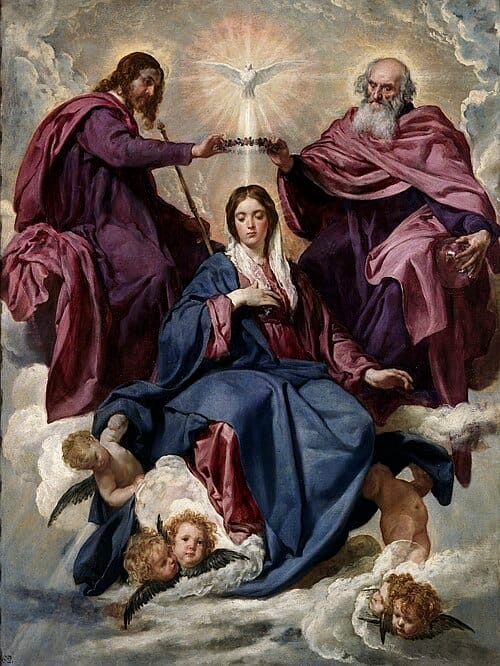
Introduction to the
Hail Holy Queen Prayer
The Hail Holy Queen, or Salve Regina, is the final prayer of the Rosary and one of the Church’s most loved Marian prayers. In it, Catholics turn to Mary as “Mother of mercy,” trusting that she leads them to Jesus, the “blessed fruit” of her womb (Lk 1:42, Douay-Rheims). The prayer gives words to the experience of life as a “vale of tears,” yet it does not end in despair. It ends in hope, asking Mary to “show” Jesus to the soul at the hour of death. This section will give a simple path into the Hail Holy Queen: what it says, why the Church prays it, and how it can help someone who feels tired, guilty, or far from God to begin again with Mary’s help.
What Is the Hail Holy Queen?
The Hail Holy Queen, or Salve Regina, is a traditional Marian prayer in which Catholics turn to Mary as their Queen and Mother of Mercy. It is usually prayed at the end of the Rosary, but it can be used at any time. In this prayer, the faithful speak honestly about life’s trials—calling this life a “vale of tears”—and ask Mary to pray for them and lead them to Jesus. The Hail Holy Queen does not stand alone; it always points to Christ, “the blessed fruit of thy womb” (Lk 1:42, Douay-Rheims). By praying it, a person learns to trust Mary’s care, ask for her intercession, and hope for the day when she will “show” them Jesus face to face.
Place of the Prayer in Catholic Life
The Hail Holy Queen holds a steady place in Catholic life as both a common and a very personal prayer. Most Catholics meet it first at the end of the Rosary, where it gathers up all the mysteries and hands them to Mary to present to Jesus. It is also used in many communities at night prayer, in processions, and at Marian devotions, especially during times of trial or grief. For the faithful who struggle, it becomes a simple way to ask for Mercy and hope when longer prayers feel hard. Parents may teach it to children, priests may suggest it in confession, and the sick often cling to it near death. In all these moments, it helps the Church look to Mary so that she may lead hearts closer to Christ.
How This Page Will Help
This page is meant to help you pray the Hail Holy Queen with clear faith and real attention, not just from habit. First, it will explain the meaning of each part of the prayer in simple terms, so you know what you are saying to Mary and why it matters. Then it will show how the themes of sorrow, Mercy, and hope in the prayer connect to your daily life, your sins, and your worries. You will also find guidance on how to pray the Salve Regina more slowly, how to use it at the end of the Rosary, and how to turn to it in times of fear or confusion, so it becomes a steady help on your path to Jesus.
Text of the Hail Holy Queen
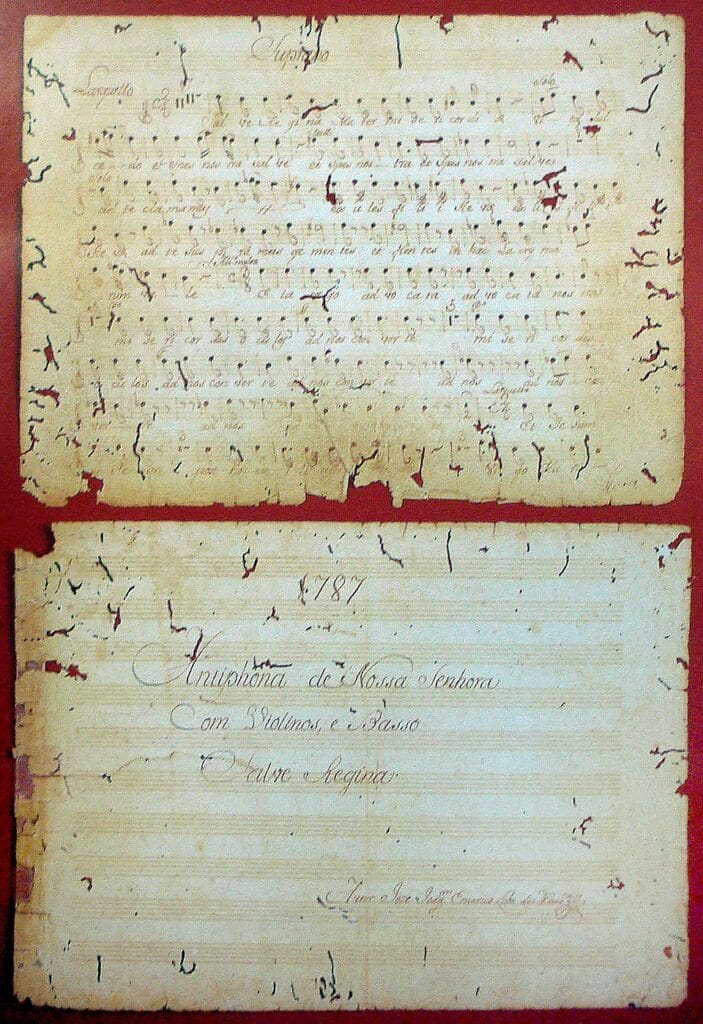
English Text
Hail, holy Queen,
Mother of Mercy!
Our life, our sweetness, and our hope!
To thee do we cry, poor banished children of Eve;
to thee do we send up our sighs, mourning and weeping in this valley of tears.
Turn, then, most gracious Advocate,
thine eyes of mercy toward us;
and after this our exile show unto us the blessed fruit of thy womb, Jesus;
O clement, O loving, O sweet Virgin Mary.
Pray for us,
O Holy Mother of God,
that we may be made worthy of the promises of Christ.
Main Parts of the Hail Holy Queen
The Hail Holy Queen can be seen in a few clear parts. First comes the greeting: “Hail, holy Queen, Mother of mercy, our life, our sweetness, and our hope,” which honors Mary with titles that speak of her care for sinners. Then the prayer describes our condition: “poor banished children of Eve,” who “send up our sighs” and “mourn and weep in this vale of tears.” Next comes a plea: we beg Mary, “turn then, most gracious advocate, thine eyes of mercy toward us,” asking for her intercession. The final part looks toward heaven: “after this our exile, show unto us the blessed fruit of thy womb, Jesus,” and ends with a loving triple cry, “O clement, O loving, O sweet Virgin Mary.”
“Hail, Holy Queen” as an Address to Mary
When we say “Hail, holy Queen,” we speak directly to Mary as a real person, now body and soul in heaven with her Son. “Hail” is a simple greeting, like the angel’s “Hail, full of grace” at the Annunciation (Lk 1:28, Douay-Rheims). We call her “Queen” because Christ, the King, has raised His Mother to share in His reign, and “Mother of mercy” because God has given her a special care for sinners. This address is not worship; that belongs to God alone. It is a child speaking to a mother, asking her to notice our need and bring it to Jesus. Each time we begin the prayer, we step under her care once more and invite her to act as Queen for us.
From Sorrow to Confidence in the Ending
The Hail Holy Queen begins in sorrow but does not stay there. We call ourselves “poor banished children of Eve,” who “mourn and weep in this vale of tears,” and we speak honestly about sin, fatigue, and grief. Then the prayer moves to a strong request: “Turn then, most gracious advocate, thine eyes of mercy toward us.” The tone changes. We no longer only describe our trouble; we look up and ask Mary to act for us. The ending looks beyond this life: “after this our exile, show unto us the blessed fruit of thy womb, Jesus.” That is the heart of our confidence. With Mary’s help, exile will pass, and we will see Christ face to face. The triple cry, “O clement, O loving, O sweet Virgin Mary,” is a final act of trust.
Biblical and Historical Foundations
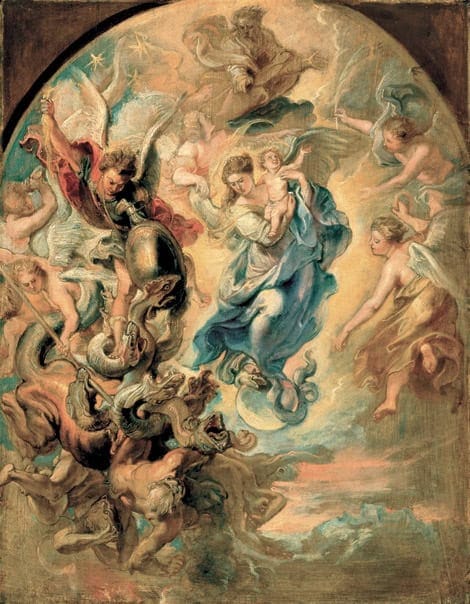
The Hail Holy Queen is not a Bible verse, but its titles and images come from Scripture and the Church’s living prayer. Mary is greeted as Queen and Mother of Mercy because she is the Mother of the King (Lk 1:32–33) and is given to the disciple as Mother at the cross (Jn 19:26–27, Douay-Rheims). Her royal dignity appears in the “woman clothed with the sun,” crowned with twelve stars (Rev 12:1). The “poor banished children of Eve” echo the fall in Genesis and our sense of exile from paradise. Historically, the Salve Regina arose in the Middle Ages and was soon adopted by monks at Compline and by the faithful in Marian processions. Over the centuries, it became one of the Church’s great “antiphons,” closing the day and, later, the Rosary.
Mary’s Queenship and Mercy
The Hail Holy Queen calls Mary “holy Queen” and “Mother of mercy” because Scripture hints at both her royal and her merciful mission. Jesus is foretold as the King who will sit on “the throne of David” and “reign in the house of Jacob for ever” (Lk 1:32–33, Douay-Rheims). In the Old Testament, the King’s Mother held a special place of honor and intercession, as seen when Bathsheba sits at Solomon’s right hand. In the Apocalypse, the “woman clothed with the sun”, crowned with twelve stars, suggests a heavenly queen who shares in her Son’s victory (Apoc 12:1, Douay-Rheims). At Cana and at the cross, Mary turns toward human need and points to Christ (Jn 2:1–11; Jn 19:26–27, Douay-Rheims), a pattern of Mercy that the prayer reflects.
“Vale of Tears” and Biblical Images of Exile
When the Hail Holy Queen speaks of this life as a “vale of tears,” it gives a name to the pain that marks human history after the fall. Adam and Eve are sent out of Eden, and the ground is cursed with toil, thorns, and death (Gen 3:16–19, Douay-Rheims). Israel later knows exile in Babylon and cries by the rivers, unable to sing with joy in a strange land (Ps 136:1–4, Douay-Rheims). These scenes show both loss and longing. The phrase “poor banished children of Eve” gathers all of this into one line: we live away from our true home, wounded by sin, carrying sorrow in the heart. By using this language, the prayer teaches the soul to be honest about suffering while still turning to Mary for help and to God for final rest.
Origins and Development of the Salve Regina
The Salve Regina took shape in the Middle Ages, probably in the 11th century, and is often linked to Blessed Hermann of Reichenau, a monk known for his learning and love for Mary. At first, it was sung in monasteries as an antiphon, a closing Marian chant for night prayer. Over time, it became one of four great seasonal antiphons to the Blessed Virgin, especially used from Trinity Sunday until Advent. Pilgrims, confraternities, and parish processions then carried it beyond the monastery walls, so that ordinary faithful learned to sing it in sorrow and in danger. By the late Middle Ages and after the Council of Trent, the Church commonly placed the Hail Holy Queen at the end of the Rosary. In this way, a monastic chant became a familiar prayer for the whole Church.
Use in Monastic and Parish Prayer
When Catholics call Mary “Queen” in the Hail Holy Queen, they speak about her place in the plan of God. Jesus is the King whose kingdom will have no end (Lk 1:32–33, Douay-Rheims). As His Mother, Mary shares in His royal dignity, not as a rival, but as a mother who serves the King and cares for His people. She is “Mother of mercy” because she gave flesh to the One who is Mercy Himself and continues to intercede for sinners with a mother’s concern. The Church teaches that her maternal care did not stop at the Assumption but continues from heaven (CCC 969). When the prayer addresses her this way, it invites every soul, even one ashamed or afraid, to approach her with trust.
Mary as Queen and Mother of Mercy
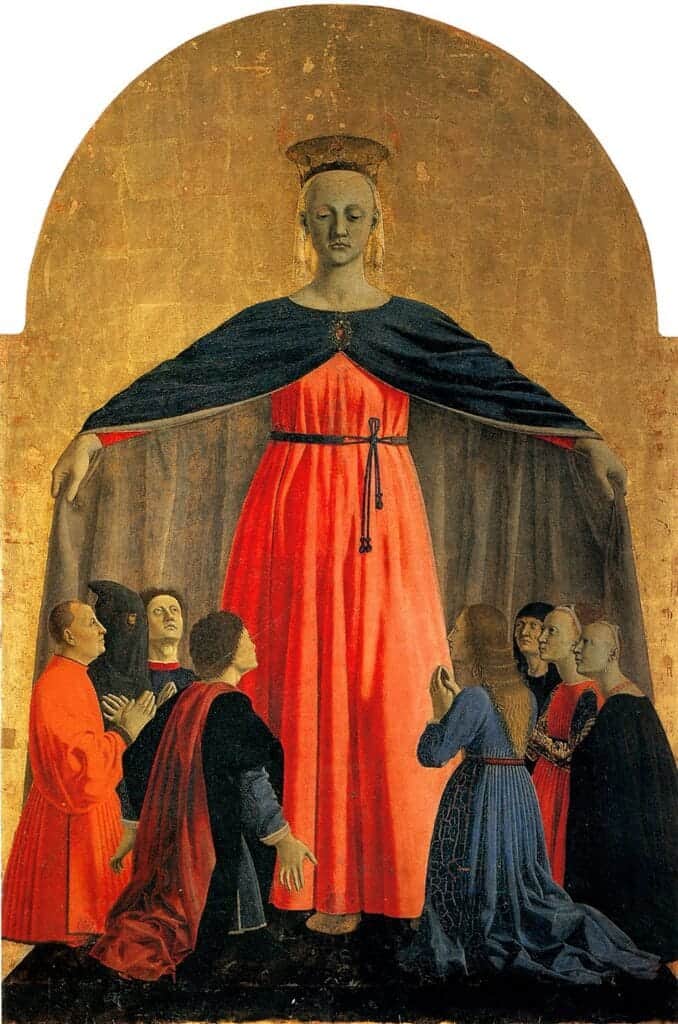
The Hail Holy Queen begins by calling Mary “holy Queen” and “Mother of mercy.” She is Queen because her Son is the King whose reign will never end (Lk 1:32–33, Douay-Rheims). In the Old Testament, the King’s Mother held a place of special honor and intercession; the Church sees this fulfilled in Mary beside Christ in heaven. She is “Mother of mercy” because she carried in her womb the One who is Mercy in person and now shares His concern for sinners. The Church teaches that her spiritual motherhood continues from heaven, as she cares for the brethren of her Son and helps them on their way to salvation (CCC 969). When the prayer uses these titles, it invites every Catholic to come to her with trust, even in weakness and sin.
Why the Church Calls Mary “Queen”
The Church calls Mary “Queen” because of who her Son is and how God has raised her up in His plan. Jesus is the long-awaited King who will sit on “the throne of David” and “reign in the house of Jacob for ever” (Lk 1:32–33, Douay-Rheims). In the Bible, the Mother of the King holds a place of honor and intercession in the kingdom (1 Ki 2:19, Douay-Rheims). This pattern helps Catholics see Mary as the Queen Mother in Christ’s kingdom. The “woman clothed with the sun,” crowned with twelve stars, also hints at this royal dignity (Apoc 12:1, Douay-Rheims). After her Assumption, the Church believes the Lord exalted her as Queen of heaven and earth, close to her Son and caring for His members (CCC 966; CCC 971).
Mary as “Mother of Mercy” and Refuge of Sinners
When the Hail Holy Queen calls Mary “Mother of mercy,” it says something about both Jesus and about us. She is Mother of Mercy because she is the Mother of Him who is Mercy made flesh. At Cana, she notices the need before anyone asks and quietly brings it to Jesus (Jn 2:1–11, Douay-Rheims). At Calvary, she stands by the cross as Christ pours out His blood for sinners (Jn 19:25–27, Douay-Rheims). From heaven, she continues this care as a spiritual mother who prays for those in danger, confusion, or grave sin (CCC 969). To call her “refuge of sinners” is not to excuse sin, but to say there is a safe place to go with it. No sin is a reason to stay away from her; it is a reason to run to her.
Mary’s Intercession in the Life of the Faithful
Mary’s intercession is a real help in daily Catholic life, not an extra idea on the side. At Cana, she notices a simple need—“They have no wine”—and brings it to Jesus, who then works His first public miracle (Jn 2:1–11, Douay-Rheims). The Church sees in this the pattern of her prayer for us: she sees, she cares, she speaks to her Son. After her Assumption, her maternal role does not stop; she “continues to bring us the gifts of eternal salvation” and “by her manifold intercession continues to bring us the gifts of eternal salvation” (CCC 969). When a Catholic says the Hail Holy Queen, especially “turn then, most gracious advocate,” he steps into this living current of prayer, letting Mary carry his needs, fears, and loved ones to the Heart of Christ.
Mary’s Queenship and the Kingship of Christ
Mary’s queenship always depends on the kingship of Jesus. He is the Son of David whose kingdom will have no end (Lk 1:32–33, Douay-Rheims). As His Mother, she shares in His reign, not as an equal, but as the first and closest of His subjects. The Church believes that after her Assumption, Christ crowned her Queen of heaven and earth (CCC 966). This does not take honor from Him; it shows His generosity. A strong king is not threatened when he lifts up his Mother. When Catholics say “holy Queen” in the Hail Holy Queen, they are really confessing that Christ is King and that His kingdom is family-like: a place where His Mother cares for the members of His Body and leads them to love and obey Him.
Themes of Exile, Sorrow, and Hope
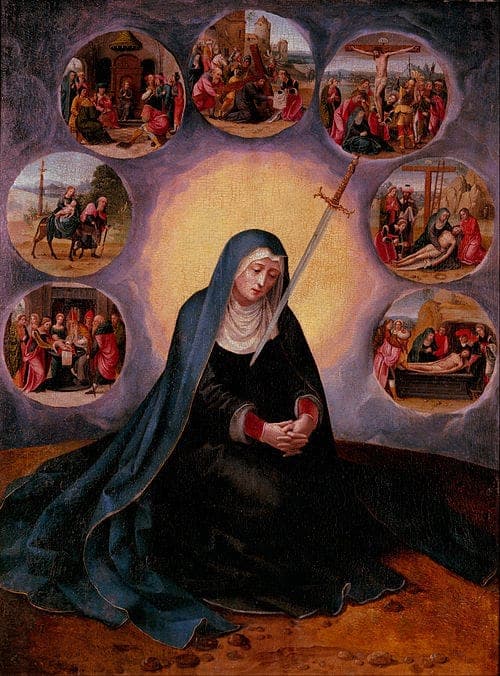
“Poor Banished Children of Eve” – Our Human Condition
When the Hail Holy Queen calls us “poor banished children of Eve,” it tells the truth about the human condition after original sin. In Adam and Eve, mankind lost friendship with God and the ease of paradise; now we inherit a fallen nature, inclined to sin and marked by suffering and death (Gen 3:16–19, Douay-Rheims; CCC 402–404). “Poor” means we cannot save ourselves; “banished” means we live outside the garden, far from our first home. Each person feels this in different ways: temptations that seem strong, broken relationships, fear of death, and a restless heart. The prayer does not use this line to crush us, but to help us stand honestly before God. From that place of truth, we can turn to Mary and beg for Mercy and help.
Tears, Trials, and Trust in God’s Mercy
When the Hail Holy Queen speaks of “mourning and weeping in this vale of tears,” it gives a place in prayer to every hidden pain: family tension, sickness, loneliness, shame over sin. Scripture does not pretend life is easy; the Psalms often cry from the heart, “Out of the depths I have cried to thee, O Lord” (Ps 129:1, Douay-Rheims). The prayer gathers all these trials and carries them to Mary, who stood beneath the cross and knows what it means to suffer with faith (Jn 19:25–27, Douay-Rheims). By saying these words slowly, a person learns to bring tears to God instead of hiding them. Mary does not take the cross away, but she helps the soul trust that Mercy is stronger than any wound and that Christ will not waste a single tear.
Turning Sorrow into Hope through Mary
The Hail Holy Queen shows how sorrow can become hope when it is handed to Mary. We begin by naming our pain: “mourning and weeping in this vale of tears.” Then we ask her to “turn” her eyes of Mercy toward us. That movement is important. Instead of staring only at our losses or sins, we look toward a Mother who never despises weakness. Mary does not replace Christ; she leads the heart to Him. She reminds the soul that exile will not last forever and that Jesus has gone ahead to prepare a place for us (Jn 14:2–3, Douay-Rheims). Each time a person prays the Hail Holy Queen with trust, a small exchange happens: they give Mary their fear and receive from her a new courage to walk toward heaven.
“Show unto Us the Blessed Fruit of Thy Womb, Jesus”
This phrase is the heart of the Hail Holy Queen. After speaking of exile and tears, we ask Mary for one thing: to show us Jesus. “Blessed is the fruit of thy womb,” echoes Elizabeth’s greeting in the Gospel (Lk 1:42, Douay-Rheims). Here we beg that, “after this our exile,” Mary will help us see Him not only by faith, but face to face in glory (1 Cor 13:12; 1 Jn 3:2, Douay-Rheims). This is more than a pious phrase. It is a daily reminder that the final goal of life is not comfort, success, or even spiritual gifts, but Jesus Himself. When a Catholic prays this line, he asks Mary to keep his eyes on that goal and to guide his steps so that he does not lose it through sin or indifference.
The Rosary and Other Devotions

Most Catholics meet the Hail Holy Queen at the end of the Rosary. After meditating on the mysteries of Christ, the Church turns to Mary with this prayer, asking her to gather all that was prayed and to lead hearts to Jesus. In many parishes, it is also used after public recitation of the Rosary before Mass, at Benediction, or during Marian devotions in May and October. In the Liturgy of the Hours, the Latin Salve Regina is often sung at night prayer, especially on Sundays and in certain seasons, as a final entrusting of the day to Mary. Many families and individuals also use it on its own, as an evening prayer or a short plea for Mercy in times of fear, sin, or grief. Wherever it is prayed, its aim is the same: to go to Jesus with Mary.
Why the Rosary Ends with the Hail Holy Queen
The Rosary ends with the Hail Holy Queen because, after walking through the mysteries of Christ’s life, death, and glory, the Church turns to Mary to guard and deepen what has been prayed. The decades can stir faith, sorrow for sin, and new desires, but these graces are still fragile. By finishing with the Hail Holy Queen, the faithful place all of this in the hands of the Mother of Mercy, asking her to protect it and bring it to full fruit in daily life. The prayer also reminds the soul that life on earth is still a “vale of tears,” and that help is needed to stay faithful. Ending with this strong plea keeps the Rosary from being only a memory exercise; it becomes an act of trust, asking Mary to lead the soul to Jesus and to heaven.
Hail Holy Queen in Communal and Private Prayer
The Hail Holy Queen belongs to both the praying Church and the praying individual. In communal life, it is often closed with the Rosary before Mass, sung at Benediction, or recited at parish devotions, so that the whole congregation can entrust itself to Mary together. In monasteries and some parishes, the Latin Salve Regina is sung at night, giving a final, shared appeal for Mercy at the end of the day. In private prayer, many Catholics use the Hail Holy Queen on its own: after an examination of conscience, before sleep, or in moments of fear, temptation, or grief. A person who finds longer devotions hard can still cling to this one prayer. Whether prayed in a full church or whispered alone at a bedside, it makes the same movement: going to Jesus with Mary.
Linking the Salve Regina to the Mysteries of the Rosary
The Salve Regina is not separate from the mysteries of the Rosary; it gathers them into one plea. After thinking on Jesus’ birth, preaching, Passion, and glory, the soul turns to Mary and speaks the truth about life: “poor banished children of Eve… mourning and weeping in this vale of tears.” In the Joyful and Luminous Mysteries, she stood close to Jesus in His hidden and public life (Lk 1–2; Jn 2:1–11, Douay-Rheims). In the Sorrowful Mysteries, she shared His sufferings at the cross (Jn 19:25–27, Douay-Rheims). In the Glorious Mysteries, she is with Him in heaven. When we end with the Hail Holy Queen, we place all these scenes into her hands and ask her to make the fruits of each mystery real in our own life and death.
Using the Prayer in Times of Trial and Temptation
The Hail Holy Queen is a strong help when trials or temptations press hard. In dark moments, it can be difficult to form words, but this prayer already says what the heart feels: “mourning and weeping in this vale of tears.” A person tempted to despair, impurity, anger, or discouragement can slow down and pray it from memory, asking Mary to “turn” her eyes of Mercy toward them. She is the Mother given at the cross to every disciple (Jn 19:26–27, Douay-Rheims), so no struggle is outside her concern. Some Catholics find it helpful to pray the Hail Holy Queen right after a fall, as an act of turning back toward God, or before a known moment of weakness, asking Mary to guard their mind, body, and soul for Christ.
Learning to Pray from the Heart
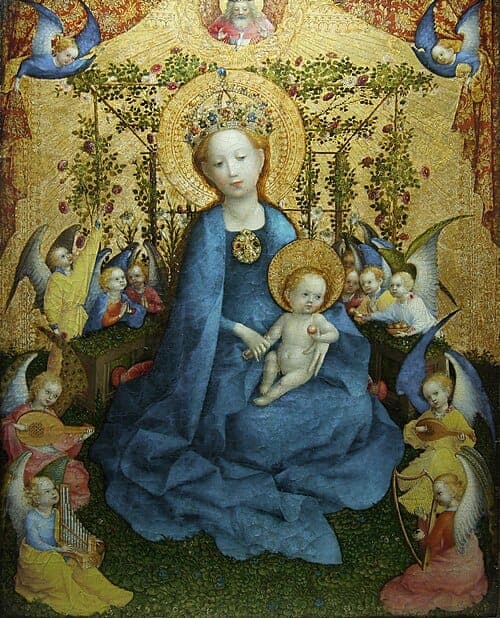
To pray the Hail Holy Queen from the heart, a person must move from saying the words by habit to saying them with attention and trust. A simple way to begin is to slow down and pause at the key titles: “holy Queen,” “Mother of mercy,” “our life, our sweetness, and our hope.” Before starting, it can help to offer one clear intention, such as a family member, a sin you are fighting, or someone who has died. From time to time, pray the Hail Holy Queen alone, outside the Rosary, and let one phrase stay with you during the day. If distraction comes, do not give up; begin again quietly. Over time, the prayer can become a familiar path back to Mary and through her to Jesus.
Slowing Down and Praying with Attention
Many Catholics can recite the Hail Holy Queen quickly, but the heart may lag behind the lips. To pray with attention, it helps to slow the pace on purpose. Begin by taking a quiet breath and remembering that you are speaking in God’s presence. As you pray, give a slight pause after key phrases like “holy Queen,” “Mother of mercy,” and “vale of tears.” If your mind drifts, do not panic; gently return to the following line and continue. You might choose one word in the prayer, such as “hope” or “mercy,” and hold it for a moment before moving on. Even praying the Hail Holy Queen once a day in this slower way can train the mind and heart to stay present, so the prayer becomes a real meeting with Mary before God, not only a habit of the tongue.
Praying the Salve Regina in Suffering or Sin
The Salve Regina is a strong prayer for the moments when a person feels most unworthy. When suffering presses in—through illness, grief, or fear—the words “mourning and weeping in this vale of tears” match what the heart feels. When someone has fallen into grave sin, the line “poor banished children of Eve” reminds them that God already knows their weakness and still offers Mercy. In both cases, the critical step is to turn toward Mary rather than turn in on oneself. A person can pray the Salve Regina before confession, after a fall, or in the middle of a painful night, asking the “Mother of mercy” to lead them back to Jesus, who came “to seek and to save that which was lost” (Lk 19:10, Douay-Rheims).
Teaching the Hail Holy Queen to Children and Newcomers
Teaching the Hail Holy Queen works best when it is simple and slow. Start by helping children or newcomers say the words out loud, a few lines at a time, until they can join in without fear. Explain hard phrases in short, clear sentences: “Mother of mercy means Mary helps us when we have done wrong,” “vale of tears means life can be hard.” You can link the prayer to a picture of Mary with Jesus, so they see who they are speaking to. Praying it at the same moment each day—after the family Rosary, before bed, or after catechism—helps it take hold. Encourage questions, and if someone forgets a line, gently supply it. The aim is not perfect recitation, but trust in Mary and love for Jesus.
Making the Prayer Part of Daily Spiritual Practice
To make the Hail Holy Queen part of daily life, it helps to give it a set place in the day. Many choose to pray it after the Rosary, at the end of night prayers, or right after an examination of conscience. Others say it each morning, offering the new day to Mary. Choose one moment and stay with it until the prayer becomes familiar. You might keep an image of Our Lady nearby as a reminder. On busy days, when longer devotions feel hard, the Hail Holy Queen can be your one solid act of prayer. Over time, repeating it with faith allows its words to shape how you see your joys, your sins, and your troubles: all carried to Jesus through His Mother.

Frequently Asked Questions
No. The Hail Holy Queen is not a prayer of worship to Mary. Catholics adore and worship God alone: Father, Son, and Holy Ghost (CCC 2096–2097). In this prayer, we honor Mary and ask for her help, the way a child turns to a mother. When we call her “holy Queen” and “Mother of mercy,” we are speaking about the gifts God has given her and the mission He has entrusted to her. Every line of the Hail Holy Queen moves toward Jesus, “the blessed fruit of thy womb.” Mary never replaces Christ. Her task is to bring people to Him, just as she did at Cana when she said, “Whatsoever he shall say to you, do ye” (Jn 2:5, Douay-Rheims).
The phrase "Poor Banished Chikdren of Eve" tells the truth about our place in the story of salvation. “Children of Eve” means we belong to the human family that fell in original sin. Because of Adam and Eve’s choice, we are born outside the peace of Eden, marked by suffering, weakness, and death (Gen 3:16–19, Douay-Rheims; CCC 402–404). “Banished” says we live far from our first home with God, and “poor” says we cannot heal this by our own strength. The prayer is not insulting us; it is teaching humility and honesty. When we speak this way before Mary, we stand in the light and admit our need. From there, we can ask the “Mother of mercy” to lead us back toward the grace her Son came to give.
Yes. Anyone who feels drawn may pray the Hail Holy Queen. The Church does not reserve this prayer to “advanced” Catholics or only to those in perfect practice of the faith. A non-Catholic who is searching, or someone returning after years away, can begin by saying the words with honesty: “Mother of mercy, our life, our sweetness, and our hope.” Even if they do not yet understand every title, they can ask Mary to lead them closer to Jesus and to the truth. At the cross, Christ gave His Mother to the beloved disciple, a sign that He offers her to all His followers (Jn 19:26–27, Douay-Rheims). The Hail Holy Queen can be a first step back toward confession, Mass, and full life in the Church.
You may pray the Hail Holy Queen at any time. It is not tied only to the Rosary. Many Catholics use it as part of morning or night prayer, or after an examination of conscience, asking Mary to help them start fresh. It can be said before confession, after Communion, or in front of the tabernacle as a way of placing everything under her care. In moments of fear, grief, or temptation, it works as a short cry for help when the mind feels tired. Families may add it at the end of grace before meals or after reading Scripture together. The Church gives great freedom here: whenever a person needs Mercy, hope, or a simple way to turn back to Jesus with Mary, the Hail Holy Queen is welcome.
If you struggle with Mary or feel far from God, you can still begin the Hail Holy Queen in a simple, honest way. You might say first, “Lord Jesus, I am not sure how to come to Your Mother. Please help me.” Then pray the Hail Holy Queen slowly, even if one line at a time, and tell God you want the truth, not just a habit. You do not have to feel anything. You do not have to force tender words. Offer your confusion as part of the prayer. Remember that Jesus Himself gave Mary to the beloved disciple at the cross (Jn 19:26–27, Douay-Rheims). You can ask Him: “Show me why You gave her to me.” That simple act of trust is already a real prayer.
Links
Rosary Prayers
- Queen of the Holy Rosary
- Sign of the Cross
- Apostles’ Creed
- Our Father
- Hail Mary
- Glory Be
- Fatima Prayer
- Hail Holy Queen (Salve Regina) (You are Here)
- Rosary Closing Prayer
- Fatima Pardon Prayer

Charles Rogers is a resident of South Carolina and a retired computer programmer by trade. Raised in various Christian denominations, he always believed in Jesus Christ. In 2012, he began experiencing authentic spiritual encounters with the Blessed Virgin Mary, which led him on a seven-year journey at her hand, that included alcohol addiction, a widow maker heart attack and death and conversion to the Catholic Faith. He is the exclusive author and owner of Two Percent Survival, a website dedicated to and created in honor of the Holy Mother. Feel free to email Charles at twopercentsurvival@gmail.com.

We strive to provide the most complete and highest quality material we can for you, our readers. Although not perfect, it is our desire and prayer that you benefit from our efforts.