

Fatima Prayer
Understanding the Rosary Prayers
Introduction
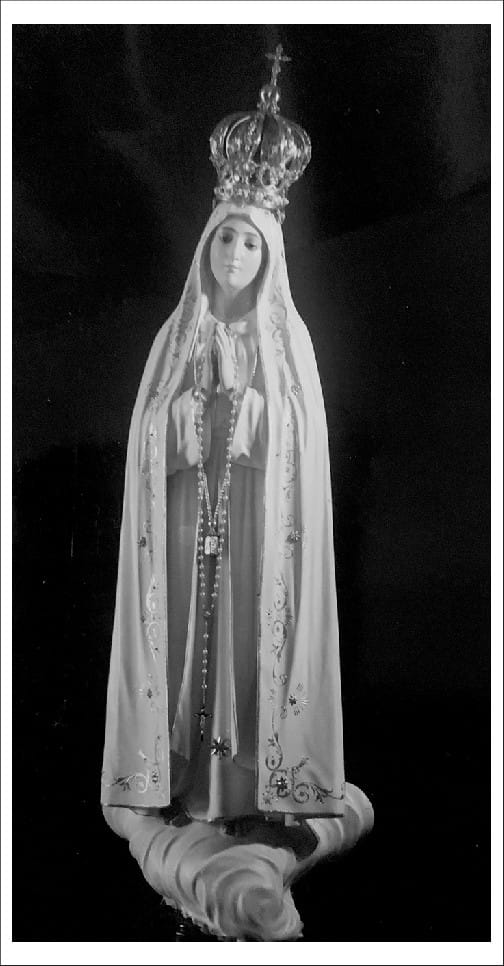
The Fatima Decade Prayer is a short plea taught by Our Lady during the apparitions at Fatima in 1917. Many Catholics know it as the “O my Jesus” prayer said after each decade of the Rosary. In a few clear phrases, it brings together sorrow for sin, trust in Christ’s mercy, and concern for the salvation of all. The prayer does not add anything new to the faith; it expresses what the Church already believes about sin, hell, and God’s desire to save. For someone returning to prayer, or praying the Rosary for the first time, the Fatima Decade Prayer offers a simple way to ask Jesus for forgiveness, protection from eternal loss, and the grace that leads every soul toward Heaven.
Purpose of This Page
This page exists to help you understand, love, and pray the Fatima Decade Prayer with clarity and faith. Many Catholics say this prayer during the Rosary but may not know where it came from, what its words mean, or how it fits with the Church’s teaching. Here you will find clear explanations of the prayer’s text, its connection to the apparitions of Fatima, and its place in Catholic teaching on sin, mercy, Heaven, and hell. The page will also offer simple guidance on using the Fatima Decade Prayer in daily life and on sharing it with others. Whether you are firm in the faith or just returning, this page aims to guide you step by step.
Who the "O My Jesus" Prayer Is For
The Fatima Decade Prayer is for any person who wants to turn more sincerely to Jesus and ask for mercy—for themselves and for others. It is for those who already pray the Rosary and for those who are just learning it. Children can learn it and offer it with simple trust, as the three shepherd children did. Adults who carry heavy burdens of sin or worry can use it to ask Christ for forgiveness and protection from eternal loss. It is also for those who feel concern for family members, friends, or a suffering Church, and want to pray that “all souls” may be led to Heaven. In short, this prayer belongs to every Catholic who desires salvation and wants to help others toward it.
Fatima in Context: The Apparitions in Portugal and Their Message

The Children of Fatima and the Call to Conversion
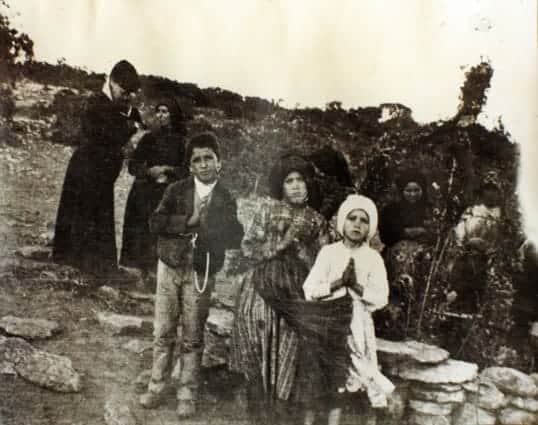
The Fatima Decade Prayer is tied to the lives of three simple shepherd children: Lucia dos Santos and her cousins, Francisco and Jacinta Marto. Through Our Lady’s visits, they learned how grave sin is and how much Jesus desires mercy for sinners. They answered her request by praying many Rosaries, accepting small sacrifices, and offering their sufferings “for poor sinners.” Francisco and Jacinta died young, but their faith and penance helped lead many hearts back to God, and the Church later declared them saints. Their example shows that the call to conversion is not only for priests or religious. It is given to children, parents, the elderly, and those who feel far from God. The Fatima Decade Prayer lets each person share in that same mission.
The Role of the Angel of Peace
Before Our Lady appeared at Fatima, the children were visited three times by an angel who called himself the Angel of Peace. He prepared them for Mary’s coming by teaching them prayers of Adoration and reparation, and by showing them how to offer sacrifices for sinners. The Angel bowed with his forehead to the ground and led them in worship of God, especially in the Eucharist. He also gave them Holy Communion in a way that underscored the sacrament’s holiness and the need to make amends for the sins that offend Jesus. The Fatima Decade Prayer, later given by Our Lady, continues this same path: Adoration of God, sorrow for sin, and a plea for mercy on “all souls.” The Angel’s lessons and the Fatima Decade Prayer belong to one call from Heaven.
Key Themes of the Fatima Message
The Fatima message turns on a few clear themes. First is conversion: Mary asks every person to turn from sin and return to God through prayer, Confession, and a change of life. Second is reparation: she calls us to offer sacrifices and prayers, especially the Rosary, to make up for sins that offend God and harm souls. Third is the urgency of salvation: the vision of hell, the Fatima Decade Prayer, and the plea for “all souls” remind us that eternity is at stake. Fourth is devotion to the Immaculate Heart of Mary, which is a safe path to Jesus. Finally, Fatima speaks of peace in families, the Church, and nations, promised when people obey God and answer this call.
The Fatima Decade Prayer

Full Text
O my Jesus,
forgive us our sins,
save us from the fires of hell,
lead all souls to Heaven,
especially those who have most need of your mercy. Amen.
Phrase by Phrase Overview
The Fatima Decade Prayer is short, but every phrase carries a clear meaning. When we say “O my Jesus,” we address Christ personally and place our trust in Him. “Forgive us our sins” is a simple act of sorrow, asking for pardon for what we have done and for what we have failed to do. “Save us from the fires of hell” faces the reality of eternal loss and begs for rescue. “Lead all souls to heaven” widens our prayer to every person, not only those we know. “Especially those most in need of Thy mercy” turns our hearts toward the most wounded, confused, or far from God. In this section, each phrase will be explained so that you can pray it with understanding and intention.
"O My Jesus" and Trust in the Savior
The Fatima Decade Prayer begins, “O my Jesus,” which is a simple act of trust. We do not speak to a distant idea, but to the living Lord who knows each person by name. Calling Him “my Jesus” recalls that He died and rose for us and that His mercy is stronger than our sins. This opening helps the Heart move from fear or shame toward confidence in the Savior. Before we ask for forgiveness or protection, we first turn toward Him as a Person who loves and listens. When this phrase is prayed slowly, it can become a small act of faith each time: “Jesus, I come to You. I believe You can save me and those I love.”
"Forgive Us Our Sins" and Personal Conversion
When we say “Forgive us our sins” in the Fatima Decade Prayer, we stand before Jesus in truth. We do not excuse ourselves or blame others; we admit that our thoughts, words, actions, and omissions have offended God and harmed souls. This short plea is more than a line in a prayer. It is a small act of contrition that prepares the Heart for deeper conversion and for the sacrament of Confession. Each time we say it, we can silently recall one concrete area where we need change—anger, impurity, neglect of prayer, lack of charity—and place it in His hands. The prayer then becomes a steady invitation: to turn away from sin, to trust His mercy, and to begin again.
"Save Us from the Fires of Hell" and Eternal Destiny
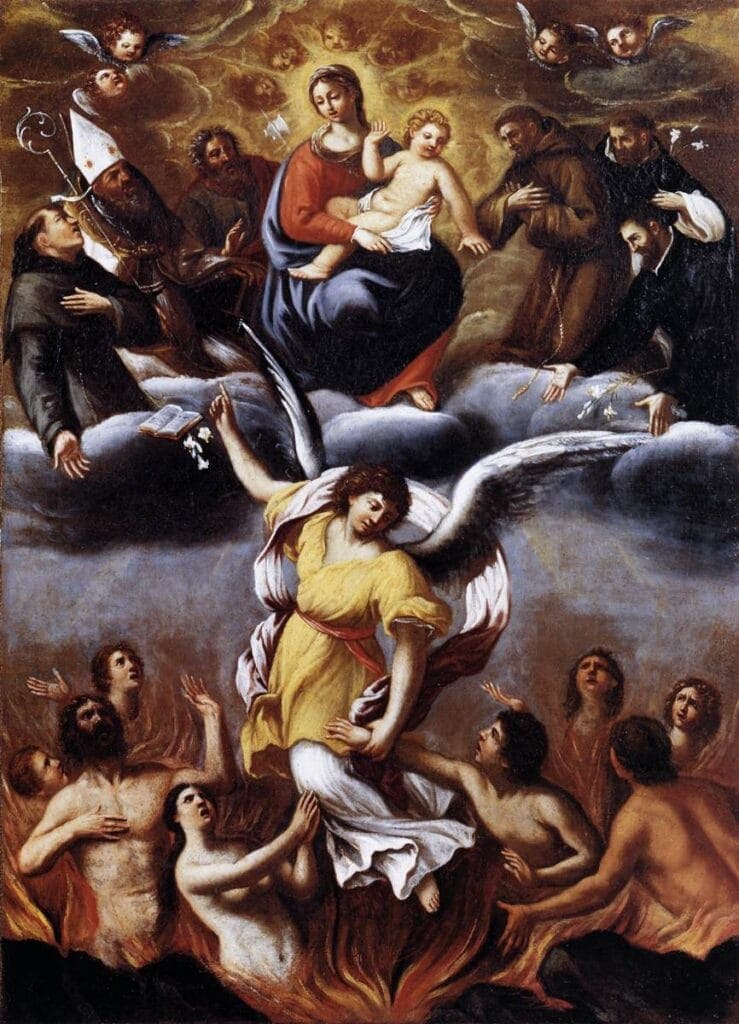
“Save us from the fires of hell” is a serious plea, but not a hopeless one. In these words, the Fatima Decade Prayer admits that hell is absolute and that sin can lead there by free choice. At the same time, it proclaims that Jesus can rescue us. We ask Him to keep us from final separation from God and to guard us from the path that leads there. This line also reminds us that life is not only about comfort, success, or reputation; it is ordered toward eternity. When we pray it with faith, we let Christ’s voice echo in our hearts: “What doth it profit a man, if he gain the whole world, and suffer the loss of his own soul?” (Mt 16:26, Douay-Rheims).
"Lead All Souls to Heaven" and Desire for Salvation of All
When we say “Lead all souls to heaven,” the Fatima Decade Prayer stretches our hearts beyond our small circle. We do not pray only for ourselves or for a few loved ones. We stand with Christ, who “will have all men to be saved, and to come to the knowledge of the truth” (1 Tim 2:4, Douay-Rheims). This line shapes how we look at every person: family, enemies, strangers, fallen-away Catholics, people far from any faith. No one is written off. Each time the words pass our lips, we quietly ask that God will guide every soul toward repentance, grace, and final union with Him. The Fatima Decade Prayer then becomes a simple daily way of sharing in the Church’s mission to work and pray for the salvation of all.
"Especially Those Most in Need" and Mercy
The last phrase of the Fatima Decade Prayer, “especially those most in need of Thy mercy,” turns our eyes toward the souls who seem farthest from God. These may be people in grave sin, those who mock the faith, the dying, the forgotten poor, or someone in our own family. Instead of judging them, we place them first before the Heart of Jesus. This line also reminds us that we, too, may be “most in need” at times, through our own sins or weakness. God “is rich in mercy” (Eph 2:4), and His grace can reach into any darkness. Each time we pray these words, we quietly stand beside Mary at the foot of the Cross, asking that no one be lost for lack of prayer, patience, or love.
Other Prayers from Fatima Taught by the Angel and Our Lady
Besides the Fatima “O my Jesus” Prayer, Heaven gave several other short prayers at Fatima through the Angel of Peace and Our Lady. The Angel taught the children the Pardon Prayer (“My God, I believe, I adore…”), the Angel’s Prayer of Adoration before the Eucharist, and a Eucharistic reparation prayer offered with Holy Communion. Our Lady later gave the Sacrifice Prayer to be said whenever the children offered a small suffering for sinners. Each of these prayers has a clear focus: faith, Adoration, reparation, and offering. Together, they form a small “school of prayer” that leads a person to worship God, confess the faith, make amends for sins, and offer personal sacrifices to the Cross. The familiar Fatima Decade Prayer belongs within this larger set.
Pardon Prayer of Fatima
The Pardon Prayer was taught by the Angel of Peace in 1916 to prepare the children of Fatima for Our Lady’s coming. The prayer is: “My God, I believe, I adore, I hope, and I love Thee. I ask pardon for those who do not believe, do not adore, do not hope, and do not love Thee.” In the first half, the soul makes a simple act of faith, Adoration, hope, and love toward God. In the second half, it begs mercy for those who deny or ignore Him. This short prayer teaches us to stand before God both for ourselves and for others. It can be prayed during Adoration, before Mass, after Communion, or at any quiet moment, as a small act of reparation and love in the middle of the day.
The Angel's Prayer of Adoration and Reparation
The Angel’s Prayer of Adoration and Reparation was given when the Angel of Peace appeared holding a chalice and Host. In this prayer, the children were taught to adore the Most Holy Trinity and to offer the Body, Blood, Soul, and Divinity of Jesus, present in the Eucharist, in reparation for “outrages, sacrileges, and indifference” against Him. The prayer also asks, through the merits of the Sacred Heart of Jesus and the Immaculate Heart of Mary, for the conversion of sinners. This prayer draws the mind to the tabernacles of the world and teaches a Eucharistic way of thinking: worship first, then reparation, then intercession for others. It is well-suited for Eucharistic Adoration, before or after Mass, or as a quiet offering during the day.
The Eucharistic Reparation Prayer
The Eucharistic Reparation Prayer was given by the Angel when he brought Holy Communion to the children. In this prayer, they were taught to offer Jesus in the Blessed Sacrament to the Father in reparation for sins against the Eucharist and to ask for the conversion of sinners. It shows that Communion is never only a private moment; it can be offered for others and for the Church. This prayer helps a Catholic see every tabernacle as a place where Jesus is often ignored or offended, yet remains out of love. By using this prayer before or after receiving Communion, or in a visit to the Blessed Sacrament, a person can join their small love to the perfect offering of Christ on the altar.
The Sacrifice Prayer
The Sacrifice Prayer was given by Our Lady to teach the children how to offer their daily sufferings for souls. The prayer is: “O Jesus, it is for love of Thee, for the conversion of sinners, and in reparation for the sins committed against the Immaculate Heart of Mary.” With these words, a person can take any slight pain, annoyance, duty, or act of kindness and join it to the Cross. The first part states the reason: love for Jesus. The second asks that sinners turn back to God. The third makes up, in a small way, for sins that wound the Heart of Mary and offend her Son. This prayer is especially helpful when facing trials, illness, or hidden sacrifices that no one else sees.
Short Invocations Linked to Fatima Devotion
Alongside the formal Fatima prayers, many Catholics use short invocations that echo the same spirit of mercy, penance, and trust. These are brief phrases that can be said during the day, in a moment of temptation, fear, or gratitude. Examples include: “O Jesus, I trust in You,” “Immaculate Heart of Mary, be my refuge,” or “O my Jesus, mercy.” Some people like to add a simple Fatima-style offering, such as “For love of You, Jesus, and for sinners.” Though these are not official formulas from the apparitions, they flow from the same call: to live in the presence of God, to offer one’s Heart with Mary, and to remember souls who are in danger or in need. Short invocations can quietly anchor the day in prayer.
Fatima Decade Prayer and Catholic Teaching

The Fatima Decade Prayer does not stand apart from Catholic teaching; it reflects it. When we ask Jesus to “forgive us our sins,” we echo the Gospel call to repentance and trust in mercy (Mk 1:15, Douay-Rheims). “Save us from the fires of hell” reflects the Church’s teaching that hell is the result of final, deliberate separation from God (CCC 1033–1035). “Lead all souls to heaven” agrees with God’s desire that all be saved (1 Tim 2:4, Douay-Rheims), while still respecting human freedom. “Especially those most in need of Thy mercy” fits the Church’s care for the poorest, the lost, and the spiritually wounded (CCC 2448). In this short prayer, an ordinary Catholic quietly proclaims what the Church believes about sin, judgment, mercy, and salvation.
Sin, Mercy, and Reparation
The Fatima Decade Prayer holds together three linked truths: sin is real, mercy is offered, and reparation matters. First, it faces sin honestly. When we ask, “Forgive us our sins,” we admit personal guilt and the need for conversion (1 Jn 1:8–9, Douay-Rheims). Second, it turns to mercy. We call on Jesus as Savior, trusting that His sacrifice on the Cross is greater than any sin (CCC 1846–1848). Third, it points to reparation. By praying “save us from the fires of hell” and asking that “all souls” be led to Heaven, we offer a small act of love that makes up, in part, for the coldness and refusal of many hearts. Fatima teaches that no sin is small and no prayer is wasted. In this prayer, the baptized share in Christ’s work of healing and restoring souls.
Heaven, Hell, and Purgatory
The Fatima Decade Prayer only mentions “the fires of hell,” but it quietly points to all three final states: Heaven, hell, and purgatory. Heaven is the blessed life with God, where the saints see Him “face to face” (1 Cor 13:12, Douay-Rheims; CCC 1023). Hell is the state of those who freely and finally reject God, a real possibility the Church cannot ignore (CCC 1033–1035). Purgatory is a merciful cleansing for those who die in God’s grace but still need purification before entering Heaven (CCC 1030–1032). When we pray, “Lead all souls to heaven,” we ask that no one be lost, that sinners turn before death, and that the souls in purgatory be swiftly purified. Each decade of the Rosary becomes a small act of hope for every soul’s eternal destiny.
The Communion of Saints and the Rosary
The Fatima Decade Prayer, placed inside the Rosary, reminds us that we never pray alone. When a Catholic takes up the beads, they pray as part of the Communion of Saints: the Church on earth, the souls in purgatory, and the saints in Heaven (CCC 954–959). Mary leads this great family in turning to Jesus. As we say, “Lead all souls to heaven,” we quietly include everyone joined to Christ’s Body, living and dead. The Rosary itself is a shared prayer of the Church; its mysteries are taken from the life of Jesus and Mary, and its structure reflects Gospel faith (Lk 1:28, 42, Douay-Rheims). When the Fatima Decade Prayer is added after each decade, the whole Rosary becomes an act of love that reaches across time and space for the good of all souls.
How the Fatima Decade Prayer Reflects the Gospel
The Fatima Decade Prayer is like a summary of the Gospel lived and prayed. It begins with Jesus, the only Savior, whom we address by name as the One who forgives sins (Mt 1:21, Douay-Rheims). It admits our guilt and asks for mercy, just as Christ calls us to “do penance, and believe the gospel” (Mk 1:15, Douay-Rheims). It speaks honestly of hell, which Jesus Himself warns about, while trusting His power to save (Mt 10:28, Douay-Rheims). It widens our hearts to desire Heaven, not only for ourselves but “all souls,” echoing God’s wish that all be saved (1 Tim 2:4, Douay-Rheims). Line by line, the prayer leads a person to face sin, cling to Christ, and love every soul He died to redeem.
How to Pray the Fatima Decade Prayer
To pray the Fatima Decade Prayer well, begin by saying it slowly and clearly, from the Heart, not as a rush of words. Many Catholics use it after each decade of the Rosary, right after the Glory Be. You can also pray it on its own during the day, especially when you think of someone in danger, far from the faith, or near death. Before you start, call to mind Jesus on the Cross and one or two people you want to commend to His mercy. Then say the prayer with attention, accepting its mention of sin and hell without fear, trusting in His love. Over time, the Fatima Decade Prayer can become a steady way of staying honest about sin and hopeful about salvation.
When to Use the Fatima Decade Prayer in the Rosary
In most places, the Fatima Decade Prayer is said after each decade of the Rosary, right after the Glory Be. You finish the ten Hail Marys, pray the Glory Be, then add: “O my Jesus, forgive us our sins…” before moving to the next mystery. Some people also like to say it after the closing Hail Holy Queen, especially when they have a strong concern for certain souls. The Church does not strictly require this prayer in the Rosary, so a person is free to use it or not. Still, because Our Lady herself asked for it at Fatima, many Catholics choose to include it every time. Said faithfully, it keeps the whole Rosary focused on mercy, conversion, and the salvation of souls.
Praying the Fatima Decade Prayer Outside the Rosary
The Fatima Decade Prayer is not tied only to the Rosary. It can be prayed at many moments during the day. A person may use it during morning or night prayers, after reading the Gospel, or when passing a church. It fits well after receiving Holy Communion, as a quiet plea for mercy for oneself and for others. It can also be offered when hearing of a sudden death, a grave sin, a scandal, or a disaster, placing all involved into the Heart of Jesus. Parents may say it with children at bedtime, teaching them to care about “all souls.” Used in this way, the Fatima Decade Prayer becomes a steady habit: a short, direct call for forgiveness, protection from hell, and grace for those most in need.
Simple Helps for Attention and Devotion
To pray the Fatima Decade Prayer with attention, start by slowing down. Take a brief pause before you begin, make the Sign of the Cross, and remember that you are speaking to Jesus. It can help to fix your eyes on a crucifix or a holy image and picture yourself at the foot of the Cross as you say each phrase. From time to time, choose one word or line—”forgive,” “save us,” or “all souls”—and hold it in your mind as you pray. You might also link each Fatima Decade Prayer to a simple intention: for your family, for a person who is far from God, or for the dying. When distractions come, do not be harsh on yourself; gently return to the words and continue.
Teaching Children the Fatima Decade Prayer
Teaching children the Fatima Decade Prayer is a way to let them share in a simple but strong act of faith. Begin by telling them the story of the three shepherd children and how Mary asked them to pray for sinners. Then introduce the prayer a few words at a time, inviting them to repeat after you. You can explain difficult words in plain language: “sins” as “the bad things we do,” “heaven” as “being with God forever.” Praying it together after a decade of the family Rosary, or at bedtime, helps them learn by habit and love, not fear. Encourage them to name someone they want Jesus to help. In this way, the Fatima Decade Prayer forms young hearts in mercy and concern for souls.
Living the Fatima Message Today
Living the Fatima message today means more than knowing the story. It means answering the same call in daily life. First, it means turning from sin and using Confession regularly, trusting that Jesus can heal deep wounds. Second, it means praying the Rosary often, with the Fatima Decade Prayer, for peace and for “all souls.” Third, it means offering small sacrifices—pain, disappointment, duties, acts of patience—for love of Jesus and for sinners. Fourth, it means honoring the Immaculate Heart of Mary through the First Saturdays and simple acts of devotion. Finally, it means caring about the salvation of others: family, neighbors, and those far from God. A person who tries to live these points will find that the Fatima Decade Prayer becomes not just words, but a way of life.
Daily Conversion and Offering of Sacrifices
At Fatima, Our Lady did not ask for big, heroic gestures first. She asked for daily conversion and small sacrifices offered with love. Daily conversion means examining our conscience, turning from sin, and choosing God again in concrete ways: honesty instead of lies, purity instead of impurity, patience instead of anger. Offering sacrifices means taking the little crosses of each day—fatigue, pain, disappointments, duties—and saying in the Heart, “O Jesus, it is for love of Thee, for the conversion of sinners.” Joined to the Fatima Decade Prayer, these offerings become a steady intercession for souls. This is not about seeking suffering, but about refusing to waste what life already brings. Lived this way, each day becomes a quiet “yes” that helps repair sin and draw souls toward Heaven.
Marian Devotion and the Immaculate Heart
At Fatima, Our Lady said that God wants devotion to her Immaculate Heart. This does not compete with Jesus; it leads to Him. Her Heart is “immaculate” because she was preserved from sin and gave herself entirely to God (CCC 492). To honor her Heart means to trust her care, imitate her “yes,” and let her guide us to conversion. This can be lived through the Rosary, the First Saturday devotion, consecration to Mary, and simple daily prayers. The Fatima Decade Prayer fits this path because it asks for mercy for “all souls,” just as a mother pleads for her children. When a Catholic prays the Fatima Decade Prayer with Mary, they learn to care about sin, salvation, and the glory of God with the tenderness of her Heart.
Fatima Decade Prayer and Parish Life
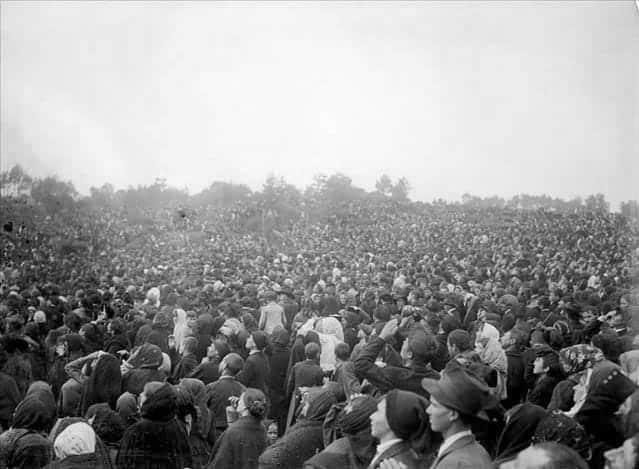
The Fatima Decade Prayer can quietly bless parish life when it is known and used by many parishioners. It may be included in parish Rosary groups, before weekday Mass, or at holy hours as a common plea for mercy and for “all souls.” Catechists can teach it to children and teens, linking it with Confession, the Eucharist, and concern for the lost. Prayer groups and families can offer it for the intentions of the parish: the sick, the dying, those far from the sacraments, and those preparing for marriage or baptism. On or near May 13 and October 13, a parish might hold a Rosary procession that highlights the Fatima Decade Prayer. Lived this way, the prayer helps a parish see itself not just as a place of activities, but as a community that prays and sacrifices for the salvation of souls.
Fatima Decade Prayer and the Mission of the Laity
The Fatima Decade Prayer fits the mission of lay Catholics in a direct way. Most lay people live in homes, workplaces, and public settings where priests cannot go daily. There, they are called to bring Christ through prayer, witness, and sacrifice (CCC 897–900). By using the Fatima Decade Prayer in ordinary tasks, a layperson quietly offers each day for the salvation of souls. Said in traffic, at a desk, in a store, or beside a hospital bed, it becomes a priestly act of intercession in the middle of the world. Joined to the Rosary, small sacrifices, and Marian devotion, it helps laymen and women carry the concerns of their families, parishes, and nations to the Heart of Jesus, doing hidden work for conversions and for peace.
Frequently Asked Questions
No, the Fatima Decade Prayer is not strictly required for the Rosary. The essential parts of the Rosary are the Apostles' Creed, the Our Father, the Hail Marys, the Glory Be, and meditation on the mysteries. The Fatima Decade Prayer is a cherished addition that Our Lady asked for at Fatima, and the Church warmly encourages devotion to Our Lady of Fatima. Still, it has not bound the faithful under obligation. You are free to include it after each decade, and most people do, but your Rosary is still valid and pleasing to God without it.
Yes, you may quietly pray the Fatima Decade Prayer at Mass or during Eucharistic Adoration. At Mass, the faithful are free to make personal prayers in their hearts, especially after Communion or during silent moments. The only care is not to change or add to the official prayers that belong to the priest and the liturgy. During Adoration, the Fatima Decade Prayer fits very well, since it honors Jesus in the Eucharist and asks mercy for sinners. It can be used in silent prayer or as part of a Rosary or Holy Hour led in Church, as long as it respects the normal order of the service.
You can explain the Fatima Decade Prayer in simple steps. First, say that it is a short prayer to Jesus asking for three things: forgiveness for our sins, protection from hell, and help for every soul, especially those in the greatest danger. You might add that it came from Our Lady's messages at Fatima, where she asked people to turn back to God. Emphasize that it is not magic or extra religion, but a simple way to trust Jesus and care about the salvation of others.
If you forget the Fatima Decade Prayer during the Rosary, do not lose peace. The Rosary is still a real prayer, and God looks first at the Heart, not at perfect memory. You can keep a small card or bookmark with the words until they stay in your mind. If you stumble or mix up the lines, pause and start again, or say, "Jesus, have mercy on us and on all souls," and go on. Over time, steady use and calm patience will help the prayer become natural.
Links
Rosary Prayers
Charles Rogers is a resident of South Carolina and a retired computer programmer by trade. Raised in various Christian denominations, he always believed in Jesus Christ. In 2012, he began experiencing authentic spiritual encounters with the Blessed Virgin Mary, which led him on a seven-year journey at her hand, that included alcohol addiction, a widow maker heart attack and death and conversion to the Catholic Faith. He is the exclusive author and owner of Two Percent Survival, a website dedicated to and created in honor of the Holy Mother. Feel free to email Charles at twopercentsurvival@gmail.com.

We strive to provide the most complete and highest quality material we can for you, our readers. Although not perfect, it is our desire and prayer that you benefit from our efforts.