

Nativity of Jesus Christ
Understanding the Third Joyful Mystery of the Rosary
Introduction
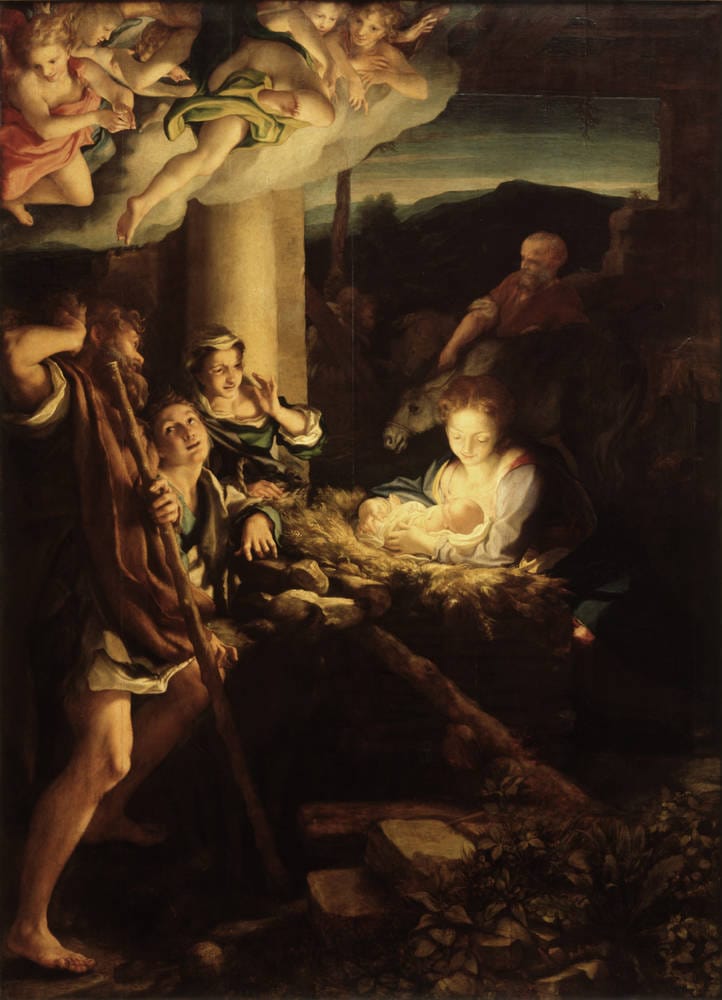
The Nativity of Jesus is the moment when the eternal Son of God enters human history, taking flesh of the Virgin Mary and being born in Bethlehem. In this humble birth, God fulfills His ancient promises and reveals the mystery of the Incarnation: that the Word became man for the salvation of the world. What takes place quietly in a manger is, in truth, the turning point of all history.
Sacred Scripture, especially the Gospel of Luke, presents the Nativity as both a real historical event and a saving mystery proclaimed from heaven. An Angel announces the birth of a Savior, shepherds hasten to adore Him, and Mary receives all these things in silence and faith. The child lying in swaddling clothes is revealed as Christ the Lord—true God and true man—who has come to dwell among His people.
For the Church, the Nativity is not only remembered at Christmas but contemplated as a living mystery throughout the Christian life. It teaches the humility of God, the dignity of human nature, and the quiet way divine grace enters the world. By contemplating the birth of Jesus, believers are invited to welcome Christ anew, to make room for Him in their hearts, and to live in the light of the salvation He brings.
Purpose of this Page
This page examines the Birth of Jesus as it is revealed in Sacred Scripture and lived in the faith of the traditional Catholic Church. Beginning with the Gospel of Luke, it walks carefully through the birth of Christ in Bethlehem, then draws on the wider witness of Scripture to show how the Nativity fulfills God’s promises. It explains the doctrinal meaning of Christ’s birth, its place in salvation history, and its celebration in the life of the Church, before reflecting on how this mystery shapes Christian prayer and daily living as the Third Joyful Mystery of the Rosary.
Scriptures of the Nativity
The Church receives the Birth of Jesus not primarily through legend or later tradition, but through Sacred Scripture, handed down under the inspiration of the Holy Spirit. Among the four Gospels, Saint Luke alone provides the full and explicit account of Christ’s birth, presenting it with historical sobriety, theological depth, and profound reverence.
Luke situates the Nativity within real human history—under the reign of Caesar Augustus and during a known census—while simultaneously revealing its divine meaning through angelic proclamation and heavenly praise. The evangelist highlights the humility of Christ’s birth, Mary’s faith, and the role of the poor, as the shepherds become the first witnesses of the Savior. In this way, Luke shows that the coming of Christ is both a historical event and a mystery of salvation that transcends time.
What follows is the complete Nativity account from Luke 2:1–21, presented as a single continuous passage from the Douay-Rheims translation, preserving the Church’s traditional English rendering of the text. This passage proclaims the birth of Jesus Christ as the fulfillment of God’s promises and the joyful announcement of salvation for all people.
The Nativity According to Luke
And it came to pass, that in those days there went out a decree from Caesar Augustus, that the whole world should be enrolled. This enrolling was first made by Cyrinus, the governor of Syria. All went to be enrolled, everyone into his own city.
Joseph also went up from Galilee, out of the city of Nazareth into Judea, to the city of David, which is called Bethlehem: because he was of the house and family of David, to be enrolled with Mary his espoused wife, who was with child. And it came to pass, that when they were there, her days were accomplished, that she should be delivered. And she brought forth her firstborn son, and wrapped him up in swaddling clothes, and laid him in a manger; because there was no room for them in the inn.
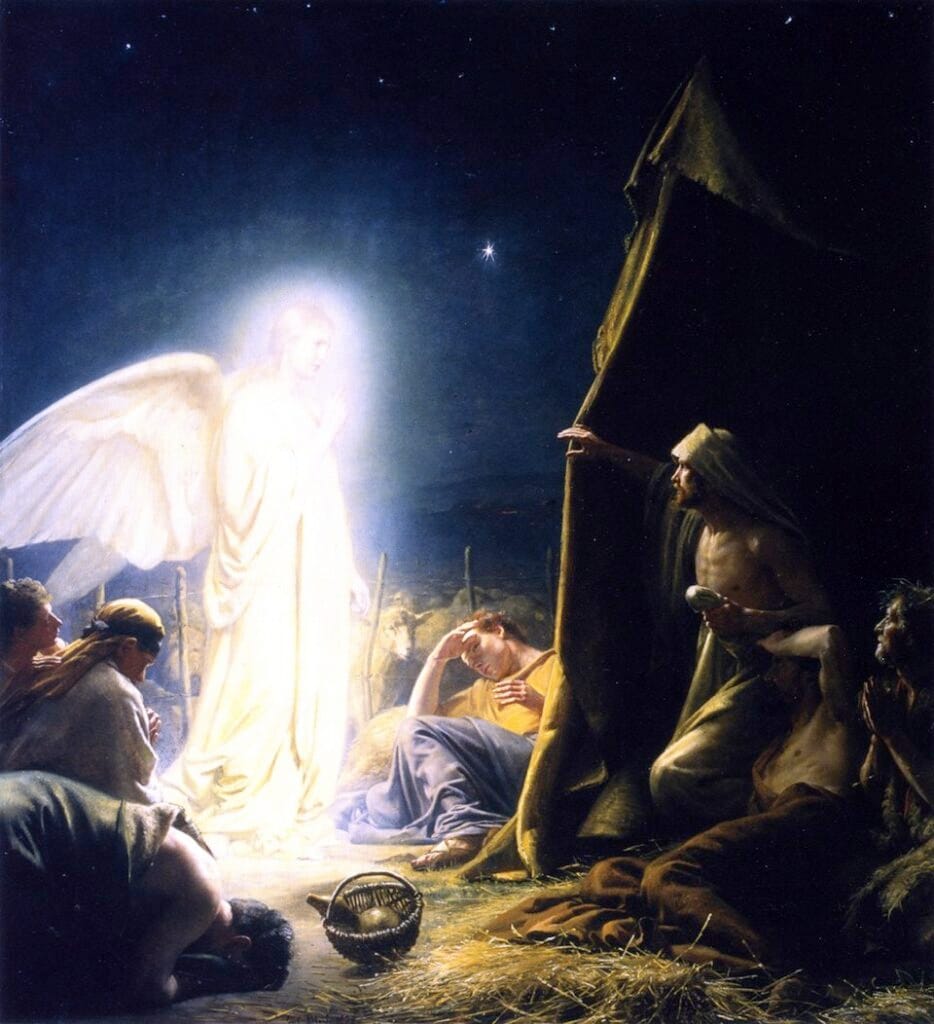
And there were in the same country shepherds watching, and keeping the night watches over their flock. And behold an angel of the Lord stood by them, and the brightness of God shone round about them; and they feared with a great fear. And the angel said to them: Fear not; for, behold, I bring you good tidings of great joy, that shall be to all the people: For, this day, is born to you a Savior, who is Christ the Lord, in the city of David. And this shall be a sign unto you. You shall find the infant wrapped in swaddling clothes, and laid in a manger. And suddenly there was with the angel a multitude of the heavenly army, praising God, and saying: Glory to God in the highest; and on earth peace to men of good will.
And it came to pass, after the angels departed from them into heaven, the shepherds said one to another: Let us go over to Bethlehem and let us see this word that is come to pass, which the Lord hath shewed to us. They came with haste; and they found Mary and Joseph, and the infant lying in the manger. And seeing, they understood of the word that had been spoken to them concerning this child. And all that heard, wondered; and at those things that were told them by the shepherds. But Mary kept all these words, pondering them in her heart. And the shepherds returned, glorifying and praising God, for all the things they had heard and seen, as it was told unto them.
And after eight days were accomplished, that the child should be circumcised, his name was called JESUS, which was called by the angel, before he was conceived in the womb. (Luke 2:1-21)
Supporting Scriptures
Old Testament Scriptures Pointing to the Nativity
- The promised virgin birth of the Messiah — Isaiah 7:14
- The child who is the divine king and Prince of Peace — Isaiah 9:6–7
- The ruler to come forth from Bethlehem — Micah 5:2
- God dwelling among His people — Isaiah 8:8–10
- The everlasting Davidic kingdom — 2 Samuel 7:12–16
- The star and scepter rising from Israel — Numbers 24:17
- The son called out of Egypt — Hosea 11:1
New Testament Theological Witness to the Nativity
- The eternal Word made flesh — John 1:1–14
- Christ’s self-emptying in the Incarnation — Philippians 2:6–11
- The Son as image of the invisible God — Colossians 1:15–20
- God sending His Son, born of a woman — Galatians 4:4–5
- The mystery of God revealed in the flesh — 1 Timothy 3:16
- Christ sharing fully in human nature — Hebrews 2:14–17
Liturgical and Doctrinal Echoes of the Nativity
- Christ as our peace proclaimed to the nations — Ephesians 2:14–18
- The light of God shining in our hearts — 2 Corinthians 4:6
- The saving grace of God appearing to all — Titus 2:11–14
Walking Through the Nativity Step by Step
The Decree of Caesar Augustus
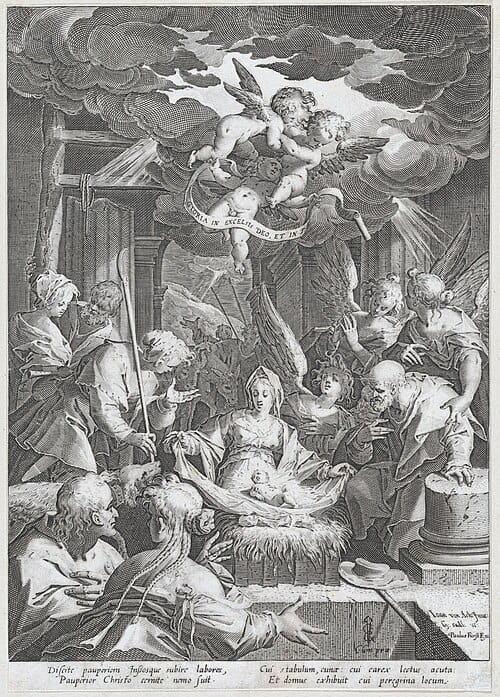
The Nativity begins with a decree from Caesar Augustus that the whole world should be enrolled. What appears to be a political act is revealed, in God’s providence, as the means by which the Savior is brought to Bethlehem. Luke shows that God’s saving plan unfolds within real historical circumstances, guiding even secular authority toward the fulfillment of His promises.
The Journey to Bethlehem
Joseph and Mary travel from Nazareth to Bethlehem because Joseph belongs to the house of David. Their journey is marked by obedience and faithfulness amid uncertainty. Luke presents no complaint or protest, only quiet trust, showing how God’s will is often accomplished through ordinary duties carried out with fidelity.
The Birth of Jesus
While they are in Bethlehem, Mary gives birth to her firstborn Son, wraps Him in swaddling clothes, and lays Him in a manger, because there is no room in the inn. The Son of God enters the world in poverty, revealing a kingdom marked by humility rather than earthly power. The manger becomes the sign by which Christ is recognized.
The Shepherds in the Fields
Luke next turns to shepherds watching over their flocks by night. They are the first to receive the announcement of Christ’s birth, showing that the good news is first offered to the lowly. God’s glory shines in the darkness, and fear gives way to joy as heaven draws near to earth.
The Angelic Proclamation
The angel announces “good tidings of great joy” and declares that a Savior has been born, who is Christ the Lord. In a single proclamation, Luke reveals Christ’s mission, identity, and authority. The angel gives a simple sign: an infant wrapped in swaddling clothes and lying in a manger, linking divine glory with human humility.
The Heavenly Praise
A multitude of the heavenly host appears, praising God and proclaiming peace to men of good will. The Nativity is shown as both a divine and earthly event. God is glorified, and peace is offered to humanity through the coming of Christ.
The Shepherds’ Response
After the angels depart, the shepherds immediately go to Bethlehem. They do not delay or doubt but seek what the Lord has revealed. Their haste reflects authentic faith—trust that moves the believer to act upon God’s word.
The Encounter at the Manger
The shepherds find Mary, Joseph, and the infant lying in the manger, just as they were told. They make known what had been spoken to them about the child, and all who hear are filled with wonder. The Nativity becomes something proclaimed and shared, not kept private.
Mary’s Interior Response
While others speak and marvel, Mary keeps all these words and ponders them in her heart. Luke presents her as the model of contemplative faith, receiving God’s work not only outwardly but interiorly, allowing the mystery to deepen over time.
The Shepherds’ Return
The shepherds returned to their ordinary lives, glorifying and praising God for all they had seen and heard. Their encounter with Christ does not remove them from daily life, but transforms it. Praise becomes the lasting fruit of meeting the Savior.
The Circumcision and Naming of Jesus
After eight days, the child is circumcised and given the name Jesus, as instructed by the angel before His conception. Luke closes the Nativity account by affirming Christ’s true humanity and obedience under the Law, while also revealing His mission: Jesus, “God saves.”
What the Nativity is and Why it Matters
Definition Of The Nativity
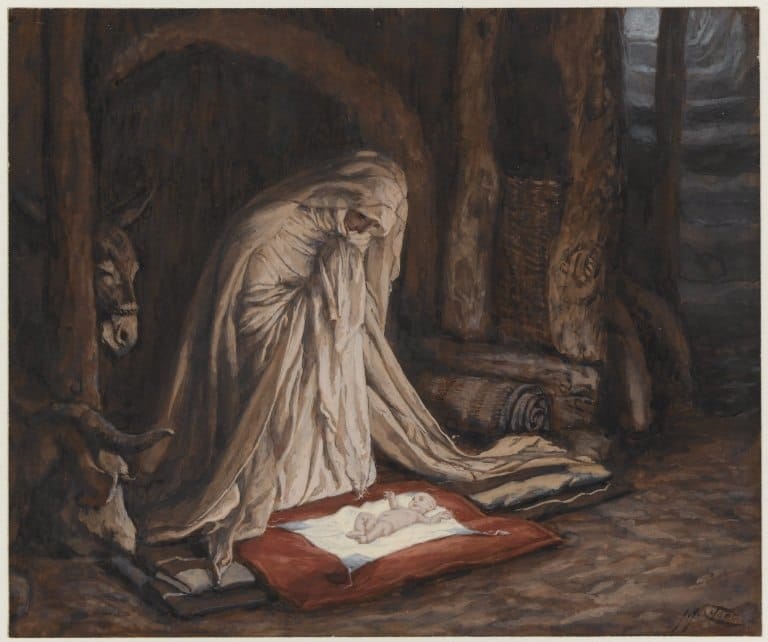
The Birth of Jesus refers to the historical and salvific event in which Jesus Christ, the eternal Son of God, was born to the Virgin Mary in Bethlehem. Through this birth, the Word, who is eternally begotten of the Father, assumed human nature without ceasing to be God, marking the visible beginning of the Incarnation in human history.
In Catholic teaching, the Nativity is understood not merely as the moment of Christ’s physical birth, but as a sacred mystery revealing God’s saving plan. The child born in a manger is at once true God and true man, conceived by the Holy Spirit, born in humility, and destined for the redemption of the world. The Nativity stands at the heart of salvation history, manifesting God’s faithfulness to His promises and His desire to dwell among His people.
Meaning Of “Nativity” In Christian Theology
In Christian theology, the word “Nativity” signifies more than a biological birth; it refers to a saving mystery in which God enters human history. Derived from the Latin nativitas, meaning “birth” or “coming into existence,” the term is used by the Church to denote births of profound theological significance, above all the birth of Jesus Christ, the Son of God made man.
Applied to Christ, the Nativity expresses the truth of the Incarnation: that the eternal Word, who exists from all eternity with the Father, freely assumed a human nature and was born in time. This birth does not mark the beginning of Christ’s existence, but the moment when He became visible and present among humanity in the flesh. Thus, the Nativity reveals both God’s condescension and the dignity bestowed upon human nature through the union of divinity and humanity in the one Person of Jesus Christ.
The Church also uses the term “Nativity” to emphasize the liturgical and salvific meaning of Christ’s birth. Celebrated in the Christmas liturgy, the Nativity is proclaimed as an event that brings light into darkness, peace into a fallen world, and hope to all nations. In this sense, the Nativity is not only an event of the past but a mystery continually made present to the faithful, calling them to receive Christ and share in the life He came to bring.
Difference Between Ordinary Birth And The Nativity
An ordinary human birth marks the beginning of a person’s existence in the world. Each human being comes into being at conception and is born as a creature wholly dependent upon God, possessing a human nature but not a divine one. While every birth is sacred and willed by God, it remains the entrance of a created person into temporal life.
The Birth of Jesus, however, is fundamentally different. In Christ’s Nativity, no new person comes into existence. Instead, the eternal Son of God, who exists from all eternity, assumes human nature and is born in time. Jesus Christ is not a human person who later becomes divine, nor is He a divine person who merely appears human. He is one divine Person—the Word—who truly becomes man while remaining fully God. This unique union of divine and human natures in one Person is known as the hypostatic union.
Furthermore, the Birth of Christ is a saving event, not only a natural one. Christ is conceived by the Holy Spirit and born of the Virgin Mary without the transmission of original sin. His birth inaugurates the fulfillment of God’s promises and begins the visible work of redemption. While ordinary births introduce someone into the human family, the Nativity introduces God Himself into human history, transforming it from within.
For this reason, the Church speaks of Christ’s birth as a mystery to be believed, celebrated, and lived. The Nativity is not simply remembered as a past moment, but proclaimed as the moment when heaven and earth were united, and when humanity was offered new life through the coming of the Savior.
Why The Nativity Matters In Christianity
The Birth of Jesus matters in Christianity because it reveals who God is and how God saves. In the birth of Christ, the invisible God makes Himself visible, entering human history not in power or splendor, but in humility and poverty. This event discloses the heart of the Christian faith: that salvation is not achieved by human effort alone, but is a gift that begins with God’s initiative.
Through the Nativity, Christianity proclaims that God is with us. The child born in Bethlehem is Emmanuel, the fulfillment of God’s promise to dwell among His people. By taking on human nature, the Son of God sanctifies every stage of human life, from birth onward, and restores the dignity wounded by sin. The Nativity affirms both the nearness of God and the value of human nature, united forever in the Person of Jesus Christ.
The Nativity also stands at the beginning of the entire work of redemption. Christ is born to suffer, die, and rise again for the salvation of the world. The wood of the manger already points toward the wood of the Cross, and the humility of Bethlehem anticipates the self-giving love revealed fully in the Paschal Mystery. Without the Nativity, there would be no Incarnation; without the Incarnation, there would be no salvation.
For believers, the Nativity is not only a doctrine to be confessed, but a pattern for Christian life. It calls the faithful to humility, trust in God, and openness to grace. By contemplating the birth of Christ, Christians learn that God often works through what is small, hidden, and seemingly insignificant. In this way, the Nativity continues to shape Christian faith, worship, and daily living across every age and culture.
Foundation Of The Incarnation
The Birth of Jesus is the visible foundation of the Incarnation, the mystery by which the eternal Son of God takes on human nature without ceasing to be God. While the Incarnation begins invisibly at the moment of Christ’s conception by the Holy Spirit in the womb of the Virgin Mary, the Nativity manifests this mystery openly within human history. In the birth of Jesus, the Word truly becomes flesh and enters the world He came to save.
Through the Nativity, the Church confesses that Jesus Christ is one divine Person with two natures, divine and human, united without confusion, division, or separation. This union is not symbolic or partial; it is real and complete. Christ is born as a true man—subject to time, growth, and human weakness—yet He remains the eternal Son, consubstantial with the Father. The Nativity safeguards the truth that salvation comes not through a mere messenger of God, but through God Himself acting within human nature. Because the Incarnation is the means by which humanity is redeemed, the Nativity stands as its necessary foundation. Only by becoming man could the Son of God heal human nature from within, reconcile humanity to the Father, and restore what was lost through sin. The birth of Christ thus reveals the depth of God’s love: a love willing to enter fully into the human condition to raise humanity to share in divine life.
Centrality To Salvation History
The Birth of Jesus occupies a central place in salvation history, marking the moment when God’s long-prepared plan of redemption enters its decisive phase. From the promises made to Abraham, through the covenant with David, and the prophecies announced by the prophets, all of Scripture points toward the coming of the Messiah. In the birth of Jesus, these promises are no longer future hopes but present realities.
Salvation history is not merely a sequence of religious events, but the unfolding of God’s relationship with humanity. The Nativity stands at the turning point of this history, dividing time itself into before and after the coming of Christ. What was anticipated in figures and shadows under the Old Covenant is fulfilled in the person of Jesus, born in Bethlehem as the Savior of the world.
Moreover, the Nativity reveals how God saves—not through domination or force, but through humility, obedience, and love. By entering history as an infant, God shows that redemption begins quietly, grows patiently, and transforms the world from within. For this reason, the Church proclaims the Nativity not as a peripheral event, but as an essential moment in the story of salvation, without which the Cross and Resurrection would have no saving power.
Doctrinal and Spiritual Meaning of the Nativity
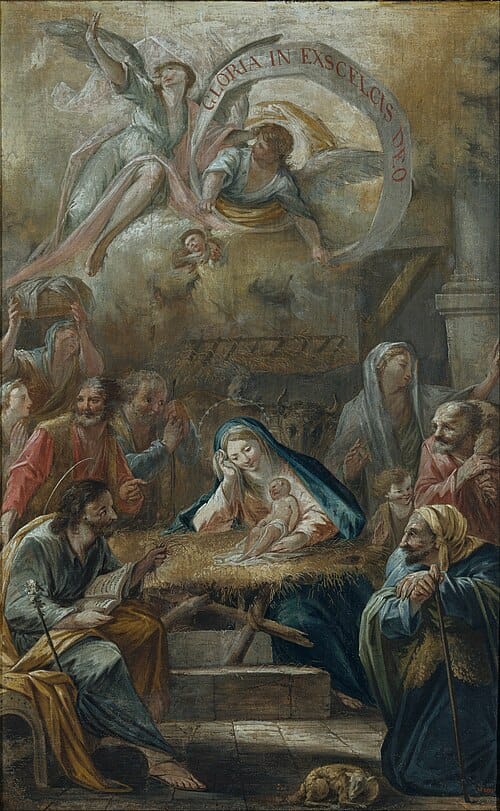
The Incarnation of the Son of God
Jesus Christ as True God and True Man
The Nativity reveals the central Christian mystery that Jesus Christ is both true God and true man. The child born in Bethlehem is the eternal Son of the Father, who exists from all eternity, now truly born in time. In Luke’s account, this mystery is proclaimed through the contrast between the humility of the manger and the angelic declaration that the newborn is Savior, Christ, and Lord. The same Jesus who lies in swaddling clothes shares fully in human weakness while possessing divine authority and identity. This union of divine and human natures in one Person—without confusion or division—is essential to Christian faith and the foundation of redemption.
Purpose of the Incarnation in Salvation
The Son of God becomes man to save humanity from sin and death. The Nativity marks the visible beginning of this saving mission. By entering the human condition, Christ sanctifies it from within and restores what was lost through sin. Luke presents the birth of Jesus not as an end in itself, but as the beginning of God’s decisive action in history. The Incarnation makes possible the reconciliation of humanity with God, for only one who is both God and man can bridge the gap between heaven and earth and offer salvation to all.
The Virgin Birth
Mary’s Virginity and God’s Initiative
The Virgin Birth affirms that the Nativity is wholly the work of God’s initiative, not human power. Jesus is born of the Virgin Mary by the action of the Holy Ghost, preserving Mary’s virginity and revealing that salvation comes from God alone. This truth safeguards the identity of Christ as the Son of God and underscores that His coming is a gift of grace. Mary’s role in the Nativity is one of humble cooperation: she receives God’s action in faith, becoming the Mother of the Savior while remaining entirely dependent on divine grace.
Humility and Self-Emptying Love
The Poverty of Christ as a Model for Holiness
The circumstances of the Nativity reveal God’s humility and self-emptying love. Christ is born in poverty, laid in a manger, and welcomed by shepherds rather than rulers. This poverty is not accidental but expressive of God’s way of saving. By choosing humility, Christ reveals the path of holiness for His followers—a path marked by trust, simplicity, and detachment from worldly power. The Nativity teaches that God draws near most intimately not through grandeur, but through lowliness and love.
The Nativity and the Paschal Mystery
Birth Ordered Toward the Cross and Resurrection
The Nativity is inseparably linked to the Paschal Mystery of Christ’s death and resurrection. Jesus is born to give His life for the salvation of the world. The wood of the manger foreshadows the wood of the Cross, and the humility of Bethlehem anticipates the self-giving love revealed on Calvary. Luke’s account points forward to this fulfillment by presenting a Savior whose mission is already defined at birth. The Nativity, therefore, is not only the beginning of Christ’s earthly life but the first step toward the redemption completed in His Resurrection.
Old Testament Prophecies and Foreshadowings Fulfilled
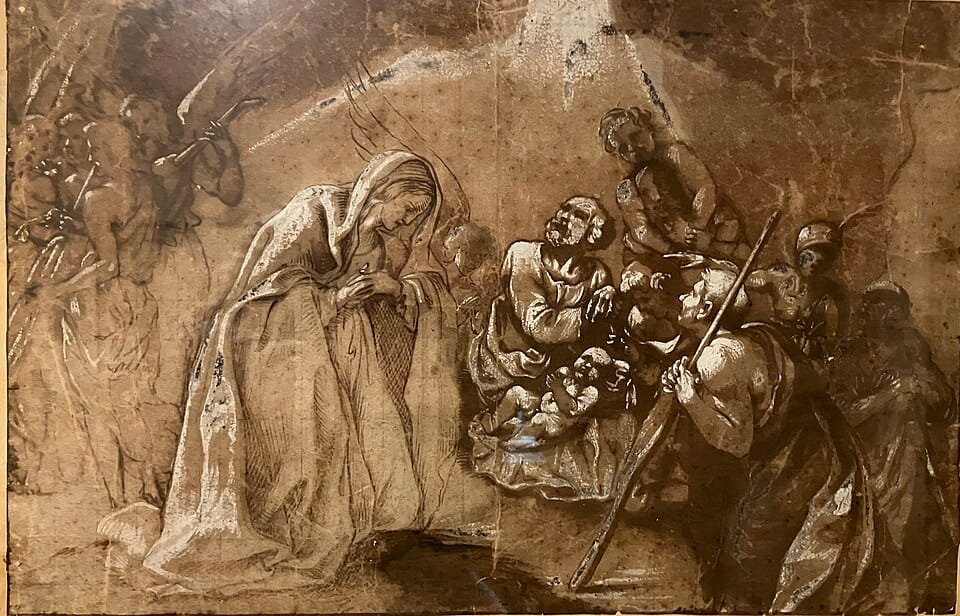
Direct Messianic Prophecies
Isaiah’s Prophecy of the Virgin and Child
The prophet Isaiah foretold that a virgin would conceive and bear a son whose very name would signify God’s presence among His people. This prophecy points directly to the Birth of Jesus, in which the child born of the Virgin Mary is revealed as Emmanuel, “God with us.” The birth of Christ fulfills this promise not symbolically, but literally, as God truly enters human history through a virginal conception, revealing both His power and His nearness to humanity.
Micah’s Prophecy of Bethlehem
Micah prophesied that a ruler would come forth from Bethlehem, though the town was small and seemingly insignificant. The Nativity fulfills this prophecy precisely, as Jesus is born in Bethlehem, the city of David. Through the Roman census, God brings Mary and Joseph to the place foretold by the prophet, demonstrating that divine providence governs even political events to accomplish God’s saving plan.
Isaiah’s Messianic Titles
Isaiah spoke of a child who would bear titles expressing divine authority and eternal kingship, such as Wonderful Counselor, Mighty God, Everlasting Father, and Prince of Peace. In the Nativity account, these titles are echoed in the angelic proclamation that the newborn child is Savior, Christ, and Lord. The child lying in the manger is thus revealed as the long-awaited Messiah whose reign brings peace without end.
Typology and Foreshadowing
Adam and Christ as a New Creation
The Old Testament presents Adam as the first man through whom sin entered the world. Christ, born in the Nativity, is revealed as the new Adam, through whom new life is given. His birth marks the beginning of a renewed creation, in which humanity is restored through obedience and grace. The humility of Christ’s birth contrasts with Adam’s pride, showing that salvation comes through trust in God rather than self-assertion.
Moses, Exodus, and Deliverance
Moses led Israel out of bondage in Egypt, prefiguring a greater deliverance to come. The Nativity initiates this definitive liberation, as the Savior is born to free humanity from the slavery of sin and death. Just as the Exodus began with God’s intervention on behalf of His people, so the birth of Christ marks the beginning of the ultimate act of salvation, accomplished through divine initiative rather than human power.
Davidic Kingship Fulfilled in Christ
God’s covenant with David promised a kingdom that would endure forever. The Nativity fulfills this promise, as Jesus is born into the line of David and recognized as the rightful king. Unlike earthly rulers, Christ’s kingship is spiritual and eternal, grounded in humility and service. His birth in David’s city confirms Him as the heir to the throne whose reign has no end.
Fulfillment of God’s Covenants
Promises to Abraham
God promised Abraham that through his descendants all nations would be blessed. The Nativity reveals the fulfillment of this promise, as the birth of Christ brings salvation not only to Israel but to all peoples. The angelic announcement of “good tidings of great joy” signals that the blessing promised to Abraham now extends to the entire world through the coming of the Savior.
The Everlasting Davidic Kingdom
The covenant with David assured that his throne would be established forever. In the Nativity, this covenant is fulfilled when Jesus is born as the eternal king. Though He enters the world in humility, His kingdom is not limited by time or geography. The birth of Christ establishes a reign that endures forever, fulfilling God’s promise and revealing the faithfulness of His covenant love.
The Nativity in the Life of the Church
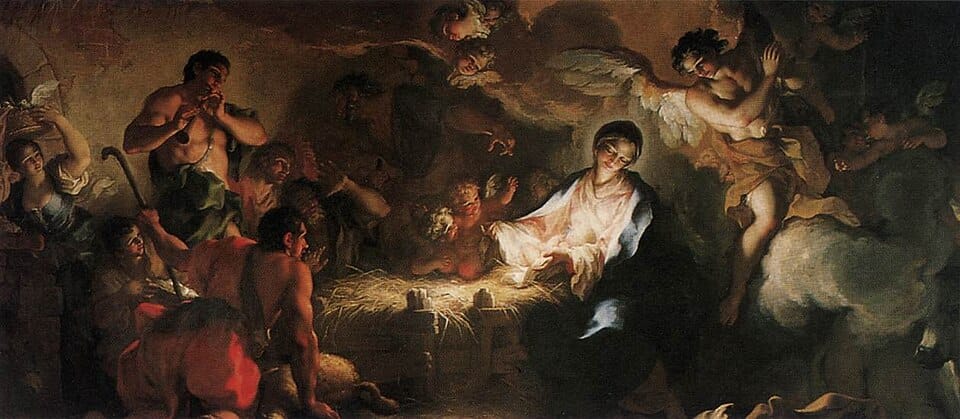
Liturgical Celebration of the Nativity
The Christmas Season and it's Meaning
The Church celebrates the Birth of Jesus primarily through the Christmas season, which begins with the Vigil Mass of Christmas and extends through the feast of the Baptism of the Lord. This season is not limited to a single day, but unfolds the mystery of Christ’s birth over time, allowing the faithful to contemplate the Incarnation in its fullness. Through the liturgy, the Church proclaims that the child born in Bethlehem is the Savior of the world and invites believers to enter spiritually into this mystery through prayer, Scripture, and sacramental worship.
Major Feasts Connected to the Nativity
Several major feasts within the Christmas season further illuminate the mystery of the Nativity. The Solemnity of Mary, Mother of God, celebrates the divine maternity of the Virgin Mary and safeguards the truth of the Incarnation. The Feast of the Epiphany proclaims Christ revealed to the nations, while the Feast of the Holy Family presents the home of Nazareth as a model for Christian family life. Together, these feasts show that the Nativity is not an isolated moment, but the beginning of Christ’s saving mission made visible in the life of the Church.
Devotional And Cultural Practices
Nativity Scenes and Their Origin
The tradition of displaying Nativity scenes allows the faithful to visualize and meditate upon the birth of Christ. This practice is commonly attributed to Saint Francis of Assisi, who arranged the first living Nativity in Greccio to foster deeper devotion to Christ’s humility. By contemplating the figures of Mary, Joseph, the Christ Child, and the shepherds, believers are drawn into the mystery of God’s love made visible in human form. Nativity scenes serve not as mere decoration, but as aids to prayer and reflection.
Advent and Christmas Devotions
The Church encourages various devotions during Advent and Christmas to prepare the heart for the celebration of the Nativity and to extend its joy beyond a single day. Advent devotions foster watchfulness, repentance, and hope, while Christmas devotions emphasize gratitude, praise, and charity. Practices such as novenas, Scripture meditation, and hymns centered on the Incarnation help the faithful internalize the mystery of Christ’s birth and live it more fully in daily life.
Teaching Authority of the Church
Catechism of the Catholic Church
The Catechism of the Catholic Church presents the Nativity within its teaching on the Incarnation, explaining that the Son of God became man for the salvation of humanity. It affirms the true divinity and true humanity of Christ, the Virgin Birth, and the redemptive purpose of the Incarnation. By articulating these truths clearly, the Catechism ensures that the celebration of the Nativity remains grounded in authentic doctrine rather than sentiment alone.
Creeds and Councils Affirming the Incarnation
From the earliest centuries, the Church has defended the truth of the Nativity through creeds and ecumenical councils. The Nicene Creed professes that the Son of God “came down from heaven and was incarnate,” safeguarding the faith against error. Councils such as Nicaea, Ephesus, and Chalcedon clarified the Church’s teaching on Christ’s divine and human natures, ensuring that the mystery celebrated at Christmas is rightly understood as the Incarnation of the eternal Word for the salvation of the world.
Living the Nativity in Daily Life
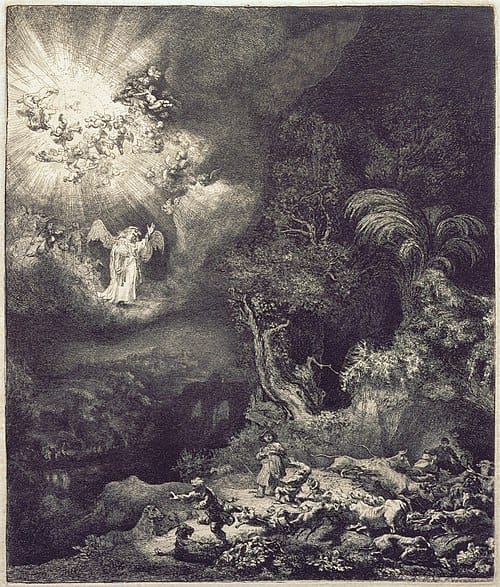
Imitating the Humility of Christ
Simplicity and Detachment
The Birth of Jesus reveals a God who chooses humility over power and poverty over privilege. To live the Nativity in daily life is to imitate this humility by embracing simplicity and detachment. This does not require rejecting material goods; rather, it requires ordering them correctly so that possessions serve the love of God and neighbor rather than replace it. By learning to be content with less and to trust more in God’s providence, believers reflect the humility of Christ, who was born without earthly security.
Making Room for Christ Spiritually
Interior Preparation of the Heart
Just as there was no room for Christ in the inn, the Nativity invites each person to examine whether there is room for Him in the heart. Living the Nativity spiritually means cultivating interior silence, repentance, and openness to grace. Through prayer, Scripture, and the sacraments, especially the Eucharist and Confession, believers prepare an interior dwelling place for Christ. The heart that is attentive and receptive becomes a new Bethlehem where Christ is welcomed and adored.
The Nativity in Family and Community Life
The Holy Family as a Model
The Nativity presents the Holy Family of Jesus, Mary, and Joseph as a model for Christian family life. Their home is marked by faith, obedience, and mutual love rather than wealth or social status. Families are invited to reflect the Nativity by placing Christ at the center of their relationships, fostering prayer, patience, and self-giving love. In this way, the domestic church becomes a living witness to the mystery of God-with-us.
Charity, Hospitality, and Joy
The birth of Christ calls believers to practice charity, hospitality, and joy, especially toward the poor and marginalized. The shepherds’ welcome and Mary’s quiet openness reflect hearts ready to receive and share God’s love. Living the Nativity means extending that love outward—through generosity, forgiveness, and service—so that Christ is recognized in those most in need. True joy flows not from excess, but from self-giving love rooted in the presence of Christ.
Witnessing the Nativity Year-Round
Living Christmas Beyond the Season
The Nativity is not meant to be celebrated for a moment and then forgotten. To witness the Nativity year-round is to carry its spirit into every season of life. Humility, gratitude, peace, and trust in God are virtues learned at Bethlehem and lived daily. When believers allow the mystery of Christ’s birth to shape their choices and relationships, Christmas becomes not merely a date on the calendar, but a way of life centered on Emmanuel, God with us.
Frequently Asked Questions
The exact calendar date of Jesus’ birth is not explicitly recorded in Scripture, and the Church does not define December 25 as a historical certainty. Rather, December 25 is a liturgical date, chosen very early in Christian tradition to celebrate the mystery of the Incarnation. By the fourth century, the Church had firmly established this date to proclaim that Christ is the true Light who enters the world. The celebration emphasizes the theological meaning of the Nativity, not precise chronology.
Jesus was born in a manger because there was no room for Him in the inn, revealing the humility and poverty with which God chose to enter the world. This was not accidental but expressive of God’s saving plan. By being born among the poor and lying where animals feed, Christ shows that salvation is offered to all, especially the lowly. The manger becomes a sign that God draws near not through power, but through humility and love.
The Nativity fulfilled Old Testament prophecies such as Isaiah 7:14, which foretold a virgin bearing a son called Emmanuel, and Micah 5:2, which predicted the Messiah’s birth in Bethlehem. In Christ’s birth, God’s promises of a Redeemer were realized.
No. In biblical and Jewish usage, “firstborn” is a title of rank and a legal term tied to the child who opens the womb and is consecrated under the Law (Exodus 13:2). Luke’s wording fits that legal meaning and leads into the Temple obligations. It does not settle the question of later children.
There is historical evidence that Augustus used censuses and registrations as part of his rule. In his own public record (the Res Gestae), Augustus says he conducted major censuses of Roman citizens. Beyond Rome itself, papyri from Egypt show regular enrollment practice under the Empire; a later Egyptian edict (A.D. 104) even orders people to return home for registration, showing the kind of administrative action Luke describes.
Luke’s phrase “the whole world should be enrolled” (Luke 2:1) is not claiming that every person on earth—from China to the Americas—lined up for a Roman census. In Scripture and ancient writing, “the whole world” often means the whole world as they knew it—the realm under a great power’s reach.
In Luke’s setting, that points to the Roman Empire, the “inhabited world” under Caesar’s authority. Luke is showing something bigger than paperwork: the Child is born under an emperor’s decree, yet God is guiding history so the Messiah is born in Bethlehem, as foretold (cf. Micheas 5:2). The point is both historical (Rome’s real administrative control) and theological (Christ enters the public world, not a private myth).
Although Roman censuses typically recorded people by residence, local customs were sometimes respected, especially in client kingdoms such as Judea. Jewish identity was strongly tied to tribal and ancestral lineage, and Luke’s emphasis on Joseph’s Davidic descent explains the journey to Bethlehem. This practice is historically plausible and not inconsistent with Roman administration.
Links
Decade Mysteries
- Annunciation of Mary
- Visitation of Mary
- Birth and Nativity of Jesus (You are Here)
- Presentation of Jesus at the Temple
- Finding Jesus in the Temple
- Agony in the Garden
- Scourging at the Pillar
- Crowning with Thorns
- Carrying of the Cross
- Crucifixion of Christ
- Resurrection of Jesus
- Ascension of Jesus
- Pentecost
- Assumption of Mary
- Coronation of Mary
- Baptism of Jesus
- Wedding at Cana
- Proclamation of the Kingdom
- Transfiguration of Jesus
- The Eucharist

Charles Rogers is a resident of South Carolina and a retired computer programmer by trade. Raised in various Christian denominations, he always believed in Jesus Christ. In 2012, he began experiencing authentic spiritual encounters with the Blessed Virgin Mary, which led him on a seven-year journey at her hand, that included alcohol addiction, a widow maker heart attack and death and conversion to the Catholic Faith. He is the exclusive author and owner of Two Percent Survival, a website dedicated to and created in honor of the Holy Mother. Feel free to email Charles at twopercentsurvival@gmail.com.

We strive to provide the most complete and highest quality material we can for you, our readers. Although not perfect, it is our desire and prayer that you benefit from our efforts.