

Presentation of Jesus in the Temple
Understanding the Presentation of Jesus in the Fourth Joyful Mystery
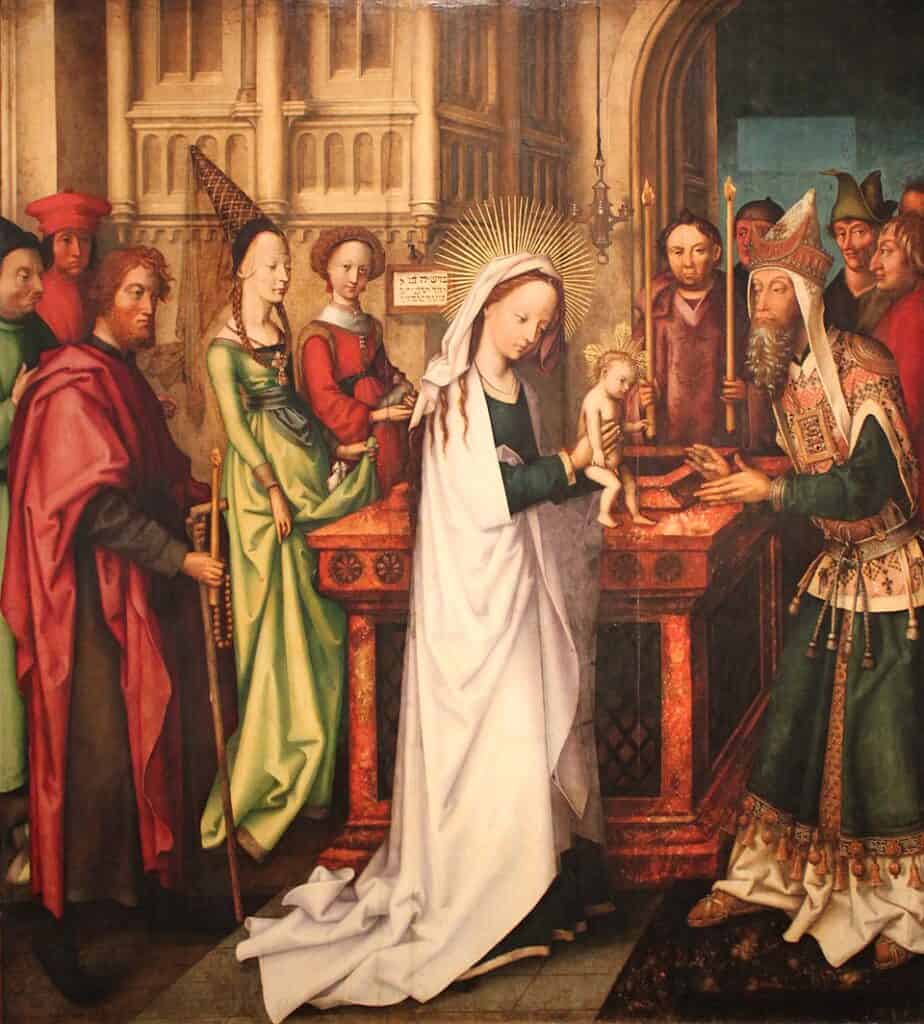
Introduction
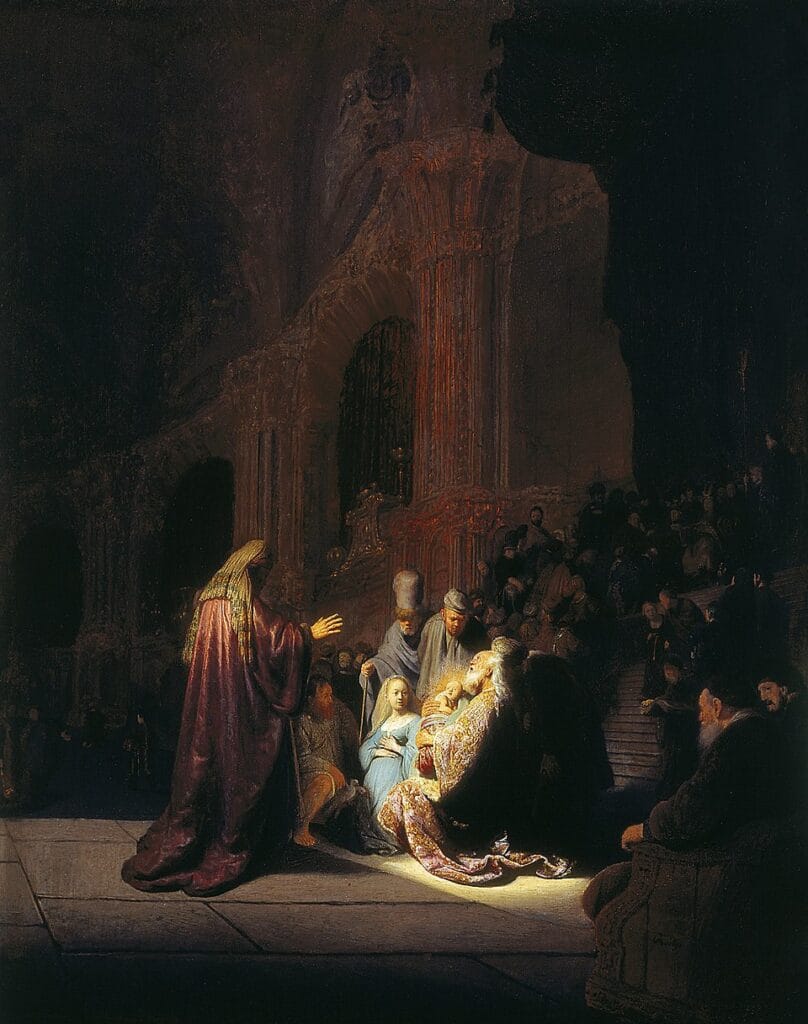
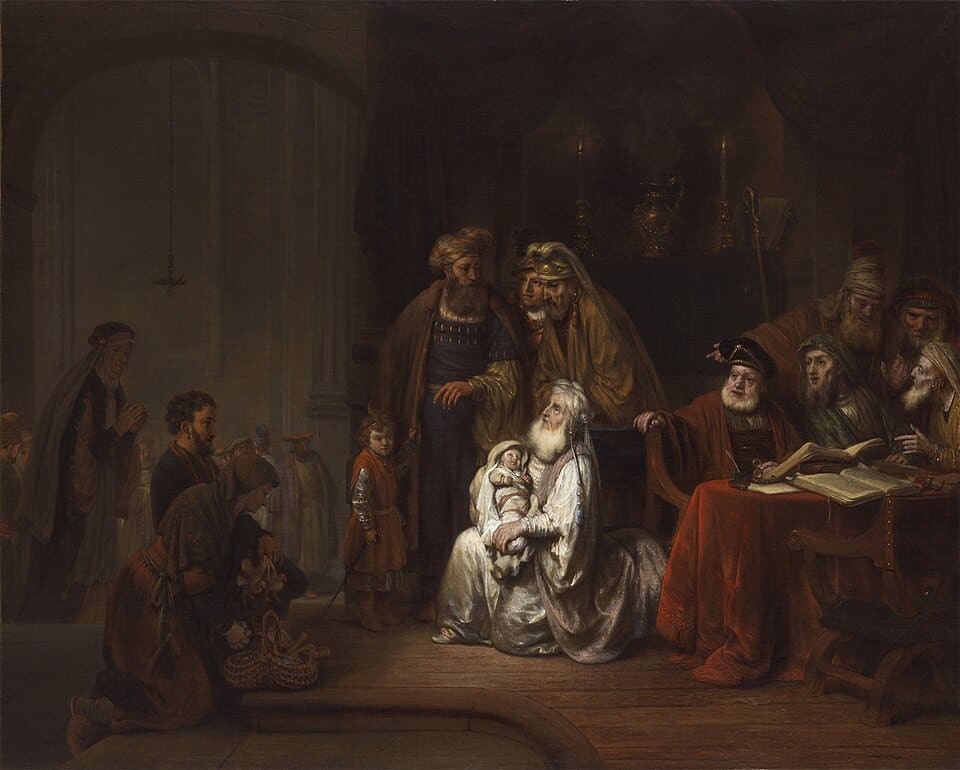
The Presentation of Jesus in the Temple, the Fourth Joyful Mystery of the Rosary holds profound importance in the Christian account. This event, also known as the Purification of Mary, underscores the fulfillment of Jewish law and the consecration of the firstborn son to God.
The significance lies in the devout obedience of Mary and Joseph to the Mosaic law, presenting Jesus in the Temple forty days after His birth. This act symbolizes Jesus’ inclusion in the covenant and establishes a connection between the Old and New Testaments.
Moreover, the encounter with Simeon and Anna adds importance. Simeon, guided by the Holy Spirit, recognizes Jesus as the promised Messiah and utters the Nunc Dimittis, acknowledging that he can depart in peace having seen the salvation of Israel. Anna, a prophetess, also witnesses this sacred moment.
The Presentation of Jesus becomes a pivotal event foreshadowing Jesus’ role as the Light to the Gentiles and the glory of Israel. It emphasizes the intersection of divine prophecy and earthly fulfillment, reinforcing the divine plan for salvation.
This Joyful Mystery invites believers to contemplate the significance of consecration and the divine purpose inherent in Jesus’ earthly arrival. It marks a transition from the hidden life of Jesus to His public ministry, symbolizing the presentation of the Savior to humanity and the unfolding of God’s redemptive plan.
Scripture of the Presentation
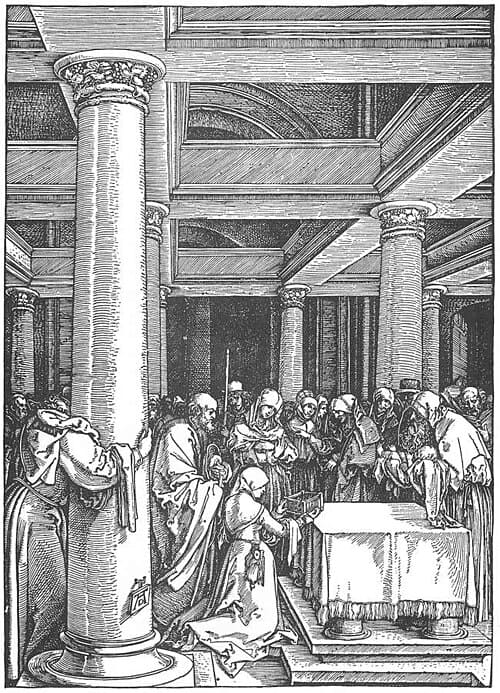
And after the days of her purification, according to the law of Moses, were accomplished, they carried him to Jerusalem, to present him to the Lord: As it is written in the law of the Lord: Every male opening the womb shall be called holy to the Lord: And to offer a sacrifice, according as it is written in the law of the Lord, a pair of turtledoves, or two young pigeons.
And Behold there was a man in Jerusalem named Simeon, and this man was just and devout, waiting for the consolation of Israel; and the Holy Ghost was in him. And he had received an answer from the Holy Ghost, that he should not see death, before he had seen the Christ of the Lord.
And he came by the Spirit into the temple. And when his parents brought in the child Jesus, to do for him according to the custom of the law, He also took him into his arms, and blessed God, and said: Now thou dost dismiss thy servant, O Lord, according to thy word in peace; Because my eyes have seen thy salvation, Which thou hast prepared before the face of all peoples: A light to the revelation of the Gentiles, and the glory of thy people Israel.
And his father and mother were wondering at those things which were spoken concerning him. And Simeon blessed them, and said to Mary his mother: Behold this child is set for the fall, and for the resurrection of many in Israel, and for a sign which shall be contradicted; And thy own soul a sword shall pierce, that, out of many hearts, thoughts may be revealed.
And there was one Anna, a prophetess, the daughter of Phanuel, of the tribe of Aser; she was far advanced in years, and had lived with her husband seven years from her virginity.
And she was a widow until fourscore and four years; who departed not from the temple, by fastings and prayers serving night and day. Now she, at the same hour, coming in, confessed to the Lord; and spoke of him to all that looked for the redemption of Israel.
And after they had performed all things according to the law of the Lord, they returned into Galilee, to their city Nazareth. And the child grew, and waxed strong, full of wisdom; and the grace of God was in him. (Luke 2:22-40)
A person can read this passage slowly before the decade and hold one phrase in their heart during the Hail Marys: “to present him to the Lord,” “a light to the revelation of the Gentiles,” or “thy own soul a sword shall pierce.”
Additional Supporting Passages
These texts help shed light on the Presentation:
- Exodus 13:1–2, 11–16 – Consecration of the firstborn sons.
- Leviticus 12:1–8 – Law of purification after childbirth.
- Malachias 3:1 – “The Lord… shall suddenly come into his temple.”
- Isaiah 42:6–7 – The Servant as light to the nations.
Walking Through the Presentation Step by Step
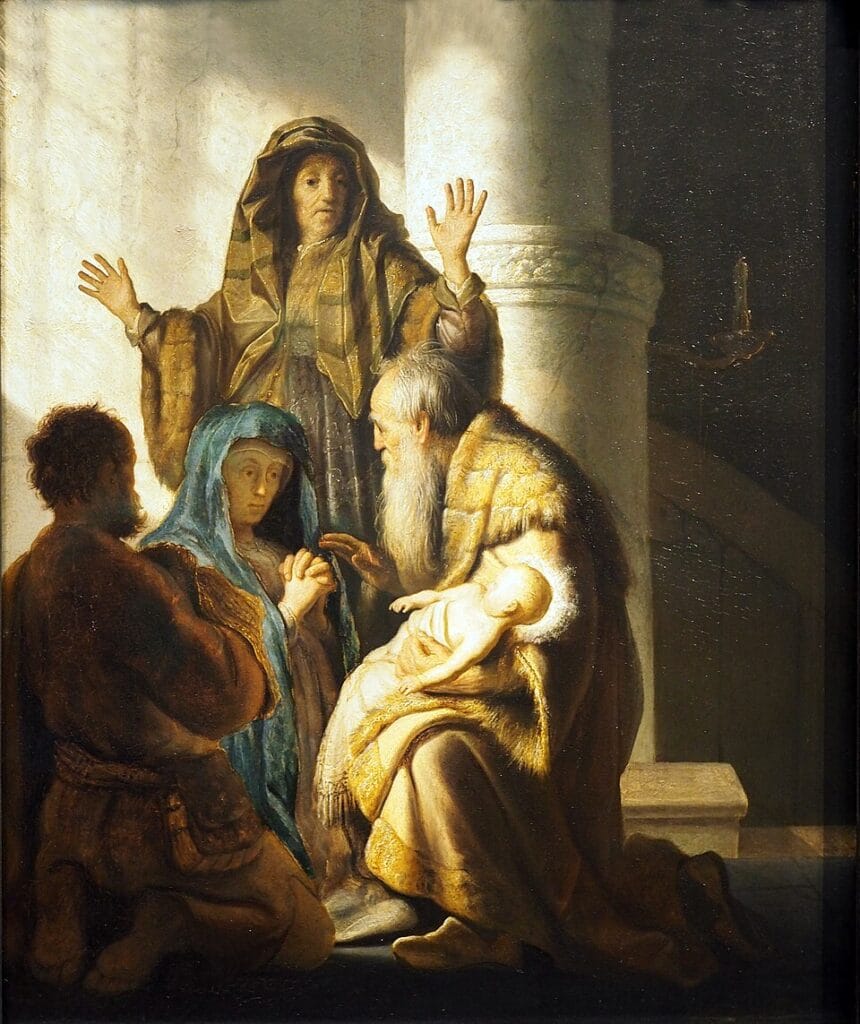
The Journey to Jerusalem
Forty days after the Nativity, Mary and Joseph leave Bethlehem and go up to Jerusalem. They carry Jesus, the firstborn, in their arms. On one level, they are simply keeping the Law: presenting their Son and offering the required sacrifice (Luke 2:22–24). On a deeper level, the true Son is being brought to the Father in His own house. The Temple, symbol of God’s presence among His people, receives the One who is God-with-us in the flesh.
Obedience to the Law and the Poor Man’s Offering
The Law required that every firstborn male be “called holy to the Lord” (Luke 2:23; Exodus 13:2). It also prescribed a sacrifice. The usual offering was a lamb and a bird, but the Law made provision for the poor: they could offer two turtledoves or two young pigeons (Leviticus 12:8). Mary and Joseph brought this poor offering. The Holy Family is not wealthy in money, but rich in faith and obedience. They show that holiness does not depend on wealth, but on surrender to God’s will.
Simeon’s Joyful Recognition
In the Temple, there is an old man named Simeon, “just and devout, waiting for the consolation of Israel” (Luke 2:25). The Holy Ghost has promised him he will not die before seeing the Christ. Led by the Spirit, he comes into the Temple at the very moment when Mary and Joseph arrive. He takes the Child Jesus into his arms and blesses God. His prayer, the Nunc Dimittis, is prayed each night by the Church:
“Now thou dost dismiss thy servant, O Lord, according to thy word in peace; Because my eyes have seen thy salvation” (Luke 2:29–30).
Simeon sees not only a baby but the salvation prepared before all peoples, a light to enlighten the nations and the glory of Israel (Luke 2:31–32). His long wait ends in quiet joy, and he is ready to die in peace.
The Prophecy to Mary
Mary and Joseph are astonished by what is said about their Child. Then Simeon blesses them and turns to Mary:
“Behold this child is set for the fall, and for the resurrection of many in Israel, and for a sign which shall be contradicted: And thy own soul a sword shall pierce” (Luke 2:34–35).
This is the first clear sign, given directly to Mary, that her Son’s path will pass through rejection and suffering and that she will share in it uniquely and profoundly. The mention of the sword points toward Calvary. The joy of the Presentation is not taken away, but it is purified and joined to sacrifice.
Anna’s Praise and Witness
Luke also recounts Anna, an elderly widow and prophetess, who spends her days and nights in the Temple in fasting and prayer (Luke 2:36–38). She comes at that hour, gives thanks to God, and speaks about the Child to all who look for redemption. Simeon and Anna together show the fruit of a long life spent in faith: clear eyes, ready praise, and a heart that recognizes the Savior.
The Fruit of the Mystery: Obedience and Offering
The traditional fruit of this mystery is obedience to God’s law and a generous spirit of offering oneself and one’s family to the Lord. Mary and Joseph do not stand above the Law, even though they carry the Lawgiver Himself. They obey out of love. In this decade, a person asks for the grace to keep God’s commands not as cold rules, but as a path of love; to place their life, their children, and their future into His hands.
Doctrinal and Spiritual Meaning of the Presentation
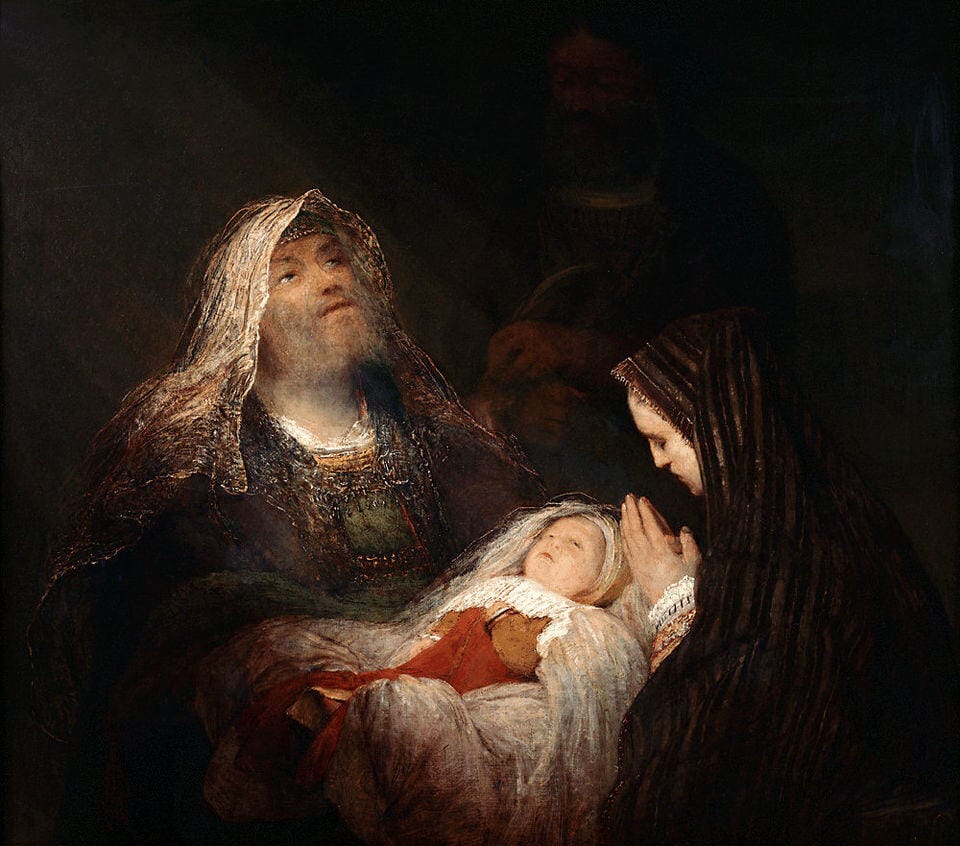
What the Presentation Reveals About Jesus
At the Presentation, Jesus is shown as the Firstborn Son who belongs in a unique way to the Father. He is offered, and at the same time, He offers Himself. This foreshadows His self-offering on the Cross (CCC 529). Simeon calls Him salvation, light, and glory (Luke 2:30–32). The Child carried in human arms, do the prophets promise the Savior, the light that will shine not only on Israel, but on all peoples (Isaiah 42:6).
The Catechism teaches that in the Presentation, Jesus is manifested as the Messiah of Israel and the light of the nations, but also as “a sign that is spoken against” (CCC 529). From His earliest days, contradiction surrounds Him; acceptance and rejection will run side by side through His life.
What the Presentation Reveals About Mary and Joseph
Mary and Joseph appear as faithful believers, fully inserted into the life of their people. They do not claim privilege; they stand in line with others, bringing the poor man’s offering and obeying the Law. At the same time, they carry a mystery that goes far beyond the Law.
Mary, in particular, is drawn more deeply into her role as Mother united to the sacrifice of her Son. Simeon’s prophecy of the sword announces the cost of her motherhood. She will not only rejoice in His birth; she will stand by Him in His Passion. The Catechism speaks of Mary’s cooperation “by her obedience, faith, hope, and burning charity in the Savior’s work of restoring supernatural life to souls” (CCC 968–969). The Presentation is one of the stages on that path.
Key Teachings from the Catechism
The Catechism highlights several points related to this mystery:
- The Presentation shows Jesus as the consecrated firstborn, offered to the Father (CCC 529).
- Simeon’s and Anna’s presence expresses the hope of Israel and the welcome of the faithful remnant (CCC 529).
- Simeon’s prophecy unites Mary to the destiny of her Son and announces the Cross.
These truths help a person see that the Presentation is not just a charming episode, but a real step toward Calvary and Easter.
Old Testament Prophecies and Foreshadowings Fulfilled
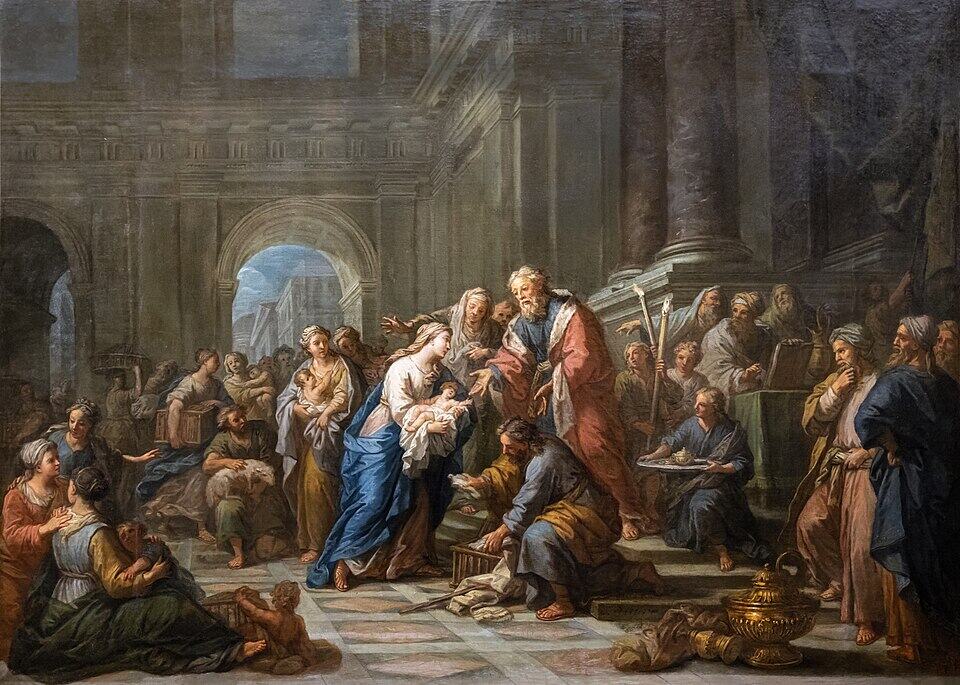
Consecration of the Firstborn
In Exodus, after the deliverance from Egypt, God claims every firstborn male as His own: “Sanctify unto me every firstborn that openeth the womb among the children of Israel” (Exodus 13:2). Parents were to redeem the child by sacrifice. In the Presentation, this law is followed, but with a difference: the One offered is the true Lamb who will not only be redeemed, but will redeem others by His Blood.
The Lord Coming to His Temple
Malachias prophesies: “And presently the Lord, whom you seek, and the angel of the testament, whom you desire, shall come to his temple” (Malachias 3:1). When Mary and Joseph carry Jesus into the Temple, this promise is quietly fulfilled. The Lord comes, not in fire and thunder, but as a small Child in His Mother’s arms. Simeon and Anna, open to the Spirit, recognize Him; many others present that day see only another couple with a baby.
Light to the Nations
Isaiah speaks of the Servant who will be “a light of the Gentiles, that thou mayst be my salvation even to the farthest part of the earth” (Isaiah 49:6). Simeon takes these words on his lips when he calls Jesus “a light to the revelation of the Gentiles” (Luke 2:32). The Presentation reveals that Christ’s mission is not limited to one people; He comes to all.
The Sword and the Revealing of Hearts
Simeon says that Jesus will be “a sign which shall be contradicted” and that through Him the thoughts of many hearts will be revealed (Luke 2:34–35). In Him, people will show where they stand: for or against grace, for or against truth. Mary’s soul will be pierced as she watches this division and shares in her Son’s suffering. The sword hints at the sorrow of Calvary, where His Heart and hers will both be touched.
The Presentation in the Life of the Church
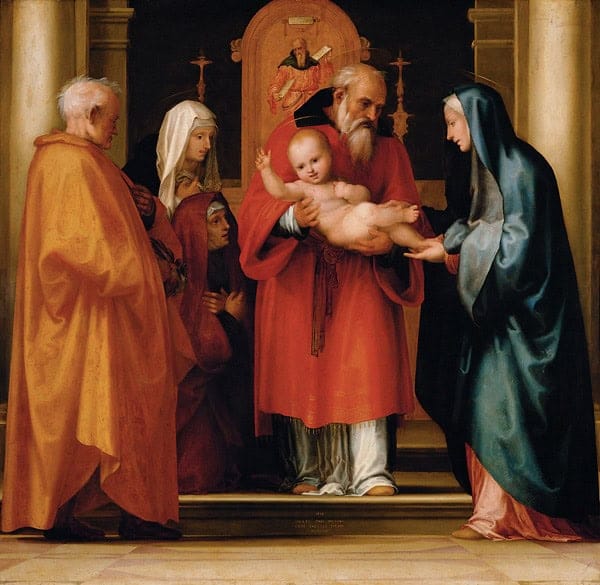
Feast Day: February 2 – Candlemas
The Feast of the Presentation of the Lord is kept on February 2, forty days after Christmas. It has long been linked to light. Candles are blessed and carried in procession, recalling Simeon’s words about Jesus as the light for the nations. The day is sometimes called Candlemas for this reason.
The liturgy of the feast shows both joy and sacrifice. It honors Christ’s coming into the Temple and the obedience of Mary and Joseph, while also recalling Simeon’s prophecy of the sword. It is like a bridge between Christmas joy and the coming season of Lent.
The Presentation in the Liturgy and Night Prayer
Simeon’s prayer, the Nunc Dimittis, is prayed every night by the Church in Compline. Each evening, the Church places the day into God’s hands with the same trust: “Now thou dost dismiss thy servant, O Lord, according to thy word in peace” (Luke 2:29). This nightly prayer keeps the spirit of the Presentation alive, teaching believers to be ready to go to God whenever He calls.
Praying the Presentation as a Decade of the Rosary
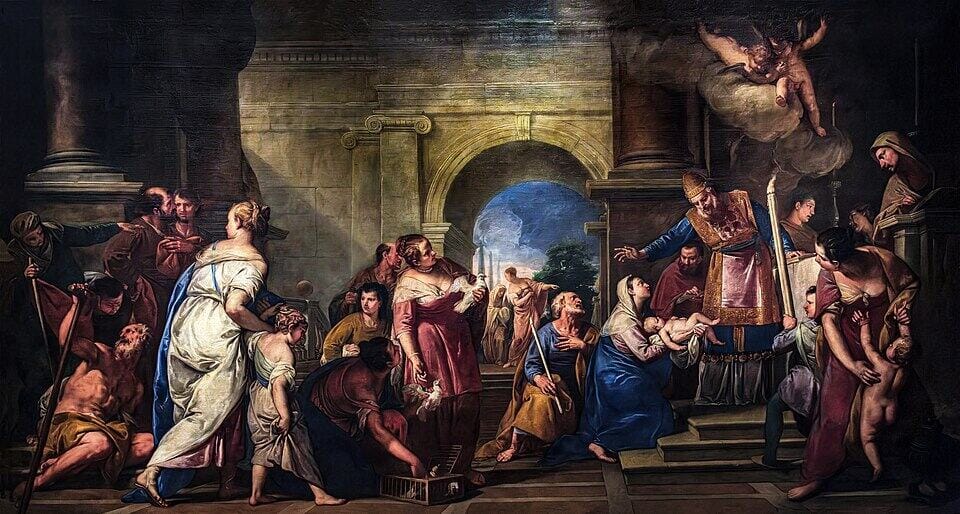
Calling the Mystery to Mind Before the Decade
Before beginning the Our Father, one can picture Mary and Joseph walking toward the Temple, carrying the Child. They can imagine the crowds, the steps, the great doors, and the quiet interior. They might see Simeon waiting, moved by the Spirit, and then taking the Child into his arms. A simple inner prayer could be: “Jesus, I offer myself to the Father with You.”
Simple Helps for Meditation
During the Hail Marys, one can move through moments of the scene:
- The journey from Bethlehem to Jerusalem.
- Mary and Joseph’s simple obedience to the Law.
- Simeon approaches and takes the Child.
- Simeon’s peaceful readiness for death.
- His prophecy to Mary about the sword.
- Anna’s praise and witness.
If that feels like too much, it can be enough to hold one short line, such as “a light to the revelation of the Gentiles” (Luke 2:32), and repeat it quietly. The goal is to stay near Jesus, offered in His Father’s house.
Suggested Intentions Linked to the Fruit
Common intentions for this decade include:
- A spirit of obedience to God’s commandments and the duties of one’s state in life.
- The grace to offer one’s sufferings and joys to the Father through Jesus and Mary.
- Parents and children, that families may belong to God and seek His will.
- The elderly, like Simeon and Anna, that they may find peace in Christ.
- A more profound love for the liturgy and the house of God.
Living the Mystery of the Presentation in Daily Life
Obeying God with Love, Not Reluctance
Mary and Joseph obey the Law without grumbling. They do what is asked, in the way it is asked, at the time it is requested. A believer lives this mystery by seeking to do the same in daily duties: going to Mass on Sundays and holy days, keeping the commandments, being honest in work, caring for family, and accepting life’s tasks as offerings to God.
Offering Oneself and One’s Family to God
At the Presentation, Jesus is offered, Mary offers Him, and in a way, she provides herself. Parents can echo this by consciously entrusting their children to God, asking that His will be done in their lives. Single people, widows, and those without children can offer their hearts, labor, and futures. A simple prayer might be: “Father, I place my life in Your hands. Use me as You wish.”
Embracing the Sword When It Comes
The sword Simeon foretold did not destroy Mary; it purified and united her more closely to her Son. Suffering comes to every life. Living this mystery means not running from God when pain arrives, but staying close to Him, like Mary at the foot of the Cross. A person may ask her for help in accepting trials in union with Jesus, so that, from many hearts, thoughts may be revealed and purified.
Frequently Asked Questions
The Presentation in the Temple is the Fourth Joyful Mystery. In it, a person meditates on Mary and Joseph bringing the Child Jesus to the Temple, their obedience to the Law, Simeon’s recognition and prophecy, and Anna’s praise. The mystery teaches obedience, purity of heart, and the offering of oneself and one’s family to God.
The central passage is Luke 2:22–38 in the Douay-Rheims Bible. It tells of the presentation of Jesus, the sacrifice offered, Simeon’s prayer and prophecy, and Anna’s thanksgiving. The broader section, Luke 2:22–40, also includes the return to Nazareth and the Child's growth.
The Presentation shows the Holy Family’s obedience to God’s law and reveals Jesus as the promised Messiah. Simeon’s prophecy foreshadows Christ’s saving mission and Mary’s share in His suffering. The event affirms Jesus as the true Light of the world.
Links
Decade Mysteries
- Annunciation of Mary
- Visitation of Mary
- Birth and Nativity of Jesus
- Presentation of Jesus at the Temple (You are Here)
- Finding Jesus in the Temple
- Agony in the Garden
- Scourging at the Pillar
- Crowning with Thorns
- Carrying of the Cross
- Crucifixion of Christ
- Resurrection of Jesus
- Ascension of Jesus
- Pentecost
- Assumption of Mary
- Coronation of Mary
- Baptism of Jesus
- Wedding at Cana
- Proclamation of the Kingdom
- Transfiguration of Jesus
- The Eucharist

Charles Rogers is a resident of South Carolina and a retired computer programmer by trade. Raised in various Christian denominations, he always believed in Jesus Christ. In 2012, he began experiencing authentic spiritual encounters with the Blessed Virgin Mary, which led him on a seven-year journey at her hand, that included alcohol addiction, a widow maker heart attack and death and conversion to the Catholic Faith. He is the exclusive author and owner of Two Percent Survival, a website dedicated to and created in honor of the Holy Mother. Feel free to email Charles at twopercentsurvival@gmail.com.

We strive to provide the most complete and highest quality material we can for you, our readers. Although not perfect, it is our desire and prayer that you benefit from our efforts.