

Visitation of Mary to Elizabeth
Understanding the Visitation of Mary in the Second Joyful Mystery
Introduction
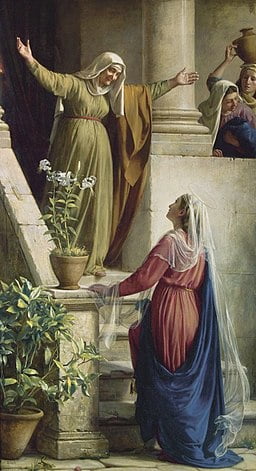
The second Joyful Mystery of the Rosary is the Visitation of Mary to Elizabeth. This event (it is believed that the meeting takes place in a suburb of Jerusalem called Ein Karem) holds immense importance in Christian tradition as it signifies the meeting between the Blessed Virgin Mary, who is pregnant with Jesus, and her relative Elizabeth, who is also miraculously expecting a child, later known as John the Baptist.
The significance lies in the joyous encounter between these two women, both chosen by God for pivotal roles in the unfolding story of salvation. When Mary greets Elizabeth, the unborn John leaps in her womb, filled with the Holy Spirit. This moment is a powerful manifestation of the divine presence, emphasizing the sacredness of the unborn children and the unique roles they will play in God’s plan.
Mary’s visitation is a symbol of love, support, and shared joy, reinforcing the familial bond between the two mothers and their unborn children. It highlights the interconnectedness of the Old and New Testaments, as John, representing the Old Covenant, recognizes and rejoices in the presence of Jesus, the fulfillment of the New Covenant.
In essence, the Visitation underscores the importance of mutual support, divine revelation, and the profound connection between generations in the divine unfolding of salvation history. This mystery invites believers to reflect on the blessings of God’s presence in their lives and the interconnectedness of God’s redemptive plan across generations.
Scriptures
And Mary rising-up in those days, went into the hill country with haste into a city of Judah. And she entered into the house of Zachary, and saluted Elizabeth.
And it came to pass, that when Elizabeth heard the salutation of Mary, the infant leaped in her womb. And Elizabeth was filled with the Holy Ghost: And she cried out with a loud voice, and said: Blessed art thou among women, and blessed is the fruit of thy womb. And whence is this to me, that the mother of my Lord should come to me? For behold as soon as the voice of thy salutation sounded in my ears, the infant in my womb leaped for joy. And blessed art thou that hast believed, because those things shall be accomplished that were spoken to thee by the Lord.
And Mary said: My soul doth magnify the Lord. And my spirit hath rejoiced in God my Saviour. Because he hath regarded the humility of his handmaid; for behold from henceforth all generations shall call me blessed. Because he that is mighty, hath done great things to me; and holy is his name. And his mercy is from generation unto generations, to them that fear him. He hath shewed might in his arm: he hath scattered the proud in the conceit of their heart. He hath put down the mighty from their seat, and hath exalted the humble. He hath filled the hungry with good things; and the rich he hath sent empty away. He hath received Israel his servant, being mindful of his mercy: As he spoke to our fathers, to Abraham and to his seed forever.
And Mary abode with her about three months; and she returned to her own house. (Luke 1:39-56)
Additional Supporting Passages
These verses shed light on what happens in the Visitation of Mary:
- Malachias 3:1 – The Lord’s messenger who prepares His way.
- Isaiah 40:3 – “A voice of one crying in the desert.”
- 2 Samuel 6:9–11 – David wonders how the ark of the Lord should come to him.
- Genesis 12:1–3 – Promise of blessing for all nations through Abraham and his seed.
Walking Through the Visitation Step by Step
Mary Sets Out in Haste
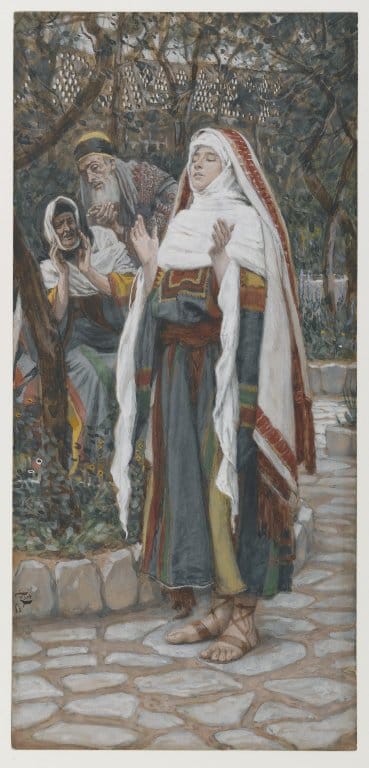
After receiving the message from Gabriel that Elizabeth has conceived in her old age, Mary rises and goes “with haste into the hill country,” traveling “into a city of Juda” to Elizabeth’s home (Luke 1:39, Douay-Rheims). She has just conceived the Son of God, yet her first movement is outward, toward love and service. She does not pause to protect her own comfort or to linger over questions. She carries Jesus hidden in her womb and becomes, in a holy sense, the first tabernacle on the move—bringing the Lord into the house where Elizabeth waits.
The Joy and Meeting of the Two Mothers
Mary enters the house of Zachary and greets Elizabeth. At that moment, John the Baptist, still unborn, leaps in his mother’s womb. Scripture says Elizabeth is “filled with the Holy Ghost” (Luke 1:41). The presence of Christ, brought by Mary, stirs joy and prophecy. Two hidden children meet: Jesus and John. Two mothers rejoice in the action of God.
Elizabeth’s Spirit-Filled Cry
Elizabeth cries out: “Blessed art thou among women, and blessed is the fruit of thy womb. And whence is this to me, that the mother of my Lord should come to me?” (Luke 1:42–43). By the light of the Holy Ghost, she recognizes Mary as Mother of her Lord, which already hints at Mary’s title as Mother of God. She also praises Mary’s faith: “Blessed art thou that hast believed” (Luke 1:45). The Church repeats Elizabeth’s praise in every Hail Mary.
Mary’s Magnificat
In answer, Mary lifts her voice in the Magnificat: “My soul doth magnify the Lord” (Luke 1:46). She does not praise herself but God, who has looked on “the humility of his handmaid.” She foretells that all generations will call her blessed (Luke 1:48). Her song praises God’s mercy, His care for the lowly, and His faithfulness to His promises to Abraham. It is both a personal thanksgiving and a hymn for the whole Church.
The Fruit of the Mystery: Love of Neighbor
Mary stays with Elizabeth for about three months, likely helping in the final months of pregnancy and the birth of John (Luke 1:56). The traditional fruit of this mystery is love of neighbor. True love for God does not remain closed in the heart. It moves the feet, the hands, everything. In the Visitation, a person learns that carrying Christ means bringing help, encouragement, and joy into other homes.
Doctrinal and Spiritual Meaning of the Visitation
What the Visitation Reveals About Jesus
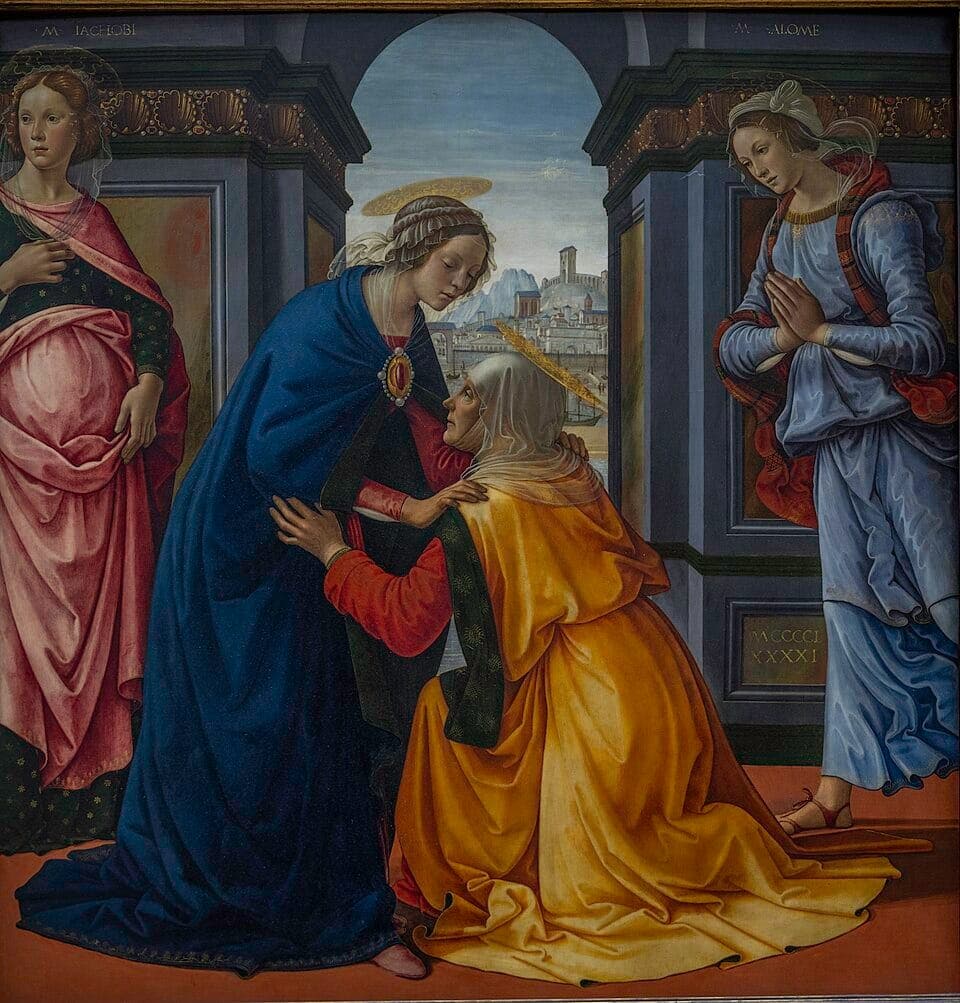
Jesus is present and active from the first moments of His hidden life. Though unseen, He sanctifies John in Elizabeth’s womb. John leaps for joy, and Elizabeth is filled with the Holy Ghost (Luke 1:41). This shows the sanctifying power of Christ even before His birth and underlines that human life in the womb is known and loved by God.
The Visitation also points toward Christ’s mission: He comes to bring joy, the Holy Ghost, and blessing to those who receive Him. He does this through Mary’s visit, which mirrors how He will later come to souls through the sacraments and through the charity of believers.
What the Visitation Reveals About Mary
Mary is shown here as Mother of the Lord, Ark of the New Covenant, and model of charity. Elizabeth’s words, “the mother of my Lord” (Luke 1:43), echo David’s awe before the ark: “How shall the ark of the Lord come to me?” (2 Samuel 6:9). The Fathers of the Church often saw Mary as the living ark, carrying not tablets of stone, but the living Word.
Mary’s Magnificat reveals her inner life. She knows Scripture, trusts God’s promises, and sees His hand in her lowliness. She gives all glory to Him. She is also teacher of the Church’s prayer: her song is prayed daily in the Church’s evening prayer.
Key Teachings from the Catechism
The Catechism teaches that Mary is truly Mother of God because her Son is divine, and that her motherhood extends spiritually to all who are joined to Christ (CCC 963–970). It also presents the Magnificat as the song of the poor who trust in God’s mercy and see His reversal of human pride and injustice (CCC 2617–2619).
In the Visitation, one sees:
- Mary as model of faith that acts.
- Mary as Mother of the Lord, already bringing Him to others.
- The joy and praise that spring up where Christ is welcomed.
Old Testament Prophecies and Foreshadowings Fulfilled
The Messenger Who Prepares the Way
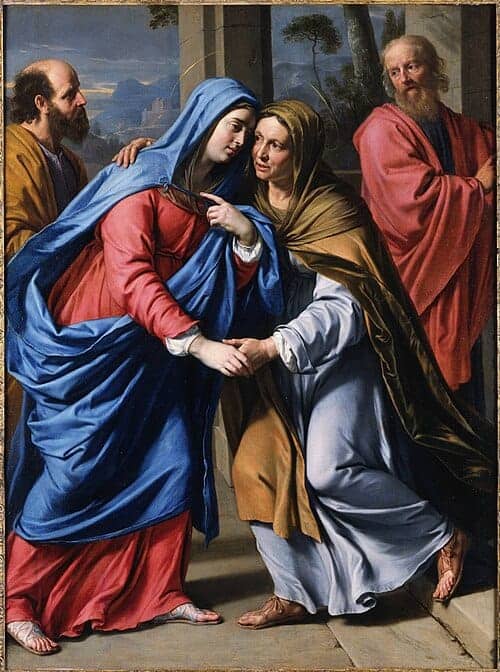
The prophet Malachias spoke of a messenger sent to prepare the way of the Lord (Malachias 3:1). John the Baptist is that messenger. In the Visitation, God is already preparing him, filling him with joy in the presence of the Savior he will later announce. The quiet meeting of these unborn children is already part of the preparation for Christ’s public mission.
A Voice Crying in the Desert
Isaiah foretold a voice crying in the desert: “Prepare ye the way of the Lord, make straight in the wilderness the paths of our God” (Isaiah 40:3). That voice will be John’s. The leap in Elizabeth’s womb at Mary’s greeting is like the first stirring of that future cry.
Mary as Ark of the New Covenant
In 2 Samuel 6, David says, “How shall the ark of the Lord come to me?” and the ark remains in the hill country for three months, bringing blessing to the house where it stays (2 Samuel 6:9–11). In the Visitation, Elizabeth says, “And whence is this to me, that the mother of my Lord should come to me?” (Luke 1:43), and Mary remains about three months. The parallels are strong: Mary, bearing Christ, is the new ark who brings the presence of God and His blessing.
God’s Promise to Abraham
Mary herself sings of God’s fidelity: “He hath received Israel his servant, being mindful of his mercy. As he spoke to our fathers, to Abraham and his seed for ever” (Luke 1:54–55). The child in her womb is the promised seed through whom all nations will be blessed (Genesis 12:3). In the Visitation, God’s promise to Abraham is already being carried into another home.
The Visitation in the Life of the Church
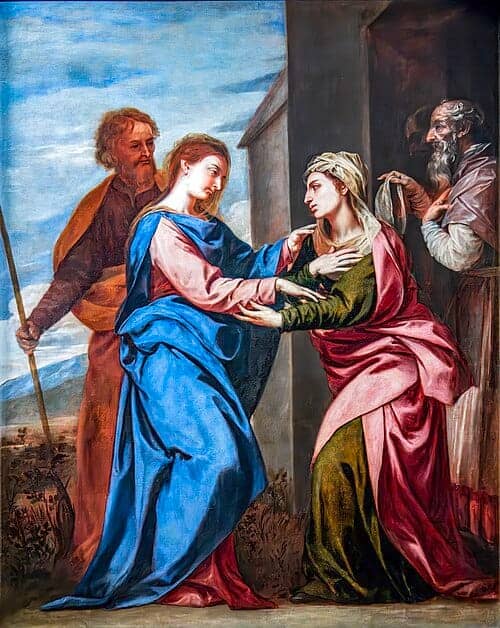
Feast Day: May 31
The Feast of the Visitation of the Blessed Virgin Mary is celebrated on May 31 in the current Roman calendar. Placed between the Annunciation and the Birth of John the Baptist, it highlights Mary’s service and the joy of Christ’s hidden presence. In the older calendar, it was kept on July 2.
The liturgy of this day invites the faithful to rejoice with Elizabeth and to sing the Magnificat with Mary. Many parishes mark the feast with Marian hymns, processions, or special devotions.
The Visitation in the Liturgy and the Magnificat
The Magnificat is at the heart of this mystery and of the Church’s prayer. Every day in Vespers, the Church prays Mary’s words: “My soul doth magnify the Lord” (Luke 1:46). This daily prayer keeps the spirit of the Visitation alive: praise for God’s mercy, care for the lowly, and trust in His promise.
The Mass readings for the feast present the meeting of the two mothers and the song of Mary. They remind believers that where Christ is, joy, humility, and praise follow.
Praying the Visitation as a Decade of the Rosary
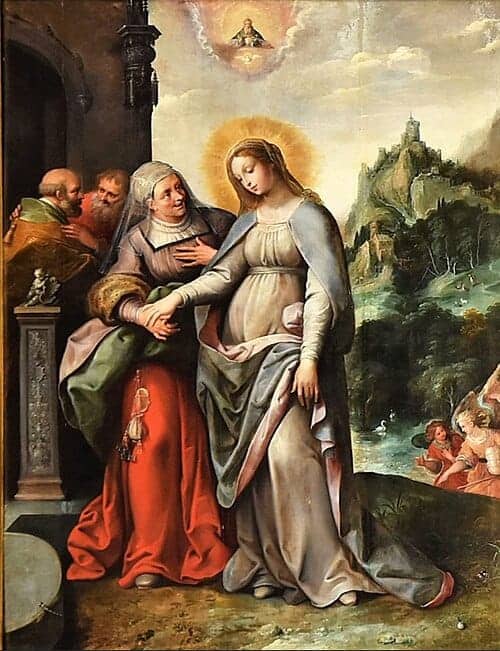
Calling the Mystery to Mind Before the Decade
Before beginning the Our Father for this decade, a person can picture Mary setting out across the hills, perhaps early in the morning, carrying Jesus within her. They might imagine her arrival at Elizabeth’s house, the greeting, the sudden joy, and the embrace of the two women. A simple inner prayer can be: “Mary, help me bring Jesus to others as you did.”
Simple Helps for Meditation
During the Hail Marys, it may help to let each part of the scene pass before the mind:
- Mary’s decision to go in haste.
- The long road and her trust.
- The greeting at the door.
- John leaping for joy in the womb.
- Elizabeth’s Spirit-filled words.
- Mary’s Magnificat.
If focus is hard, a person can hold one short line: “Blessed art thou that hast believed” (Luke 1:45), or “My soul doth magnify the Lord” (Luke 1:46).
Suggested Intentions Linked to the Fruit
Many pray this decade for:
- Greater love of neighbor and generous service.
- The grace to bring Christ into family life, work, and friendships.
- Expectant mothers, unborn children, and families in crisis.
- Those who are lonely or visited by few.
- A heart that praises God in all things, like Mary’s Magnificat.
Living the Mystery of the Visitation in Daily Life
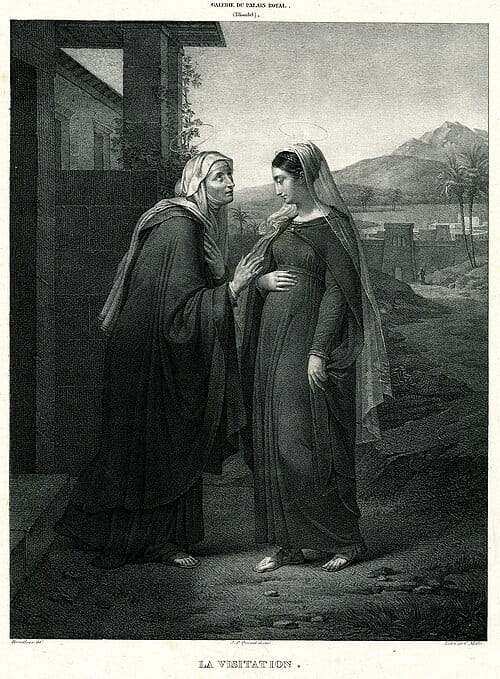
Serving Others Promptly and Joyfully
Mary does not wait to be asked. She goes. This mystery encourages believers to notice those who may need a visit, a call, a message, a meal, or simple company. Love of neighbor is not only a feeling; it is a decision to move. Offering one’s time to the sick, the elderly, the grieving, or a struggling friend is a way of living the Visitation.
Bringing Christ, Not Just Ourselves
When Mary arrives, she brings more than her presence. She brings Jesus. A Catholic is called to do the same. Entering a home, a hospital room, or a workplace, one can quietly ask: “Lord, come with me. Love through me.” This changes visits from casual social time into moments of grace, even if there is no religious talk at all.
Learning to Praise God in All Circumstances
Mary’s Magnificat rises from a life that is humble and poor in the eyes of others. She praises God not because everything is easy, but because He is faithful. A person can live this mystery by learning to thank God in small things, by praying the Magnificat in the evening, and by teaching children to see and name God’s blessings in their day.
Frequently Asked Questions
The Visitation is the second Joyful Mystery of the Rosary. It recalls the Blessed Virgin Mary’s visit to her relative Elizabeth, who was expecting John the Baptist. When Mary greeted her, the unborn John leaped for joy in his mother’s womb, recognizing the presence of Jesus, the Savior.
The Visitation is described in Luke 1:39–56. Mary travels into the hill country to visit Elizabeth. Filled with the Holy Spirit, Elizabeth proclaims, “Blessed art thou among women, and blessed is the fruit of thy womb.” Mary then responds with her hymn of praise, the Magnificat.
The Magnificat is Mary’s hymn of praise recorded in Luke 1:46–55. It magnifies the Lord for His mercy, justice, and faithfulness. The hymn shows Mary’s humility and faith while echoing Old Testament themes. The Church calls it “the song both of the Mother of God and of the Church” (CCC 2619).
Links
Decade Mysteries
- Annunciation of Mary
- Visitation of Mary (You are Here)
- Birth and Nativity of Jesus
- Presentation of Jesus at the Temple
- Finding Jesus in the Temple
- Agony in the Garden
- Scourging at the Pillar
- Crowning with Thorns
- Carrying of the Cross
- Crucifixion of Christ
- Resurrection of Jesus
- Ascension of Jesus
- Pentecost
- Assumption of Mary
- Coronation of Mary
- Baptism of Jesus
- Wedding at Cana
- Proclamation of the Kingdom
- Transfiguration of Jesus
- The Eucharist

Charles Rogers is a resident of South Carolina and a retired computer programmer by trade. Raised in various Christian denominations, he came to faith in Jesus Christ early in life. In 2012, he began experiencing authentic spiritual encounters with the Blessed Virgin Mary, which led him on a seven-year journey at her hands, that included alcohol addiction, a widow maker heart attack and death and conversion to the Catholic Faith. He is the exclusive author and owner of Two Percent Survival, a website dedicated to and created in honor of the Holy Mother. Feel free to email Charles at twopercentsurvival@gmail.com.

May Our Lady of the Rosary lead you deeper into the grace you have been given. Pray always, and trust the mercy of God while the door remains open.
— Two Percent Survival